Disposable plates have become an essential part of the food service industry in India. From weddings and festivals to office lunches, catering events, street food stalls, and food delivery services, single-use tableware is widely used because it offers convenience and efficiency.
However, Indian cuisine presents unique challenges when it comes to disposable tableware. Many traditional dishes include hot gravies, oily curries, rice, and heavy portions that can easily damage low-quality disposable plates.
Choosing the right material for disposable plates is therefore extremely important for caterers, restaurants, and food service providers. The wrong material can lead to leaking, bending, or breaking, which negatively affects both food presentation and customer experience.
Understanding the different materials available for disposable plates helps businesses select the most reliable option for serving Indian food.
Why Indian Food Requires Strong Disposable Plates
Unlike many cuisines where meals are served in smaller portions or separate containers, Indian meals often include a combination of dishes served on a single plate.
A typical meal may include rice, dal, vegetable curry, roti, salad, chutney, and sometimes dessert. Many of these dishes contain gravy, oil, or moisture.
Disposable plates used for such meals must therefore be able to handle several factors.
They must be strong enough to hold the weight of multiple food items.
They must resist moisture and oil.
They must withstand the heat of freshly cooked meals.
They should maintain their shape during the entire dining experience.
Weak disposable plates can quickly become soggy or collapse under the weight of food, which creates inconvenience for customers and operational challenges for catering teams.
Common Materials Used for Disposable Plates
Several types of disposable plates are commonly used in India. Each material has different advantages and limitations.
Plastic Plates
Plastic plates are durable and resistant to moisture, which makes them suitable for many types of food. However, they are petroleum-based products and contribute significantly to plastic pollution.
Single-use plastic tableware is also increasingly restricted by government regulations due to environmental concerns. As a result, many businesses are now looking for alternatives that reduce plastic waste.
Thermocol Plates
Thermocol plates have been widely used in large events because they are inexpensive and lightweight. However, thermocol is a type of polystyrene foam that poses serious environmental problems.
It does not biodegrade and can remain in landfills for hundreds of years. In addition, thermocol plates can break easily when handling heavier meals.
Due to environmental and health concerns, many organizations are now avoiding thermocol tableware.
Paper Plates
Paper plates are often seen as a more environmentally friendly alternative to plastic and thermocol. They are lightweight and relatively affordable.
However, standard paper plates are not always suitable for Indian food. When exposed to hot curries, oils, or gravies, they may quickly absorb moisture and lose their strength.
Some paper plates include a plastic coating to improve resistance to liquids, but this coating reduces their compostability and environmental benefits.
Areca Leaf Plates
Areca leaf plates are made from naturally fallen palm leaves and are fully biodegradable. They have a rustic appearance and are often used at eco-friendly events.
However, areca plates can be more expensive than other disposable options and are sometimes limited in availability for large-scale food service operations.
Bagasse Plates
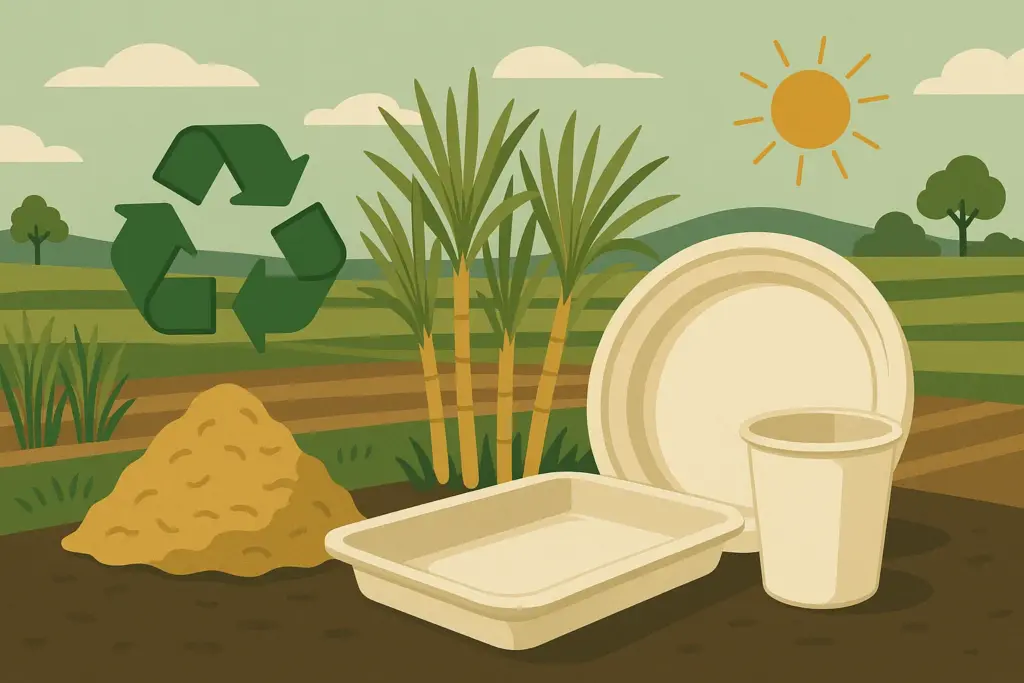
Bagasse plates are made from sugarcane fiber, a natural byproduct of sugar production. After sugarcane juice is extracted, the remaining fiber can be processed into strong and compostable tableware.
Bagasse plates have become one of the most popular choices for serving Indian food because they combine durability with sustainability.
Why Bagasse Plates Work Best for Indian Food
Among all disposable plate materials, bagasse plates are particularly well suited for Indian cuisine.
Strong and Durable
Bagasse plates have a dense fiber structure that gives them excellent strength. They can comfortably hold full meals that include rice, curries, breads, and other items without bending or collapsing.
This strength makes them ideal for catering services and events where large numbers of meals are served.
Handles Hot and Oily Foods
Indian dishes are often served hot and contain oils or gravies. Bagasse plates perform well in these conditions and maintain their shape even when exposed to heat and moisture.
This makes them reliable for serving traditional meals such as biryani, dal, paneer dishes, and vegetable curries.
Compartment Options for Complete Meals
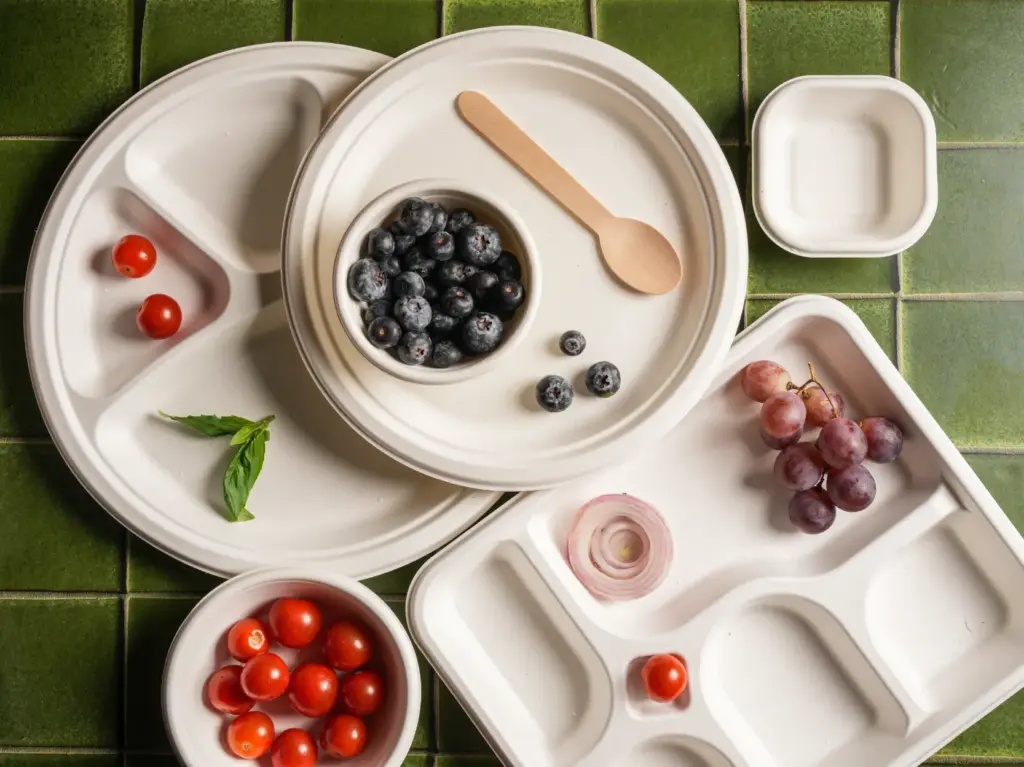
Many bagasse plates are available in compartment designs that allow different food items to be served separately.
This is particularly useful for Indian meals where rice, sabzi, dal, and accompaniments need to be organized neatly on a single plate.
Compartment plates also improve presentation and portion control during large catering events.
Eco Friendly and Compostable
One of the biggest advantages of bagasse plates is their environmental benefit. Since they are made from natural sugarcane fiber, they are compostable and break down naturally after disposal.
This helps reduce landfill waste and supports sustainable food service practices.
For businesses that want to reduce their environmental footprint, bagasse plates offer a responsible alternative to plastic or thermocol.
Increasing Demand in Catering and Food Delivery
The demand for bagasse plates in India has grown significantly in recent years. Catering companies, restaurants, and food delivery businesses are increasingly adopting compostable tableware.
Corporate events, weddings, and large gatherings are also shifting toward eco-friendly serving solutions. This change reflects both environmental awareness and customer expectations for responsible business practices.
Bagasse plates are now commonly used in corporate cafeterias, training programs, festivals, and large catering events where hundreds or thousands of meals may be served.
Choosing High Quality Bagasse Plates
Not all bagasse plates are manufactured to the same quality standards. Businesses should consider a few important factors when selecting bagasse tableware.
The plates should have sufficient thickness and strength.
They should maintain structure under hot food.
They should have consistent manufacturing quality.
They should be produced using food-safe processes.
Working with a reliable manufacturer ensures that the tableware performs well during real food service conditions.
Pulpcraft Bagasse Plates for Indian Food Service
Pulpcraft manufactures high-quality bagasse tableware designed specifically for demanding food service environments. Using natural sugarcane fiber, Pulpcraft produces strong and reliable disposable plates that can easily handle full Indian meals.
The Pulpcraft range includes bagasse plates, compartment plates, meal trays, bowls, and food containers that are suitable for restaurants, caterers, cloud kitchens, and large corporate events.
These products are designed to support both operational efficiency and sustainable food service practices. Their sturdy construction ensures that meals remain secure and presentable, while the compostable material helps businesses reduce their environmental impact.
For catering companies and food businesses serving Indian cuisine, Pulpcraft bagasse plates offer a practical solution that balances performance, hygiene, and environmental responsibility.
The Future of Disposable Tableware in India
As environmental awareness continues to grow, the food service industry is gradually moving away from plastic and thermocol disposable plates.
Sustainable materials such as bagasse are becoming the preferred choice for businesses that want reliable performance without compromising environmental responsibility.
For serving Indian food, bagasse plates provide the strength needed for traditional meals while supporting eco-friendly dining practices.
Choosing the right disposable plate material is about building a responsible and sustainable food service system for the future.