If you have decided to move away from plastic and thermocol, the choice in India usually comes down to two natural options: sugarcane bagasse plates and areca (palm) leaf plates. Both are biodegradable and compostable, but they behave very differently in a busy kitchen. This guide compares them on the things that actually matter when you are serving Indian food at scale.
What are bagasse plates?
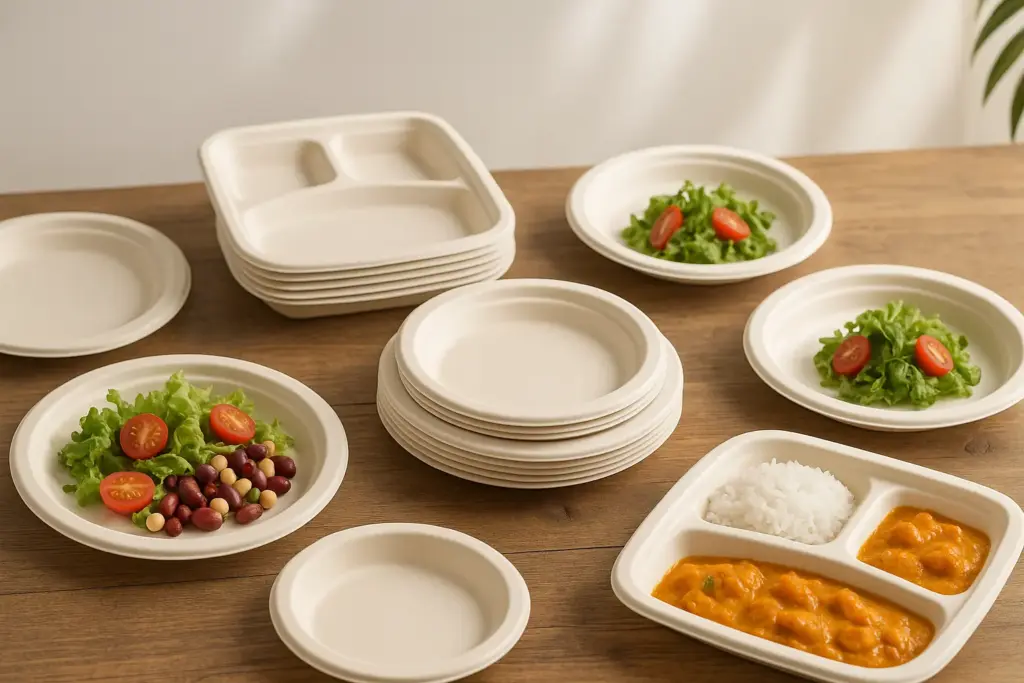
Bagasse is the fibrous pulp left over after sugarcane is crushed for juice. That waste fibre is moulded under heat and pressure into plates, bowls and trays. The result is a smooth, sturdy, off-white plate that is microwave-safe, freezer-safe and breaks down in a compost setting within a few months.
What are areca leaf plates?
Areca plates are made from the naturally shed leaf sheaths of the areca (betel nut) palm. The sheaths are cleaned, heat-pressed into shape and trimmed. Each plate has a distinctive wood-grain look and no two are exactly alike, which makes them popular for weddings and premium catering.
Bagasse vs areca leaf: side by side
| Factor | Bagasse | Areca Leaf |
|---|---|---|
| Raw material | Sugarcane pulp (sugar by-product) | Fallen areca palm leaf sheaths |
| Look and feel | Uniform, smooth, off-white | Natural wood-grain, every piece unique |
| Strength with gravy | Excellent, holds liquids and oil well | Good, but thinner sheaths can warp with very watery curries |
| Heat tolerance | Microwave and oven friendly to moderate temperatures | Handles hot food well, can be oven-warmed briefly |
| Consistency of size | Highly consistent (machine-moulded) | Varies leaf to leaf |
| Cost at volume | Lower and more predictable | Often higher, depends on leaf supply |
| Supply reliability | Steady, year-round factory output | Seasonal, tied to leaf availability |
| Compostable | Yes, 30 to 90 days in composting | Yes, similar timeframe |
Which one should you choose?
For high-volume, cost-sensitive operations such as cloud kitchens, QSR chains, canteens and catering, bagasse is usually the more practical pick. It is cheaper per piece, sizes are perfectly consistent so packaging and stacking are predictable, and supply does not dip with the seasons. Its moulded walls also handle gravies, sambar and oily food without leaking.
Areca leaf shines where presentation is the priority. The natural grain looks premium on a wedding or event table, and many customers love that each plate is one of a kind. The trade-offs are higher and less stable pricing, size variation, and supply that depends on the leaf-shedding season.
Cost and supply: the practical difference
For any business buying in volume, price and availability matter as much as performance. Bagasse plates are produced in factories all year round, so pricing is lower and stays predictable, and large repeat orders are easy to secure. Areca leaf supply is tied to the natural leaf-shedding season of the areca palm, which means availability and price can swing through the year and very large, consistent volumes are harder to lock in.
If you run a cloud kitchen, canteen, QSR chain or catering operation that needs the same plate, in the same size, week after week, that steadiness is a real advantage for bagasse.
Which is better for Indian food?
Indian meals are demanding on disposable plates. Gravies, sambar, dal, chutneys and oily snacks all test how well a plate holds liquid without going soft. Bagasse plates are moulded with solid walls and rims, so they contain curry and oil comfortably for the length of a meal. Areca leaf is sturdy too, but the thinner natural sheaths can warp with very watery dishes left sitting for a while.
Bagasse also wins on portion consistency. Because plates are machine-moulded, every plate is the same size and depth, which makes thali-style serving, stacking and packaging predictable. Areca plates vary leaf to leaf, which is part of their charm but less convenient for standardised service.
Sustainability: both win, but differently
Both materials are fully biodegradable and compostable, and both are far better for the planet than plastic or thermocol. The difference is in the story. Bagasse uses the fibre left over after sugarcane is crushed for juice, so it turns an existing waste stream into useful products without growing anything new. Areca plates use leaf sheaths that the palm sheds naturally, so no tree is cut to make them. Whichever you choose, you are keeping plastic and thermocol out of landfills and waterways.
Look, feel and presentation
Presentation is the one area where areca leaf has a genuine edge. Each areca plate carries a natural wood-grain texture, and because every leaf is different, no two plates look exactly alike. That handcrafted, earthy appearance photographs beautifully and feels premium on a wedding buffet or a curated event table.
Bagasse takes the opposite approach. Its clean, uniform off-white finish is neutral and professional, which is exactly what most foodservice operations want. It does not compete with your food or your branding, it stacks neatly, and it looks consistent across thousands of plates. For everyday service, that uniformity is a feature rather than a limitation.
What to check before you buy
Quality varies a lot within both categories, and a cheap version of either material can disappoint. Before you commit to a supplier, run through this checklist:
- Thickness and rigidity: pick up a sample, load it, and see whether it stays firm. Thin, flimsy plates of either type will fail with wet food.
- Food-grade assurance: confirm the plates are food-grade and free from added plastic lining or harmful coatings.
- Finish and consistency: bagasse should have a smooth, even surface with no weak spots; areca should be cleanly finished, properly dried and free from cracks or mould.
- Supply and lead time: check whether the supplier can hold your sizes and volumes consistently, which is where bagasse usually has the advantage.
- Compostability claims: both should compost fully, so ask for the basis of any green claims.
A quick verdict
If you boil it down, bagasse wins on cost, supply reliability, size consistency and liquid resistance, which makes it the better everyday workhorse for restaurants, cloud kitchens, canteens and caterers. Areca leaf wins on natural premium looks and uniqueness, which makes it ideal for weddings, premium events and brands that want a rustic, handcrafted feel. Both win decisively over plastic and thermocol on sustainability.
The bottom line
If your real question is which material to use for Indian food in general, see our wider guide to the best disposable plates for Indian food. Both bagasse and areca beat plastic and thermocol comfortably. If you need dependable strength, consistent sizing and a lower, steadier cost for everyday foodservice, bagasse is the safer workhorse. If you are styling a premium event and want a natural, rustic look, areca leaf is hard to match. Many businesses use bagasse for daily operations and keep areca leaf for special occasions.
Frequently Asked Questions
Are bagasse plates stronger than areca leaf plates?
For wet and oily Indian food, bagasse generally holds up better because its moulded walls resist sogginess and leaks. Areca leaf is sturdy too, but thinner sheaths can warp under very watery dishes.
Is bagasse cheaper than areca leaf?
Usually yes, and more importantly the price is steadier because bagasse is produced year-round in factories, while areca leaf supply is seasonal.
Are both compostable?
Yes. Both are fully biodegradable and compost in roughly 30 to 90 days under composting conditions, unlike plastic or thermocol.
Which lasts longer with wet food, bagasse or areca leaf?
For watery, gravy-heavy Indian food, bagasse generally holds up longer because its moulded walls resist sogginess. Areca leaf is strong but thinner sheaths can warp under very wet dishes left standing.
Can you microwave both bagasse and areca leaf plates?
Bagasse is reliably microwave-safe. Areca leaf can usually handle brief warming, but it is best checked per product, since bagasse is the more consistent performer for reheating.
Which is better for weddings, bagasse or areca leaf?
Areca leaf has a natural, premium wood-grain look that many people love for weddings and events. Bagasse is the more practical, lower-cost choice for everyday and high-volume catering.
How long do bagasse and areca leaf plates take to decompose?
Both compost in roughly 30 to 90 days under proper composting conditions, far faster than plastic or thermocol, which can persist for decades or longer.
Which is better for restaurants and cloud kitchens?
Bagasse, in most cases. Its lower cost, consistent sizing and strong resistance to gravy and oil suit high-volume, repeat foodservice better than seasonal, variable areca leaf.