A practical guide to hosting a potluck in an Indian home: how to divide the menu so nobody brings a third biryani, what to actually bring, and how to serve twenty people without a mountain of washing up.
The short version
A potluck works when one person owns the menu grid and everyone else fills a slot. Assign categories, not dishes. Count on one main per four guests, keep the host’s kitchen free for reheating rather than cooking, and sort out serving ware before anyone arrives, because the plates and bowls are the thing every first-time host forgets.
Who this is for: anyone hosting eight to thirty people in a flat, on a terrace, or in a society clubhouse. Housewarmings, Diwali get-togethers, cricket finals, birthdays, Sunday lunches that got out of hand.
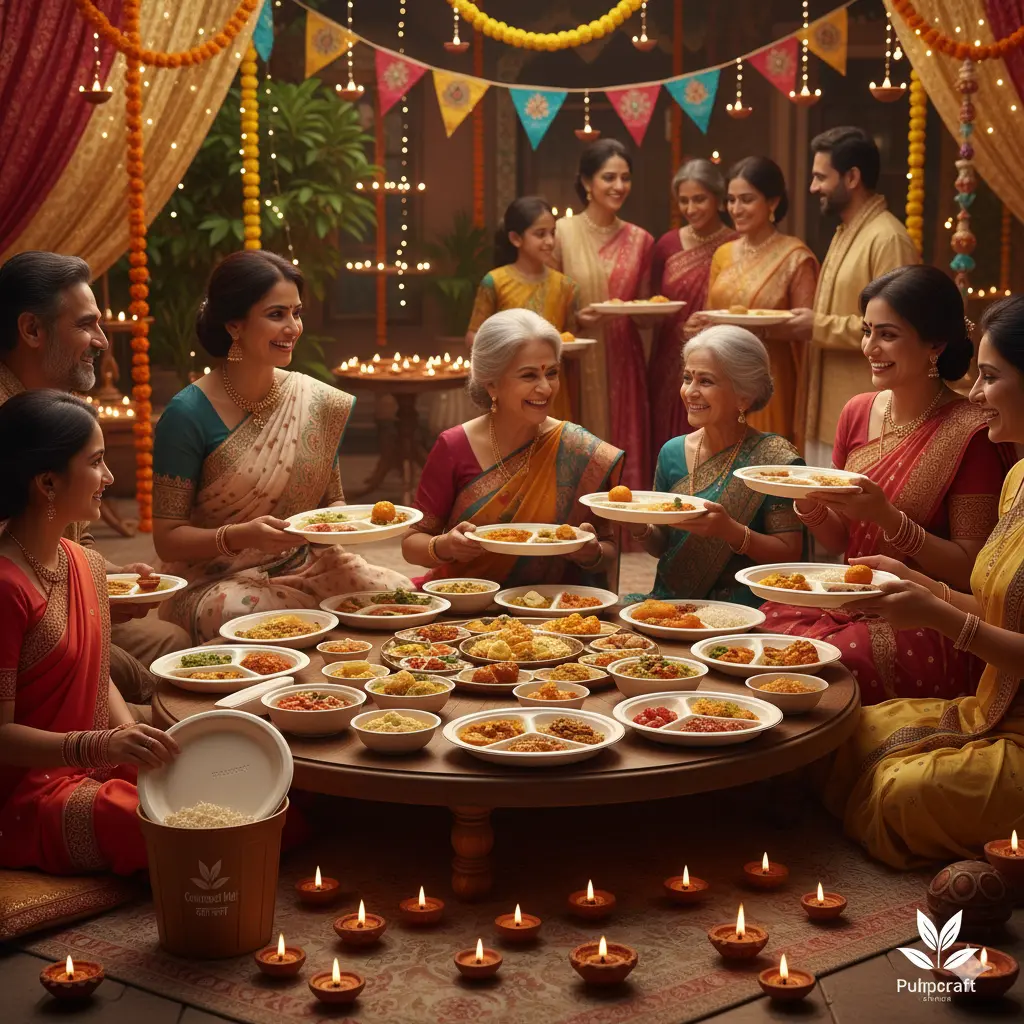
Potlucks are how most young Indian households now entertain. Rent is high, kitchens are small, and nobody in a 2BHK wants to cook for eighteen people alone. So the load gets split. Everyone brings one thing, the host provides the space, and the evening costs a fraction of a restaurant booking. The problem is that an unplanned potluck produces four dals, two biryanis, no dessert, and a host doing dishes until one in the morning. The fix is a plan you can send on WhatsApp.
How far ahead should you plan a potluck?
Short answer: Two weeks for the invite, one week for the menu grid, three days for the final headcount, and the day before for everything you serve on.
Indian RSVPs move late. Send the invite two weeks out and expect half the answers in the last 48 hours. Lock the menu grid a week ahead so people can shop over the weekend. Ask for a hard headcount three days before, and add a 10% buffer for the cousins and flatmates who materialise on the night.
The day before is for the half nobody plans: serving spoons, ice, extra chairs, and enough plates, bowls and cutlery for everyone twice over. Guests bring the food, and the host supplies everything the food touches.
How do you split the menu so you don’t get four dals?
Short answer: Assign categories, not dishes. Send a grid with named slots and let people claim one.
Asking “what are you bringing?” in an open group chat is what produces the four dals. Everyone answers at once, three people say paneer, and nobody says dessert. Post a grid with fixed slots instead and let guests claim them.
A menu grid that works for 16 to 20 people:
| Slot | How many | Examples |
|---|---|---|
| Mains, veg | 2 | Chole, rajma, paneer butter masala, veg pulao |
| Mains, non-veg | 1 to 2 | Chicken curry, mutton biryani, fish fry |
| Rice or biryani | 1 | Jeera rice, veg biryani, curd rice |
| Breads | 1 person, bought | Rotis, naan, pav from a bakery |
| Dry sabzi or salad | 2 | Aloo gobi, bhindi, kachumber, sprouts salad |
| Starters | 2 | Kebabs, tikka, cutlets, dhokla |
| Chaat or snack | 1 | Bhel, samosa, papdi chaat components |
| Raita, pickle, papad | 1 | Boondi raita, achaar, roasted papad |
| Dessert | 2 | Gulab jamun, halwa, cheesecake, ice cream |
| Drinks | 1 to 2 | Nimbu pani, jaljeera, buttermilk, soft drinks |
| Serving ware | Host | Plates, bowls, cutlery, cups |
Two rules make the grid hold. One dish per person or per couple, so nobody overcommits and cancels. And the host takes the least glamorous slot, which is usually rice, breads and everything people eat off.
What should you bring to a potluck?
Short answer: Something that tastes good at room temperature, travels without leaking, and needs nothing from the host’s kitchen.
The best potluck dish is the one that survives an auto ride and a two-hour wait on a table, which is rarely the most impressive one.
- Travels well: biryani, pulao, chole, rajma, dry sabzis, kebabs, cutlets, salads, halwa, ladoos, cheesecake.
- Travels badly: anything deep-fried that needs to stay crisp, dosa, poori, soufflé, anything that has to come straight off the flame.
- Bring it hot or bring it ready: transport in a casserole or an insulated bag. If it needs reheating, ask the host first, because one microwave and nine dishes is how dinner runs ninety minutes late.
- Bring your own serving spoon. Hosts run out of these before they run out of anything else.
- Label it. A strip of tape with the dish name and “veg” or “non-veg” saves twenty questions and keeps mutton out of a vegetarian’s plate.
Vegetarian, Jain and no-onion-no-garlic guests are common enough at an Indian table that they should be handled in the grid, not improvised at the door. Ask on the invite, then assign one or two dishes to cover it.
How much food do you actually need?
Short answer: One main per four guests, 150 to 200 g of rice or two to three rotis per head, and two desserts for the whole party.
Potlucks almost always over-cater, because everyone privately assumes their dish is the one that will run out. Some working numbers for 20 guests:
| Item | For 20 guests |
|---|---|
| Mains (curries, sabzis) | 4 to 5 dishes, roughly 1.5 kg each |
| Rice or biryani | 3 to 4 kg cooked |
| Rotis or breads | 40 to 50 |
| Starters | 3 to 4 pieces per person |
| Dessert | 2 dishes, 20 to 25 portions |
| Drinks | 500 ml per person, more in summer |
| Plates | 40 (two per guest) |
| Bowls | 40 (curry and dessert) |
| Cutlery sets | 30 |
Guests take a fresh plate for dessert, and anyone going back for seconds picks up a clean one. Budget two per head and you will not be washing up mid-party.
How do you set up the table so twenty people can serve themselves?
Short answer: One-way flow, plates at the start, desserts on a separate surface.
Set the table so guests move in one direction and never double back:
- Plates and cutlery at the head of the table.
- Rice and breads next, because they take the most plate space.
- Mains, veg first, non-veg after, each with its own serving spoon.
- Raita, salad, pickle, papad at the end.
- Desserts and drinks on a different table entirely, ideally in another part of the room.
Splitting the desserts off keeps the queue moving. If sweets sit at the end of the main table, everyone stands still deciding, and the line stops behind them.
Two more things. Keep veg and non-veg dishes physically separated with their own spoons, which is non-negotiable at most Indian gatherings. And put a labelled bin and a compost or wet-waste bag where people can see them, or every surface in the flat becomes a plate rest.
What do you serve a potluck on?
Short answer: Disposable plates, bowls and cutlery, in enough quantity, chosen so they can hold a curry for an hour without going soft.
Ten people share out the food. Nobody is assigned the serving ware, and the host discovers at 7 pm that the flat has eleven plates.
The three routes:
- Your own crockery. Fine up to about eight guests. Beyond that you do not own enough, and you spend the evening washing up instead of eating.
- Thin plastic or thermocol disposables. Cheap, and they buckle under rajma. They also go to landfill, and several Indian states now restrict single-use plastic cutlery and thermocol outright.
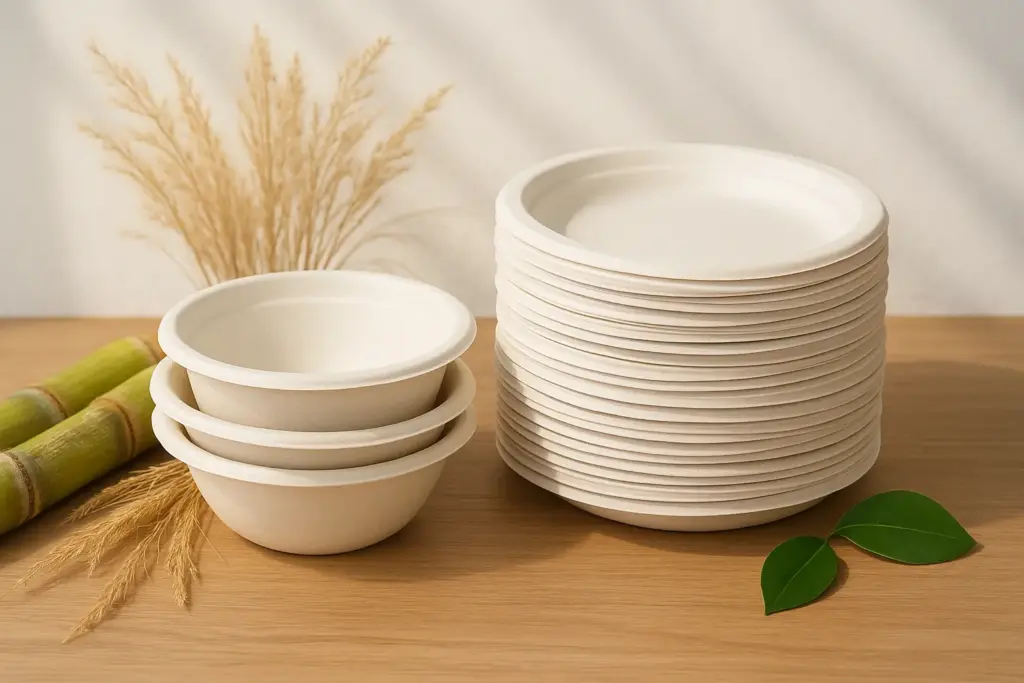
- Moulded natural-fibre disposables. Bagasse plates and bowls, made from the sugarcane fibre left after juice extraction. Rigid enough for gravy, oil and heat, and compostable afterwards.
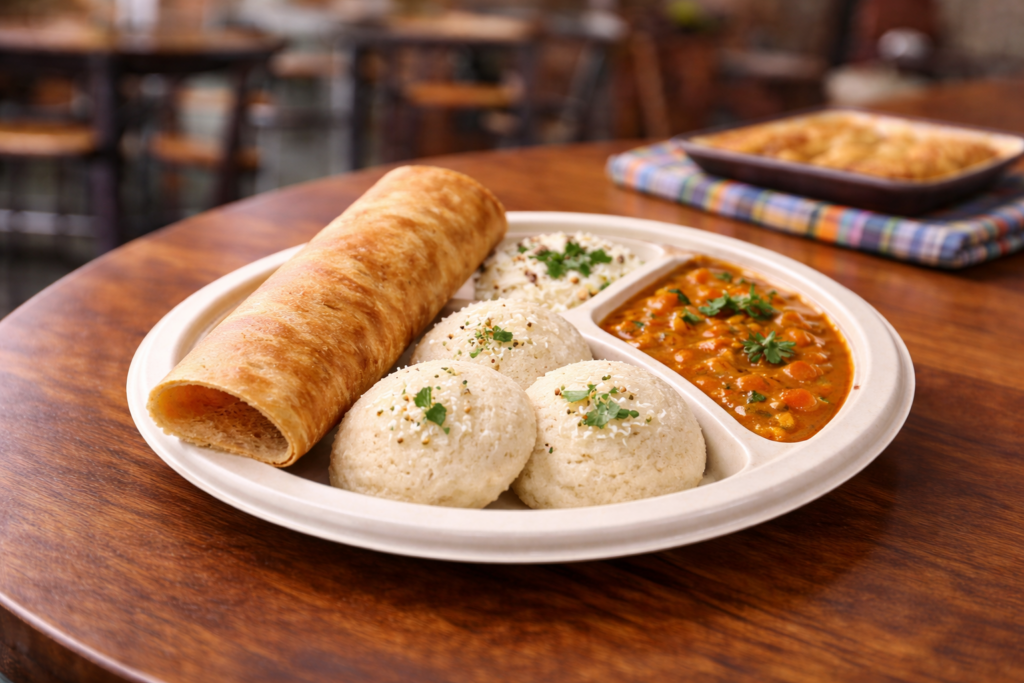
For a potluck specifically, three things matter: compartments, depth and rigidity. A partitioned plate keeps dal out of the halwa. Deep bowls hold curry, raita and dessert, and they are the item hosts under-buy most often. And the plate has to stay rigid under hot, oily food for an hour, which is where the very cheap options fail.
Pulpcraft’s bagasse plates come in partitioned and round formats with deep bowls and cutlery to match, in bulk packs sized for exactly this kind of gathering. They handle hot Indian food without going limp, and they go into the wet-waste or compost bin at the end of the night instead of the landfill. If you are weighing them against the alternatives, our comparison of bagasse and areca leaf plates covers the differences, and the guide to biodegradable tableware for events covers larger functions.
How do you handle the cleanup?
Short answer: Set up the bins before guests arrive, and do the sorting as you go rather than at midnight.
Cleanup is what makes people reluctant to host twice. Three bins, labelled, visible from the food table:
- Wet waste and compostables: food scraps, bagasse plates, bowls, cutlery, paper napkins.
- Dry recyclables: bottles, cans, clean packaging.
- Everything else: cling film, foil, plastic wrappers.
Ask guests to scrape and drop as they finish. Keep a stack of clean containers so people can take leftovers home, which solves the fridge problem and the “please take some” negotiation at the door at once. And accept help when the two people who always offer, offer.
If you are running a series of these, or a bigger society function, buying serving ware in bulk once is cheaper per head than restocking before every event, and it removes the 7 pm panic permanently.
Where Pulpcraft comes in
Short answer: We manufacture the plates, bowls and trays, in the compartment sizes a potluck actually needs, and supply them in bulk across India.
Pulpcraft moulds tableware from bagasse, the fibrous pulp left after sugarcane is crushed for juice. Three items from the range do most of the work at a potluck. The 3-compartment 10 inch and 4-compartment 11 and 12 inch plates keep dal, rice and sabzi from running into each other, which is the reason thali-style trays exist in the first place. The 6 and 7 inch deep round plates and bowls hold curry, raita and dessert without flexing when they are full. And because the moulded fibre is dense and carries no plastic lining, it holds gravy and oil for the length of a meal instead of going soft under rajma.
The plates are microwave, freezer and oven friendly, so leftovers go into the fridge on the same plate they were served on. They compost in roughly 30 to 90 days. Our manufacturing carries ISO 9001, ISO 14001, ISO 45001 and ISO 22000 certification along with SGS food safety and Sedex compliance. A society committee or a caterer will want that list; a dinner for twelve will not, but the same plate turns up in both. If you want the detail on heat, our post on whether bagasse plates are microwave safe covers the testing.
We supply households, caterers, cloud kitchens, event companies and society committees across India, and export to 18 countries. Browse the range or ask us for a quote with your headcount and we will tell you what to order.
A potluck planning timeline
| When | What |
|---|---|
| 2 weeks out | Send the invite, ask for dietary restrictions |
| 1 week out | Post the menu grid, let people claim slots |
| 3 days out | Confirm headcount, fill empty slots yourself |
| 1 day out | Buy plates, bowls, cutlery, cups, ice, serving spoons; set up bins |
| Morning of | Clear fridge space, cook your own slot, arrange tables |
| 1 hour before | Lay out the serving line, label veg and non-veg |
| As guests arrive | Take dishes straight to the table, hand out plates |
Frequently asked questions
What is a good dish to bring to an Indian potluck if I cannot cook?
Bought is fine and nobody minds. Take the breads slot and bring pav or rotis from a good bakery, or bring dessert, drinks and ice. Those slots are always the last to be claimed.
How many dishes should one person bring to a potluck?
One, in a quantity that serves the full headcount as a portion. Two half-sized dishes from one person is how you end up with a table of tasting samples and no dinner.
How do you keep food warm at a potluck?
Casseroles and insulated carriers do most of the work. For anything that has to stay hot for hours, a slow cooker or an electric warming tray on the serving table beats reheating in batches.
How many plates do I need for 20 guests?
Around 40 plates, 40 bowls and 30 cutlery sets. Two plates per guest covers dessert and second helpings without washing up mid-party.
Are bagasse plates strong enough for curry and gravy?
Yes. Moulded sugarcane fibre is rigid and resists oil and moisture far better than thin plastic or thermocol, which is why caterers use it for hot Indian food.
The bottom line
A good potluck is an organising problem. Divide the menu into slots, ask for one dish per person, over-order the plates and bowls, split the desserts onto their own table, and put the bins out before anyone arrives. The host who does all five gets to sit down and eat.
Hosting a big one? Pulpcraft supplies bagasse plates, bowls, trays and cutlery in bulk, sugarcane-fibre tableware that holds hot Indian food and composts afterwards. Get in touch for wholesale pricing and samples.