Cloud kitchens operate differently from traditional restaurants. There is no dine-in buffer, no second impression, and no chance to correct mistakes once the food leaves the kitchen. Packaging becomes part of the product. That’s why choosing the right bagasse plates and sugarcane plates is not a minor operational detail—it directly affects customer experience.
Many cloud kitchens exploring biodegradable plates and eco friendly disposable plates hesitate before switching from plastic. The concern is practical: will these plates handle hot food, oily gravies, stacking pressure, and delivery stress?
When selected correctly, sugarcane bagasse plates and high-quality bagasse tableware are well suited for cloud kitchen operations. The key is knowing what to evaluate before placing bulk orders.
Why Cloud Kitchens Need Different Packaging Standards
Unlike dine-in restaurants, cloud kitchens depend entirely on delivery performance. Food may travel 20 to 40 minutes before reaching the customer. During that time, plates are exposed to:
- Heat retention
- Steam buildup
- Oil and liquid pressure
- Stacking inside delivery bags
- Handling by riders
Low-quality eco friendly plates often fail under these conditions. Softening, bending, or leakage during transit can quickly lead to negative reviews.
This is why material selection matters more for cloud kitchens than for most other formats.
Strength and Rigidity: The First Check
When evaluating sugarcane plates, test their structural strength first. A good plate should:
- Maintain shape when loaded with heavy portions
- Resist bending at the edges
- Feel balanced when held with one hand
Cloud kitchens cannot afford packaging that needs reinforcement. Strong bagasse plates reduce the need for double plating, which saves both cost and time.
Heat and Oil Resistance for Delivery
Cloud kitchen menus often include curries, gravies, rice bowls, fried items, and sauces. These foods stress packaging.
High-quality sugarcane bagasse plates are made from compressed natural fibres that resist oil seepage and hold shape under heat. Before choosing a supplier, test plates with:
- Hot gravies
- Oily dishes
- Steamed food
Leave the food on the plate for at least 20 minutes to simulate delivery time. Reliable biodegradable disposable plates should not soften or leak during that period.
Stackability and Storage Efficiency
Space management is critical in cloud kitchens. Plates need to stack efficiently without sticking together or cracking.
Good bagasse tableware offers:
- Uniform thickness
- Clean moulded edges
- Easy stacking without damage
When buying disposable plates wholesale, consistency across batches ensures that storage and usage patterns remain predictable.
Matching Plate Design to Menu Format
Cloud kitchens often serve combination meals, rice bowls, or multi-item orders. Choosing the right plate format improves delivery presentation.
Options to consider include:
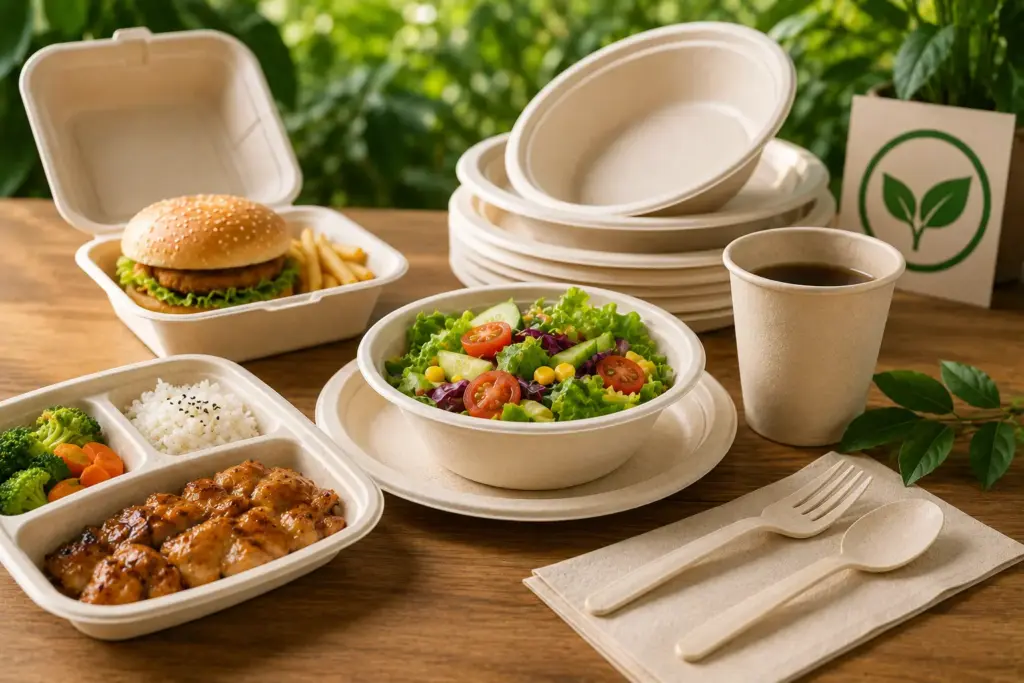
- Compartment sugarcane plates for mixed meals
- Deeper plates for gravy-heavy dishes
- Larger plates for premium portions
Not all biodegradable plates are designed for every menu type. Matching plate design to food format prevents spills and enhances customer satisfaction.
Consistency at Scale
Many cloud kitchens operate across multiple locations. Standardisation becomes essential.
Reliable sugarcane bagasse tableware ensures that every outlet uses plates with the same thickness, strength, and finish. This prevents operational inconsistencies and protects brand image.
For businesses sourcing disposable plates wholesale, supplier stability is as important as product quality. Sudden variations in thickness or fibre density can disrupt service during peak demand.
Customer Perception in a Delivery-First Model
In a cloud kitchen, the plate is one of the first physical touchpoints a customer interacts with. A flimsy or leaking plate immediately affects perception, regardless of food quality.
Sturdy eco friendly disposable plates made from bagasse communicate care and attention to detail. Customers may not consciously analyse the material, but they notice reliability.
Good packaging reduces the risk of poor reviews related to spills or mess during transit.
Cost vs Operational Value
While bagasse plates may cost slightly more than low-grade plastic or paper options, cloud kitchens must consider total operational cost.
Packaging failures lead to:
- Refunds and replacements
- Negative ratings
- Wasted food
- Staff time spent resolving issues
When evaluated against these risks, high-quality sugarcane plates often deliver better overall value.
Final Thoughts
Choosing sugarcane plates for cloud kitchens is about protecting delivery performance, brand reputation, and operational efficiency.
Well-manufactured bagasse plates, biodegradable disposable plates, and eco friendly plates integrate into cloud kitchen workflows when selected carefully. The focus should always be on strength, oil resistance, consistency, and supplier reliability.
In delivery-driven food businesses, packaging is not background detail. It is part of the experience. Choosing Pulpcraft’s bagasse plates ensures that the experience arrives intact—every time.