Why Your Corporate Events Need Sustainable Tableware and Cutlery
Choosing the right tableware for company events and cutlery for company events is no longer just about convenience. It is a direct reflection of your brand values, your environmental commitments, and the impression you leave on every employee, client, and stakeholder who attends. A single 500-person corporate gathering can generate over 5,000 single-use plastic items, most of which persist in landfills for 500 years or more. Switching to bagasse, a compostable material made from sugarcane fibre, lets you host a zero-waste celebration without sacrificing durability, aesthetics, or food safety.
This guide walks you through everything you need to know about eco-friendly tableware for company events, from understanding what bagasse is and how it compares to plastic, to a step-by-step switching plan, cost analysis, and a downloadable zero-waste event checklist. If you are an event planner, office manager, or CSR lead looking for sustainable event tableware, this is the only resource you need.
What Is Bagasse and Why Does It Work for Corporate Events?
From Sugarcane Waste to Premium Tableware
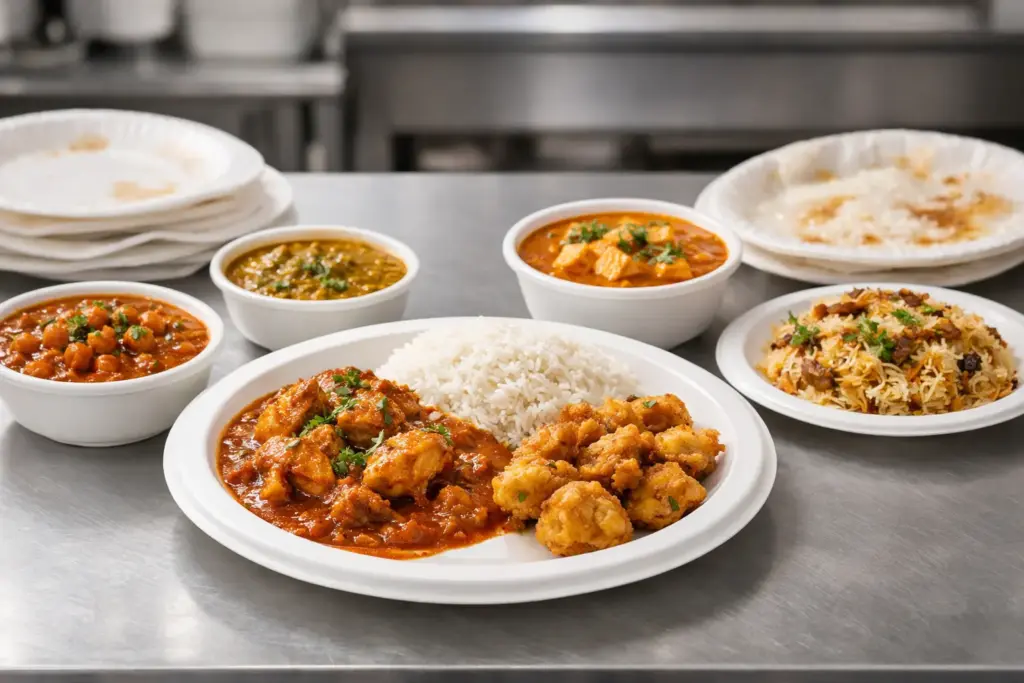
Bagasse is the dry, fibrous pulp that remains after sugarcane stalks are crushed to extract juice. Historically treated as agricultural waste, it is now heat-pressed into plates, bowls, clamshells, and trays. No synthetic binders, bleaches, or plastic coatings are required. The result is a material that is 100% compostable, typically breaking down in 60 to 90 days under commercial composting conditions.
For corporate events, bagasse delivers a clean, modern appearance that rivals traditional dinnerware. The neutral white finish photographs well, handles branding easily, and suits everything from formal galas to casual team lunches.
Key Properties Event Planners Should Know
- Heat-resistant: Bagasse tableware handles temperatures up to 120 degrees Celsius, so it is safe for hot soups, curries, and grilled items.
- Leak-proof and oil-resistant: No soggy plates, even with saucy or oily dishes commonly served at corporate buffets.
- Microwave-safe: Staff can reheat meals without transferring food to another container.
- Non-toxic and PFAS-free: Free from BPA, phthalates, and harmful forever chemicals found in many conventional disposables.
- Compostable in 60 to 90 days: Returns to organic matter instead of sitting in a landfill for centuries.
Tableware and Cutlery for Company Events: The Complete Bagasse Range
Plates and Bowls
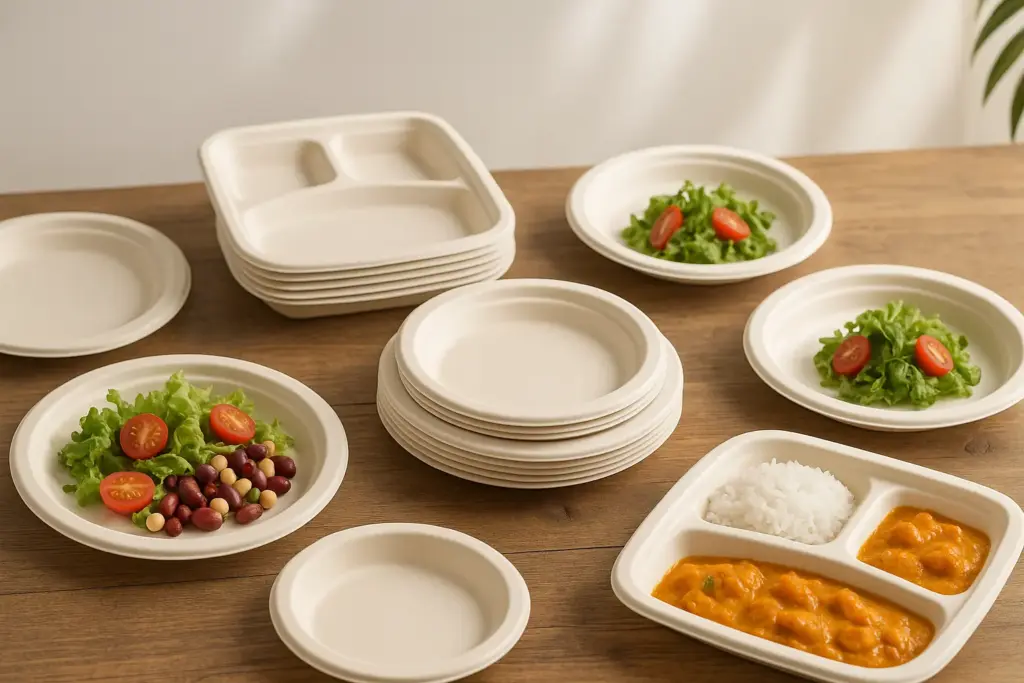
Bagasse plates come in round and compartmentalised formats, ranging from 6-inch dessert plates to 10-inch dinner plates. Bowls are available in 12 oz to 32 oz sizes, suitable for soups, salads, and rice dishes. For large corporate events, compartment plates simplify buffet service and reduce the total number of items each guest needs.
Cutlery for Company Events: Eco-Friendly Forks, Knives, and Spoons
While bagasse is ideal for plates and containers, cutlery for company events is typically produced from complementary compostable materials such as CPLA (crystallised polylactic acid), birchwood, or bamboo. CPLA cutlery withstands heat up to 85 degrees Celsius and has the weight and rigidity of traditional plastic. Birchwood cutlery offers a natural, rustic aesthetic that pairs beautifully with bagasse plates at outdoor company picnics and team-building events.
When sourcing biodegradable cutlery for corporate events, look for sets that include forks, knives, spoons, and sometimes stirrers or chopsticks, all wrapped in compostable packaging rather than individual plastic sleeves.
Drinkware, Clamshells, and Serving Trays
Complete your plastic-free corporate event supplies with bagasse clamshell containers for takeaway portions, PLA-lined cups for hot and cold beverages, and moulded fibre serving trays. Custom branding with your company logo is available on most bagasse products through food-safe soy-based ink printing, turning every plate into a subtle sustainability message.
Bagasse vs. Plastic vs. Paper: A Comparison for Event Planners
Choosing tableware for company events requires balancing performance, cost, and environmental impact. The comparison below clarifies where bagasse stands relative to traditional options.
- Material: Plastic (Polystyrene) / Decomposition: 500+ years / Microwave-safe: No / Oil-resistant: Moderate / Compostable: No / Cost per plate: $0.03 to $0.06
- Material: Paper (coated) / Decomposition: 2 to 5 years (coating slows process) / Microwave-safe: Limited / Oil-resistant: Low / Compostable: Partially / Cost per plate: $0.04 to $0.08
- Material: Bagasse (sugarcane) / Decomposition: 60 to 90 days / Microwave-safe: Yes / Oil-resistant: High / Compostable: 100% / Cost per plate: $0.05 to $0.10
- Material: Palm Leaf / Decomposition: 60 to 90 days / Microwave-safe: Yes / Oil-resistant: High / Compostable: 100% / Cost per plate: $0.12 to $0.25
Bagasse occupies the sweet spot. It costs only marginally more than plastic, decomposes in a fraction of the time, and outperforms paper on every functional metric. For corporate procurement teams evaluating compostable plates for company events, bagasse delivers the best combination of affordability and sustainability at scale.
Step-by-Step Guide: How to Switch Your Corporate Events to Bagasse Tableware
Step 1: Audit Your Current Event Waste
Before your next company event, document every disposable item used: plates, bowls, cups, cutlery, napkins, and food containers. Weigh the total waste generated. This baseline gives you a measurable starting point and a compelling before-and-after story for internal communications.
Step 2: Estimate Quantities by Event Size
A reliable planning formula for a standard corporate buffet is 2 to 3 plates, 1 to 2 bowls, 3 cutlery pieces, and 2 cups per guest. For a 500-person event, that translates to roughly 1,000 to 1,500 bagasse plates, 500 to 1,000 bowls, 1,500 cutlery pieces, and 1,000 cups. Order 10% to 15% extra to account for seconds and spillage.
Step 3: Source Certified Products
Insist on third-party certifications that validate compostability and safety claims. The most respected standards include BPI certification (USA), ASTM D6400, OK Compost (EU), and FDA food-contact compliance. Ask suppliers directly for test reports and confirm their products are PFAS-free. Reputable bagasse manufacturers like PulpCraft provide full documentation.
Step 4: Set Up Composting and Waste Stations
Switching to zero waste corporate event tableware only works if disposal matches the product. Place clearly labelled composting bins alongside general waste and recycling stations. Use signage with images showing which items go where. Partner with a local commercial composting facility to collect bagasse waste after the event.
Step 5: Communicate the Change to Employees and Stakeholders
Send a brief internal announcement explaining why the company is making the switch. Frame it around your CSR commitments and the tangible impact. For example: “By switching to bagasse tableware at our annual company celebration, we eliminated approximately 5,000 plastic items from landfill.” This transparency builds employee pride and reinforces your sustainability culture.
How Bagasse Tableware Supports Your ESG and CSR Strategy
Selecting eco-friendly tableware for company events is a strategic decision as much as an operational one. Sustainability reporting frameworks such as GRI and CDP now expect companies to disclose waste reduction initiatives. Documenting your switch from plastic to bagasse gives your ESG team concrete data points for annual sustainability reports.
Regulatory Compliance Across Markets
India’s nationwide ban on single-use plastics (effective July 2022) prohibits plastic plates, cups, and cutlery at all events. The EU Single-Use Plastics Directive similarly restricts disposable plastic tableware. In the United States, states including California, New York, and Washington have enacted their own bans or surcharges on plastic foodware. Using certified bagasse tableware ensures your corporate events comply with regulations across all operating regions.
The Ripple Effect on Your Supply Chain
When a large organisation switches to sugarcane tableware for corporate events, caterers, venue operators, and event suppliers notice. They begin stocking compostable alternatives to serve your requirements. Over time, this demand ripple normalises sustainable procurement across the entire events industry. Your purchasing decision becomes an industry signal.
Cost Analysis: Is Bagasse Tableware Affordable for Corporate Events?
The most common objection to sustainable event tableware is price. While the per-unit cost of bagasse is roughly 40% to 60% higher than commodity plastic, the total event cost tells a different story.
- Waste disposal savings: Many municipalities charge lower tipping fees for compostable waste compared to general landfill waste. Some composting facilities accept commercial food waste and bagasse at no charge.
- Faster cleanup: When plates, food scraps, and cutlery all go into the same composting stream, sorting time drops significantly. Event staff report 20% to 30% faster post-event cleanup.
- Brand value and PR: A documented zero-waste corporate event generates positive media coverage, social media engagement, and improved employer brand perception, returns that far exceed the marginal cost of bagasse.
- Bulk pricing: Orders above 5,000 units typically unlock volume discounts of 15% to 25%, bringing bagasse pricing close to parity with plastic for large-scale company events.
Zero-Waste Corporate Event Checklist
Use this checklist to ensure your next company celebration achieves maximum sustainability impact.
- Conduct a pre-event waste audit and set a measurable diversion target (e.g., 90% landfill diversion).
- Source BPI-certified or OK Compost-certified bagasse plates, bowls, and clamshells.
- Order compostable CPLA or birchwood cutlery for company events to match your tableware.
- Replace plastic cups with PLA-lined or bagasse drinkware.
- Switch to compostable napkins and eliminate plastic straws.
- Arrange clearly labelled composting, recycling, and landfill stations with visual guides.
- Partner with a local commercial composting facility for post-event collection.
- Brief catering staff on proper waste sorting procedures.
- Communicate sustainability goals to attendees before and during the event.
- Document results: total waste diverted, plastic items eliminated, and compost generated. Share in your next CSR report.
Frequently Asked Questions: Tableware and Cutlery for Company Events
What is bagasse tableware and is it safe for food?
Bagasse tableware is made from the fibrous residue left after sugarcane juice extraction. It is FDA-compliant for food contact, free from BPA and PFAS chemicals, and entirely non-toxic. It is one of the safest disposable tableware options available for serving hot, cold, oily, or acidic foods at corporate events.
How long does bagasse tableware take to decompose?
Under commercial composting conditions, bagasse tableware breaks down fully in 60 to 90 days. In home composting setups, the process may take 90 to 180 days depending on moisture, temperature, and aeration. By contrast, plastic tableware can persist in landfills for over 500 years.
Is bagasse tableware microwave-safe and heat-resistant?
Yes. Bagasse plates and bowls withstand temperatures up to 120 degrees Celsius and are fully microwave-safe. This makes them practical for corporate catering scenarios where reheating is required.
What is the best eco-friendly cutlery for corporate events?
CPLA (crystallised polylactic acid) cutlery is the most popular choice because it closely mimics the feel and strength of plastic while remaining fully compostable. Birchwood and bamboo cutlery are excellent alternatives for events with a natural or rustic theme. All three pair well with bagasse plates.
How much does bagasse tableware cost compared to plastic?
Individual bagasse plates cost approximately $0.05 to $0.10 per unit, compared to $0.03 to $0.06 for plastic. However, bulk orders above 5,000 units reduce the gap significantly, and savings on waste disposal and cleanup labour often offset the difference entirely.
Can bagasse plates handle hot and oily foods?
Absolutely. Bagasse is naturally oil-resistant and leak-proof without requiring plastic coatings. It performs reliably with curries, gravies, fried foods, and saucy dishes commonly served at company buffets.
What certifications should I look for in compostable tableware?
The gold standard certifications are BPI (Biodegradable Products Institute) in North America, ASTM D6400 for compostability, OK Compost for European markets, and FDA compliance for food safety. Always request documentation from your supplier before placing a bulk order.
How do I plan a zero-waste corporate event?
Start with a waste audit, then replace all plastic disposables with certified compostable alternatives: bagasse plates, CPLA cutlery, PLA cups, and compostable napkins. Set up clearly labelled composting stations, partner with a commercial composting service, brief your catering staff, and communicate your goals to attendees. Use the checklist above as your planning framework.
Can bagasse tableware be custom branded with a company logo?
Yes. Most bagasse manufacturers offer custom printing using food-safe, soy-based inks. You can add your company logo, event theme, or a sustainability message directly onto plates, bowls, and clamshells, turning every piece of tableware for company events into a branded touchpoint.
What is the difference between compostable and biodegradable tableware?
Compostable tableware meets specific third-party standards (BPI, ASTM D6400) and breaks down within a defined timeframe under composting conditions. Biodegradable is a broader, less regulated term meaning the material will eventually decompose, but without guarantees on timeline or conditions. For corporate procurement, always choose products labelled compostable with supporting certification.
Make Your Next Corporate Event a Statement for the Planet
Every company event is an opportunity to demonstrate leadership. When you replace plastic plates with bagasse and swap petroleum-based forks for compostable cutlery, you send a clear message to employees, partners, and stakeholders: sustainability is more than a page in your annual report. It is visible in every detail of how you operate.
The switch is simpler than most organisations expect. Bagasse tableware for company events is durable, affordable at scale, and compostable in under 90 days. Paired with the right cutlery for company events, drinkware, and a proper composting setup, you can achieve near-zero waste at your very next corporate gathering. Start with your next team lunch, scale to your annual gala, and document the impact. Your planet, your people, and your brand will all be better for it.