Hotels and Quick Service Restaurant (QSR) chains operate at scale. Every day, they serve thousands of meals, use large volumes of disposable packaging, and generate significant waste. As sustainability moves from being a “nice-to-have” to a business necessity, many hotels and QSR brands are reassessing one critical aspect of their operations — disposable tableware.
Across India and global markets, a clear shift is underway. Hotels and QSR chains are increasingly replacing plastic and thermocol disposables with bagasse tableware, driven by regulatory pressure, consumer expectations, and operational advantages.
This transition is not just about compliance. It is about efficiency, brand perception, and long-term viability.
The Changing Landscape of Hospitality and Food Service
The hospitality and QSR sectors are under constant scrutiny from regulators, customers, and environmental bodies. Rising awareness around plastic pollution has fundamentally changed how diners view packaging and disposables.
Modern consumers now expect:
- Responsible sourcing
- Reduced plastic usage
- Visible sustainability efforts
- Safe, non-toxic food contact materials
For hotels and QSR chains, disposable tableware is no longer invisible. What food is served on matters almost as much as the food itself.
Plastic and Thermocol Are Becoming Operational Liabilities
Plastic plates, bowls, and EPS thermocol trays were once popular for their low cost and convenience. Today, they come with serious drawbacks.
Key Issues with Traditional Disposables
- Regulatory risk: Single-use plastic bans and restrictions continue to expand across India and globally.
- Environmental impact: Plastic waste accumulates in landfills, drains, rivers, and oceans.
- Health concerns: Heating food in plastic or thermocol can release harmful chemicals.
- Negative brand perception: Customers increasingly associate plastic use with irresponsible business practices.
For hotels and QSR chains operating across multiple locations, continuing with plastic disposables creates legal uncertainty and reputational risk.
What Is Bagasse Tableware?
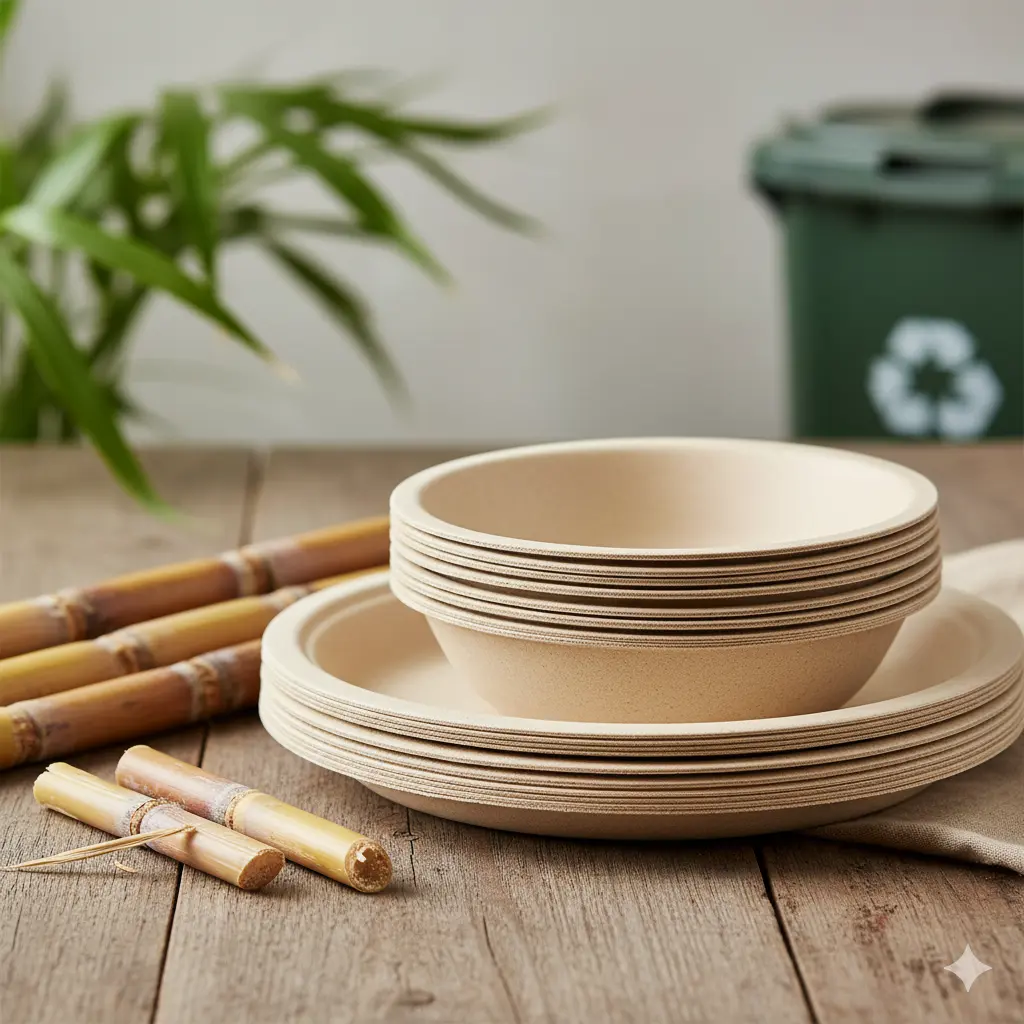
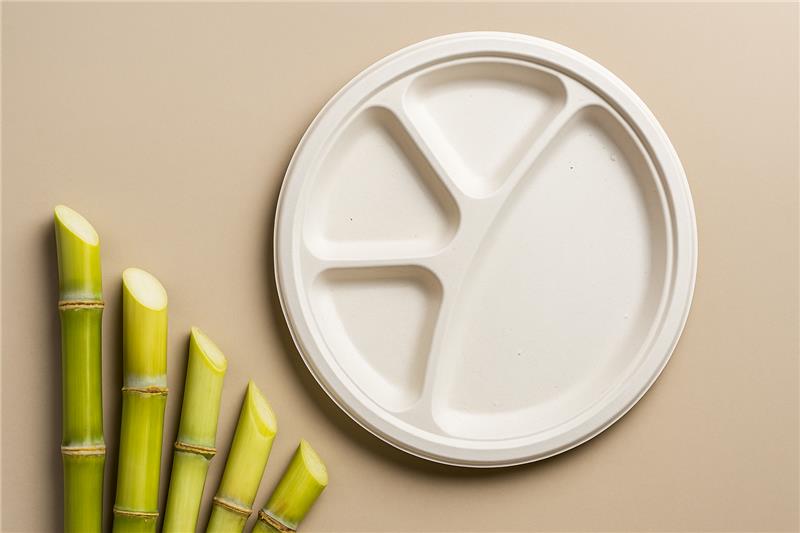
Bagasse is the fibrous residue left after extracting juice from sugarcane. Instead of being burned or discarded, this agricultural byproduct is processed into pulp and molded into plates, bowls, trays, and food containers.
Bagasse tableware is:
- 100 percent biodegradable and compostable
- Made from renewable agricultural waste
- Food-safe and chemical-free
- Strong enough for hot, cold, and oily foods
For high-volume food service environments, bagasse offers the functionality of plastic without its environmental cost.
Why Hotels Are Adopting Bagasse Tableware
1. Sustainability Commitments Are Now Measurable
Many hotel chains have public sustainability goals related to waste reduction and carbon footprint. Switching to bagasse tableware allows hotels to make immediate, visible progress.
Bagasse products decompose naturally within 60 to 90 days, supporting:
- Zero-waste initiatives
- Green building certifications
- Corporate sustainability reporting
Using compostable tableware is one of the fastest ways for hotels to reduce single-use plastic without altering service workflows.
2. Guest Experience and Brand Image
Guests notice details. Serving food on eco-friendly, natural-fiber tableware sends a strong message about responsibility and quality.
Bagasse plates and bowls offer:
- A clean, premium appearance
- A natural texture aligned with modern hospitality aesthetics
- Confidence that food is served on safe, non-toxic surfaces
For hotels, this improves brand perception without sacrificing convenience.
3. Safe for Diverse Food Service Needs
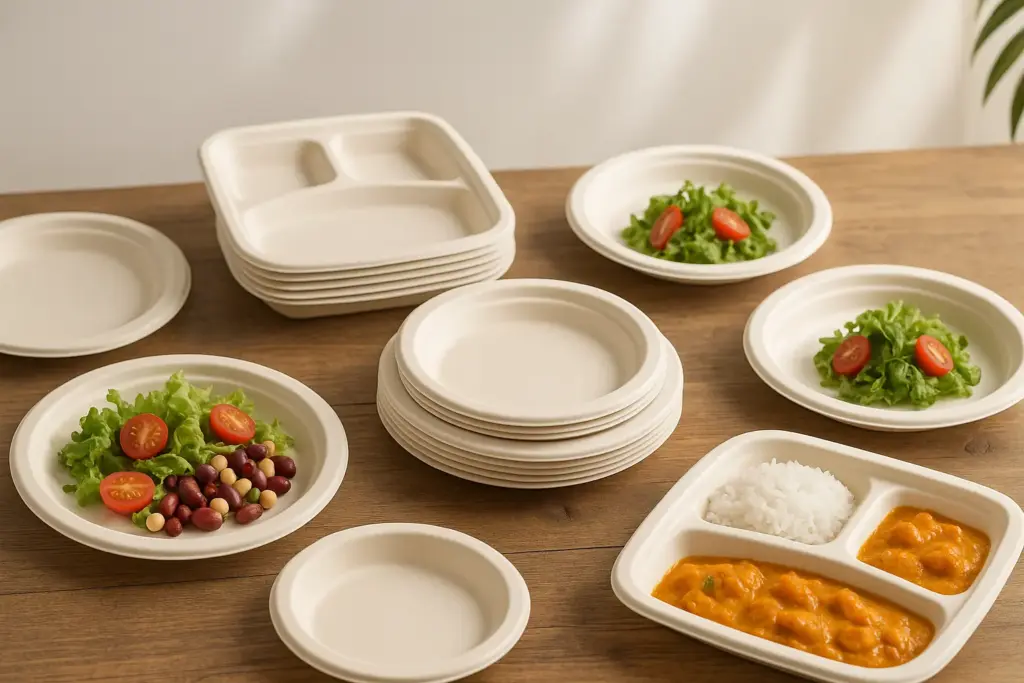
Hotel operations include buffets, room service, outdoor dining, banquets, and events. Bagasse tableware performs well across all these use cases.
It is:
- Microwave-safe for reheating
- Resistant to grease and moisture
- Stable under hot and cold temperatures
This versatility makes it suitable for large kitchens and catering operations.
Why QSR Chains Are Making the Switch
1. High Volume Requires Reliable Performance
QSR chains serve food quickly and at scale. Disposable tableware must be consistent, sturdy, and easy to handle.
Bagasse tableware:
- Does not bend or collapse under heavy meals
- Holds sauces and gravies without leakage
- Maintains shape during transit and takeaway
For QSRs, this reduces complaints, spillage, and customer dissatisfaction.
2. Packaging Is Part of the Brand Experience
In QSR formats, packaging is often the only physical touchpoint with customers. Eco-friendly packaging strengthens brand trust and loyalty.
Many QSR brands now actively highlight:
- Compostable packaging
- Plastic-free operations
- Sustainable sourcing
Bagasse tableware aligns naturally with these brand narratives.
3. Compliance with Plastic Regulations
India’s plastic ban and similar global regulations require QSRs to move away from restricted materials. Bagasse tableware offers a compliant, widely accepted alternative.
By switching proactively, QSR chains avoid:
- Fines and penalties
- Sudden supply disruptions
- Last-minute operational changes
Operational Advantages of Bagasse Tableware
Beyond sustainability, bagasse offers real operational benefits.
Cost Stability at Scale
As production volumes increase, bagasse tableware has become cost-competitive with plastic. Bulk procurement directly from manufacturers further reduces costs for large hotel and QSR chains.
Simplified Waste Management
Compostable waste streams are easier to manage than mixed plastic waste, especially for large kitchens and centralized facilities.
Support for Circular Economy
Bagasse products are made from agricultural waste and return to the soil after use. This closed-loop cycle aligns with long-term environmental and economic goals.
How Bagasse Tableware Fits the Future of Food Service
The hospitality and QSR industries are moving toward:
- Sustainable sourcing
- Reduced waste
- Transparent operations
- Responsible consumption
Bagasse tableware supports all of these priorities without disrupting service speed or customer experience.
As awareness grows and regulations tighten, bagasse is becoming the standard rather than the alternative.
Conclusion
Hotels and QSR chains are not switching to bagasse tableware as a trend. They are doing so because it makes business sense.
Bagasse tableware offers:
- Compliance with plastic bans
- Improved brand perception
- Safe and reliable food service performance
- Reduced environmental impact
- Scalable solutions for high-volume operations
In an industry built on efficiency and experience, bagasse tableware delivers both — while supporting a cleaner, more responsible future.
The shift is already happening. For hotels and QSR chains, the question is no longer if they should move away from plastic, but how soon they can make the change.