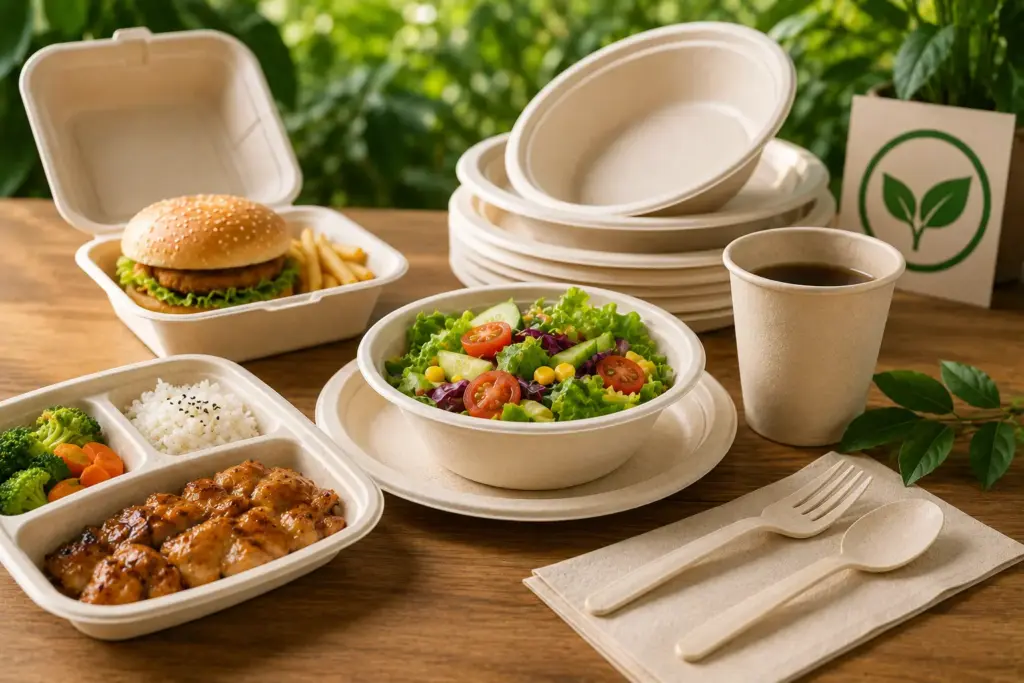
The demand for sustainable packaging has grown rapidly, and with it, the use of terms like eco friendly, biodegradable, and compostable. For restaurants, caterers, and bulk buyers looking at bagasse plates and sugarcane plates, these labels often influence purchasing decisions.
But there is a problem. Not all eco friendly disposable plates perform the same way, and not every product labelled biodegradable plates or sugarcane bagasse plates meets the expectations of real food service.
Understanding what these labels actually mean, and where they fall short, is essential before making a decision.
Why eco friendly labels can be misleading
The term eco friendly is not always clearly defined. Many disposable plates are marketed as eco friendly plates simply because they use plant-based materials or appear sustainable.
However, the label alone does not guarantee:
- Strength and durability
- Resistance to heat, oil, and moisture
- Consistency across batches
- Suitability for commercial food service
This creates confusion for buyers sourcing disposable plates wholesale, especially when products look similar but perform very differently.
Performance is often overlooked
One of the biggest gaps in eco friendly messaging is the lack of focus on performance.
Restaurants need plates that can:
- Hold hot food without softening
- Resist oily gravies without leaking
- Maintain structure during delivery
Many biodegradable disposable plates fail in these areas, not because the material is flawed, but because manufacturing quality is inconsistent.
High-quality bagasse tableware made from sugarcane bagasse performs well under these conditions. Poorly made alternatives do not, even if they carry the same eco friendly label.
Not all biodegradable plates are equal
The term biodegradable plates suggests that all such products behave similarly. In reality, there is significant variation.
Differences can arise from:
- Fibre density and compression
- Moulding techniques
- Raw material quality
- Quality control during production
Two sugarcane plates may look identical but perform completely differently. This is where buyers often face issues after bulk purchases.
The gap between marketing and real use
Marketing focuses on sustainability benefits, but real use exposes operational challenges.
In actual food service conditions, eco friendly disposable plates are tested by:
- Heat from freshly cooked food
- Oil and moisture from dishes
- Handling during peak service
- Delivery and transport stress
If plates fail under these conditions, the eco friendly label becomes irrelevant. For restaurants, functionality always comes first.
Why price can distort perception
Lower-priced products often rely heavily on eco friendly branding to attract buyers. However, cost reductions usually come from compromises in manufacturing.
Cheap biodegradable plates may:
- Feel lighter and weaker
- Soften quickly with food
- Show inconsistent quality across batches
For businesses sourcing disposable plates wholesale, these issues lead to higher hidden costs through wastage and customer complaints.
What buyers should focus on instead
Rather than relying solely on labels, buyers should evaluate products based on performance and reliability.
Key factors include:
- Strength and rigidity
- Heat and oil resistance
- Consistency across orders
- Supplier reliability
Testing sugarcane bagasse tableware under real conditions provides more accurate insight than any label.
Why material still matters when done right
Despite the issues with labelling, the material itself remains a strong option when manufactured properly.
Well-made bagasse plates and sugarcane bagasse plates offer:
- Natural fibre strength
- Good performance with hot and oily food
- Reduced reliance on plastic
The difference lies in quality, not in the label.
Final thoughts
Eco friendly labels in disposable plates can be useful, but they should never be the only factor guiding a decision.
For restaurants and bulk buyers, the focus should always be on how bagasse plates, sugarcane plates, and biodegradable disposable plates perform in real service conditions.
When performance, consistency, and supplier reliability are prioritised, eco friendly disposable plates become a practical solution rather than just a marketing claim.
The key is simple. Look beyond the label and choose based on what actually works.