The container is quiet, but the chemistry is not. Here is what daily plastic does, and the simple swap that stops it.
The short version
Eating from plastic every day exposes you to hormone-disrupting chemicals like BPA and phthalates, and to microplastics that researchers now find in human blood and organs. The effects being studied include hormone imbalance, reproductive harm, metabolic changes, and gut irritation.
Heat and oily food make the leaching worse. The easy fix is to serve and pack food in natural-fibre tableware such as bagasse, made from sugarcane, which puts nothing synthetic into your food and composts after use.
Who this blog is for
Anyone who eats takeaway, tiffin or reheated meals from plastic often, and the restaurants, cloud kitchens and tiffin services that pack their food.
The daily reality: how plastic meets your food
Plastic feels like the most harmless thing in the kitchen. The tiffin box, the takeaway container, the water bottle, the cling film over last night’s dal. None of it looks dangerous, and for a single meal it very likely is not.
The concern is the word in the title: every day. When hot, oily, everyday food meets plastic again and again over months and years, small amounts of chemicals and tiny plastic particles make their way into you, and they add up.
Here are five things the research says are happening inside your body when plastic is your daily plate, and the simple switch that takes most of it off the table.
What actually happens when you eat from plastic every day?
Two things leach from plastic into food, especially when it is hot or oily: chemicals such as BPA and phthalates that interfere with your hormones, and microplastic particles that travel into your blood and organs. Over time this is linked to hormonal, reproductive, metabolic and gut effects. The five below break it down.
The microwave-safe myth
Before the list, one myth worth clearing up. The label microwave safe only means the container will not melt or warp in the microwave. It does not mean the plastic stays out of your food.
Heat, oil and acidity are exactly the conditions that pull chemicals and particles out of plastic, so reheating a greasy curry in a plastic box is close to the worst case.
1. Hormone-disrupting chemicals slip into your system
Short answer
Plastics can release BPA and phthalates, which act like fake hormones in the body and can throw your natural hormone balance off.
How it works
Many food plastics are made with bisphenol A (BPA) or softened with phthalates. Both are endocrine disruptors, which means they mimic or block the body’s own hormones, especially estrogen and testosterone.
When they leach into food and you eat them day after day, your system is getting a steady drip of chemical signals it never asked for. Research has linked this kind of exposure to hormone imbalance and a range of downstream effects, which is why regulators keep tightening the rules around BPA in food contact items.
Switching to a plain plant-fibre plate removes this source entirely, because there is no BPA or phthalate in it to begin with.
2. Microplastics build up in your blood and organs
Short answer
Tiny plastic particles shed from containers and end up inside the body. Studies have now detected microplastics in human blood, and in organs including the lungs, placenta and testicles.
How it works
This is the finding that changed the conversation. In 2022, scientists reported microplastics in the blood of most of the healthy adults they tested. Since then, these particles have turned up in the lungs, the gut, the placenta and other tissues.
Food and drink are a major route in, and heating plastic sharply increases the number of particles released. The long-term health effect of carrying plastic inside you is still being studied, but no researcher is arguing it is a good thing.
The sensible move is to cut down the everyday sources you can control. Your daily container is one of the easiest to change.
3. Your fertility and reproductive health can take a hit
Short answer
The same chemicals and particles are increasingly linked to reproductive harm, including effects on sperm quality and hormone-driven reproductive health in both men and women.
How it works
Because BPA and phthalates act on sex hormones, reproductive health is one of the most studied areas of concern. Recent research has found microplastic particles in human reproductive tissue, and reviews have connected phthalate exposure with lower sperm quality and other reproductive effects.
This is an area where the science is still developing and no single meal is the cause, but it is also an area where caution costs almost nothing. Reducing daily plastic contact with food is a simple, low-effort way to lower one avoidable exposure during the years it matters most.
4. Your metabolism and weight get quietly nudged
Short answer
Some plastic chemicals are studied as obesogens, meaning they may interfere with how the body handles fat, insulin and blood sugar.
How it works
Beyond hormones and fertility, a growing line of research looks at how chemicals like BPA affect metabolism. They have been associated in studies with insulin resistance, changes in how the body stores fat, and a higher risk of type 2 diabetes.
The effect from any one exposure is small, but the whole theme of this article is repetition. A metabolic nudge, delivered with lunch every single day for years, is exactly the kind of low-grade, long-term exposure researchers worry about.
Taking plastic out of your daily eating removes one more small push in the wrong direction.
5. Your gut and immune system get irritated
Short answer
Microplastics reaching the gut may disturb the gut lining and the balance of gut bacteria, and can trigger low-level inflammation.
How it works
The gut is the first place swallowed microplastics arrive in quantity. Early research suggests these particles can irritate the gut lining, disturb the balance of healthy gut bacteria, and set off the kind of low-grade inflammation that sits behind many long-term health problems.
Gut health has knock-on effects on immunity, mood and digestion, so an irritant arriving with every meal is not trivial. Once again, the fix is upstream: stop the particles getting into the food in the first place by not serving hot, oily meals on plastic.
Why natural-fibre tableware is the simple fix
Short answer
Switching to plant-fibre tableware like bagasse removes the source. It has no BPA, no phthalates and no plastic to shed particles, and it is made for hot, oily food.
How bagasse works
Notice that every one of the five points traces back to the same root cause, which is food touching plastic, especially when hot. Change the material and the problem largely disappears.
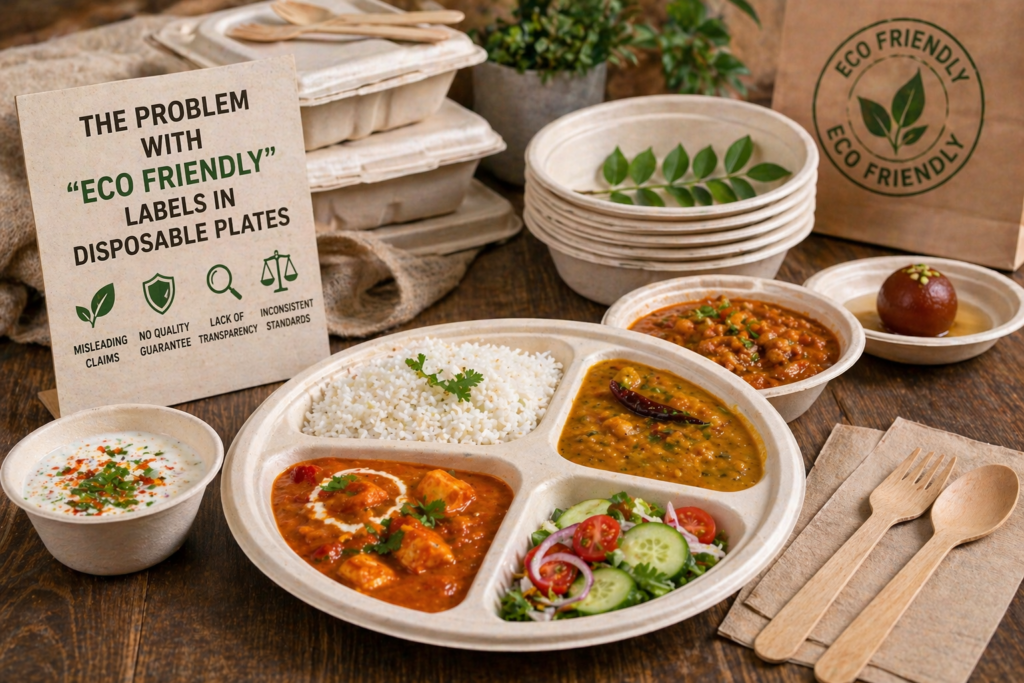
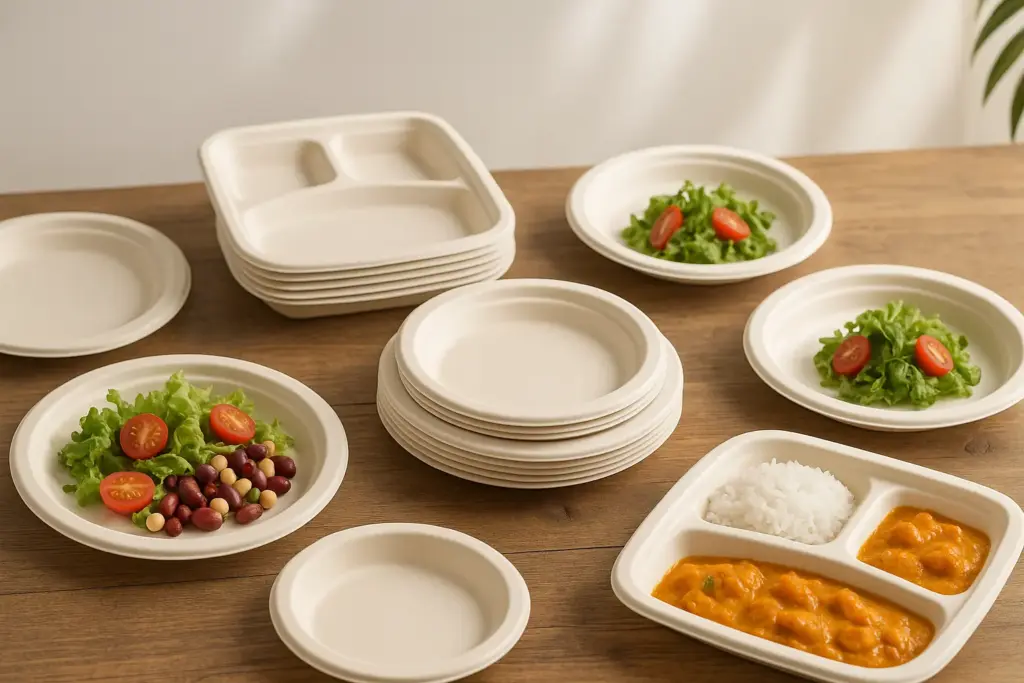
The strongest everyday swap is bagasse, the natural fibre left over after sugar mills crush the juice from sugarcane. Moulded into plates, bowls, tiffin trays and takeaway boxes, it is simply plant fibre with no plastic lining, so there is no BPA, no phthalate and no microplastic to migrate into even the hottest, oiliest dish.
It comfortably handles gravy and heat, and when you are done it composts in about 60 to 90 days instead of adding to the plastic pile it just helped you avoid. For hot food you actually eat every day, it is the clean, low-effort upgrade.
Where Pulpcraft comes in
If you run a restaurant, cloud kitchen or tiffin service and want your customers to eat off something safe rather than a plastic box, Pulpcraft is one of India’s largest makers of bagasse tableware and packaging.
It produces the everyday formats that replace plastic directly, including:
- Plates and bowls
- Compartment meal trays
- Clamshell boxes with tight snap lids that hold gravy without leaking
The containers resist oil and moisture, take hot food straight from the kitchen, and are made under strict food-safety certifications:
- ISO 9001, ISO 14001, ISO 22000 and ISO 45001
- SGS testing
- Sedex
- FDA compliance
What carries your food is properly food-grade and plastic-free. Because Pulpcraft supplies direct from the factory in bulk at steady wholesale rates, switching your packing off plastic costs only a rupee or two more per piece.
You get to tell customers their meal arrives with no BPA, no phthalates and no microplastics. To get wholesale pricing and samples for your menu, reach out to the Pulpcraft team.
How to cut your daily plastic exposure today
Never microwave in plastic, do not let hot or oily food sit in it, and move your regular meals and takeaway to natural-fibre tableware like bagasse.
- Never reheat in a plastic container. Move food to glass or ceramic first, whatever box it came in.
- Get hot, oily food out of plastic quickly. Tip your takeaway onto a plate instead of eating straight from the box.
- Choose bagasse for daily serving and packing. It is the single change that removes chemicals and particles from every meal at once.
- If you sell food, switch your packaging. One decision protects every customer you serve and gives your brand a real health and sustainability story.
Frequently asked questions
Is it safe to eat from plastic every day?
Occasional use of good-quality plastic is low risk, but daily contact, especially with hot and oily food, means a steady exposure to chemicals like BPA and phthalates and to microplastics. Reducing daily use is the sensible choice.
Does microwave-safe plastic leach chemicals?
Microwave safe only means the container will not melt. It does not mean chemicals or microplastics stay out of your food. Heating plastic tends to increase what leaches, so avoid microwaving food in it.
Is bagasse tableware safe for hot food?
Yes. Bagasse is plain sugarcane fibre with no plastic coating, so it holds hot, oily and gravy food without leaching BPA, phthalates or microplastics, and it is certified food-grade.
Is bagasse better for the environment than plastic?
Yes. Bagasse is made from crop waste and composts in roughly 60 to 90 days, while plastic containers persist for centuries and shed microplastics as they break apart.
The bottom line
Eating from plastic once in a while is not worth losing sleep over. Doing it every day is a different question, because the chemicals and particles that leach from plastic add up quietly over years, and the research keeps linking that build-up to hormonal, reproductive, metabolic and gut effects.
The good news is that this is one of the easiest exposures to remove. Swap the daily plastic plate for natural sugarcane fibre and you take the source out of the equation, for your body and for the planet. Your next hot meal deserves a container that holds the food and nothing else.
Serving food to customers every day? Pulpcraft supplies certified, compostable bagasse plates, bowls, tiffin trays and clamshell boxes in bulk, a food-grade, plastic-free way to serve hot meals with no BPA, no phthalates and no microplastics. Get in touch for wholesale pricing and samples that fit your menu.