Chhath is the festival where the whole family checks the list three times. Miss one fruit or forget the new soop, and someone is running to the market at dusk on the day of the arghya. This guide puts everything in one place: the 2026 dates, a samagri list sorted by day, the prasad, a thekua recipe that works, and how to leave the ghat as clean as you found it.
The short version
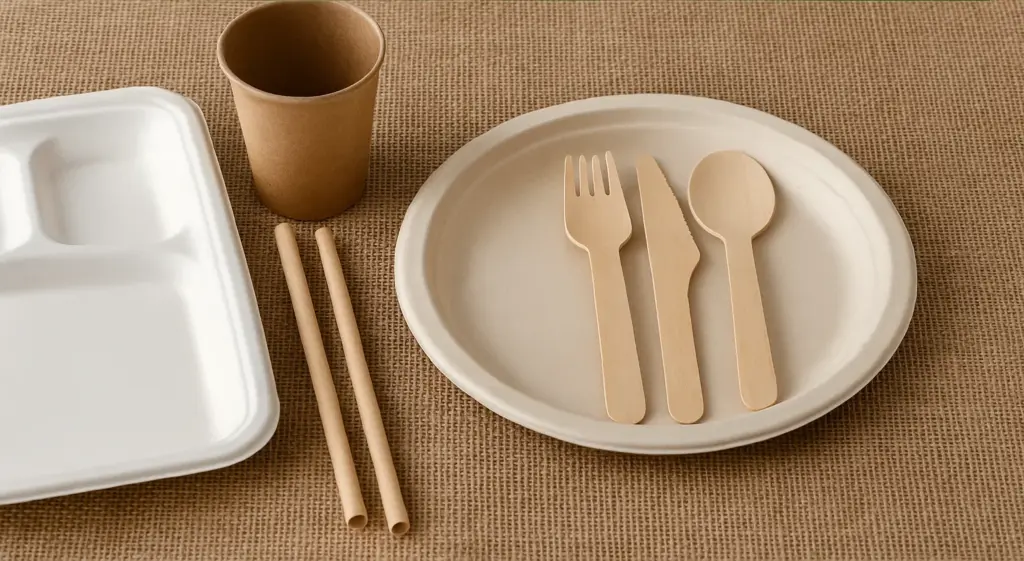
Chhath Puja 2026 runs over four days, from Friday 13 November to Monday 16 November. The main day, Shashthi, is Sunday 15 November, when the Sandhya Arghya is offered to the setting sun. The fast ends with the Usha Arghya at sunrise on Monday 16 November. For the puja you need a bamboo soop and daura, seasonal fruit (sugarcane, banana, coconut, sweet lime, singhara and more), thekua, a lota for the arghya, diyas, ghee and new clothes for the vrati. If your samiti is handing out prasad or tea at the ghat, use plates and cups that can go in the wet-waste bin, not thermocol.
Table of Contents
When is Chhath Puja in 2026?
Short answer: 13 to 16 November 2026, with the main evening arghya on Sunday 15 November. Drik Panchang gives the Shashthi tithi as running from 11:23 pm on 14 November to 2:00 am on 16 November.
| Day | Ritual | Date in 2026 | What happens |
|---|---|---|---|
| Day 1 | Nahay Khay | Friday, 13 November | Holy bath, house cleaned, one sattvik meal of lauki-chana dal and rice |
| Day 2 | Kharna (Lohanda) | Saturday, 14 November | Fast all day, broken after sunset with gur kheer (rasiya) and roti; the 36-hour nirjala fast begins |
| Day 3 | Sandhya Arghya | Sunday, 15 November | Arghya to the setting sun at the ghat, standing in water |
| Day 4 | Usha Arghya | Monday, 16 November | Arghya to the rising sun, then the fast is broken (parana) and prasad is shared |
Because the arghya follows the sun, the time changes by city. Drik Panchang puts sunset on 15 November at 5:27 pm in Delhi; in Patna it is about 5:00 pm, and in Kolkata a few minutes earlier. Vratis usually step into the water well before sunset, so reach the ghat early.
Chhath Puja samagri list
Short answer: You need a bamboo soop (winnowing basket) or daura for each vrati, seasonal fruit and vegetables, thekua and other prasad, a brass or copper lota, diyas, ghee, sindoor, a coconut, sugarcane stalks, and new clothes. The tables below split the list by when you need each item, so you can shop in two trips instead of five.
Puja essentials
| Item | Why you need it |
|---|---|
| Bamboo soop (one or more per vrati) | Holds the fruit and prasad offered at the arghya |
| Bamboo daura or dauri (large basket) | Carries the full offering to the ghat, usually on the head |
| Brass or copper lota | For pouring water or milk during the arghya |
| Brass or copper thali | Holds the diya, sindoor and small items |
| Earthen diyas, cotton wicks and ghee | Lit on the soop and at the ghat |
| Sindoor, roli, akshat (rice), haldi | For tilak and decorating the soop |
| Incense, camphor, matchbox | For the puja |
| New sari or dhoti for the vrati | The vrati wears new, unstitched clothes where possible |
| A clean cloth (often yellow) | To cover the daura on the way to the ghat |
| Kosi items: five or more sugarcane stalks, earthen hathi, diyas | For households that fill the kosi on the night of Sandhya Arghya |
Fruits and vegetables for the soop
Chhath favours whatever the season gives, and many of these are only in the market for a few weeks. Buy them a day or two before the Sandhya Arghya.
- Sugarcane, with the leaves on, usually a pair per household
- Banana, a full bunch (raw bananas are also offered)
- Coconut, whole, with water inside
- Gagal or big lemon (nimbu) and sweet lime (mosambi)
- Singhara (water chestnut), sharifa (custard apple) and amla
- Suthni (a small yam), shakarkand (sweet potato) and mooli with leaves
- Fresh haldi and adrak plants, with the leaves
- Apple, orange, pomegranate and pear, depending on what your family offers
Ingredients for the prasad
- Whole wheat atta for thekua
- Jaggery (gur), more than you think you need
- Pure ghee for frying
- Rice, and rice flour for kasar (rice-and-jaggery ladoos)
- Dry coconut, fennel (saunf), green cardamom
- Milk and arwa (sun-dried) rice for the Kharna kheer
- Lauki and chana dal for the Nahay Khay meal, plus sendha namak (rock salt)
Chhath Puja prasad list
Short answer: Thekua is the signature prasad. Alongside it come kasar ladoos, the Kharna gur kheer (rasiya) with roti or puri, and the fruit from the soop. Everything is cooked without onion, garlic or regular salt, usually on a new or freshly cleaned chulha.
| Prasad | When it is made | What it is |
|---|---|---|
| Lauki-chana dal, rice, lauki sabzi | Nahay Khay (Day 1) | The single sattvik meal that begins the vrat, cooked with rock salt |
| Rasiya (gur kheer) with roti | Kharna (Day 2) | Rice cooked in milk with jaggery; the vrati eats this after sunset, then fasts |
| Thekua | Day 2 night or Day 3 morning | Crisp, moulded wheat-and-jaggery cookies fried in ghee |
| Kasar or ladua | Day 3 | Ladoos of rice flour and jaggery |
| Fruit and sugarcane | Placed in the soop on Day 3 | Offered at both arghyas, then shared |
After the Usha Arghya, the prasad is shared with family, neighbours and anyone at the ghat who asks for it. Asking a vrati for prasad is considered a blessing for both sides, so make more than your family alone will eat.
How to make thekua for Chhath
This makes about 25 to 30 thekua. The method matters more than the measurements: a stiff dough and slow frying are what make them crisp all the way through instead of soft in the middle.
- 2 cups whole wheat atta
- 3/4 cup grated jaggery, melted in 1/2 cup warm water and strained
- 4 tbsp ghee, plus ghee for frying
- 2 tbsp grated dry coconut, 1 tsp fennel seeds, 1/2 tsp cardamom powder
- Mix the dry ingredients. Combine the atta, coconut, fennel and cardamom, then rub in the 4 tbsp ghee until the flour holds together when pressed in your fist.
- Knead a stiff dough. Add the cooled jaggery syrup a little at a time. The dough should be firmer than roti dough; if it is soft, the thekua will spread and turn chewy.
- Shape the thekua. Pinch off lime-sized balls, flatten them, and press each into a wooden thekua mould (sancha). No mould? Press the back of a fork into each one.
- Heat the ghee on medium-low. Drop in a small piece of dough. It should rise slowly, not sizzle hard.
- Fry slowly. Fry a few at a time for 6 to 8 minutes, turning once, until deep golden brown on both sides.
- Cool before storing. Drain on a clean cloth. They harden as they cool and keep for two weeks in an airtight tin.
Keeping the ghat plastic-free
Short answer: The offering itself has always been plastic-free: bamboo, clay, leaves and fruit. The plastic arrives with everything around it, such as polythene bags for fruit, thermocol plates at prasad and tea stalls, and plastic cups at sevak counters. Swap those few things and the ghat stays clean.
Single-use plastic plates, cups, cutlery and thermocol for decoration have been banned across India since July 2022. Uttar Pradesh has declared Chhath ghats “no-plastic zones” during the festival and runs a Swachh Ghat competition for the cleanest ones. The rivers and ponds where vratis stand are the same ones the plastic ends up in, which is why our piece on plastic in India’s rivers starts at the ghats.
Small swaps for families
- Carry fruit home from the market in a cloth bag or the daura itself, not polythene
- Use the soop and daura you already own; a good bamboo soop lasts several years if kept dry
- Keep a cloth bag for flowers and leftover puja material, and put it in a compost or a designated kund rather than the river
- If you are carrying water or tea for the family, take a steel flask and cups
For puja samitis, societies and sevak stalls
Most ghats have a samiti or a group of volunteers running tea, milk, prasad or a community meal for vratis and families through the night. That is where most of the disposable plates and cups on a ghat come from, so it is also where a switch makes the biggest difference.
| What you are serving | What works best |
|---|---|
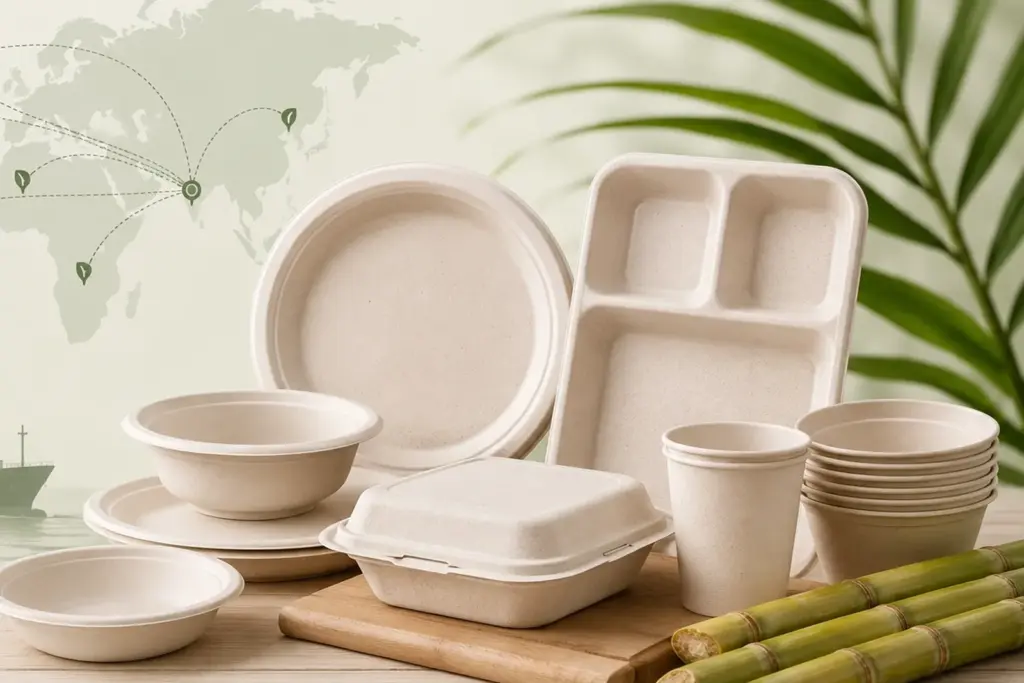
| Thekua, kasar and fruit prasad handed out after the Usha Arghya | 5-inch triangle plate or the 120 ml Kiwi bowl |
| Kharna kheer or rasiya for guests at home or at a community kitchen | 180 ml or 240 ml round bowl |
| A full meal for sevaks or families waiting overnight | 10-inch 3-compartment plate or 12-inch 4-compartment plate |
| Prasad packed for elderly vratis or to send home | 3-compartment meal tray or a bagasse clamshell box |
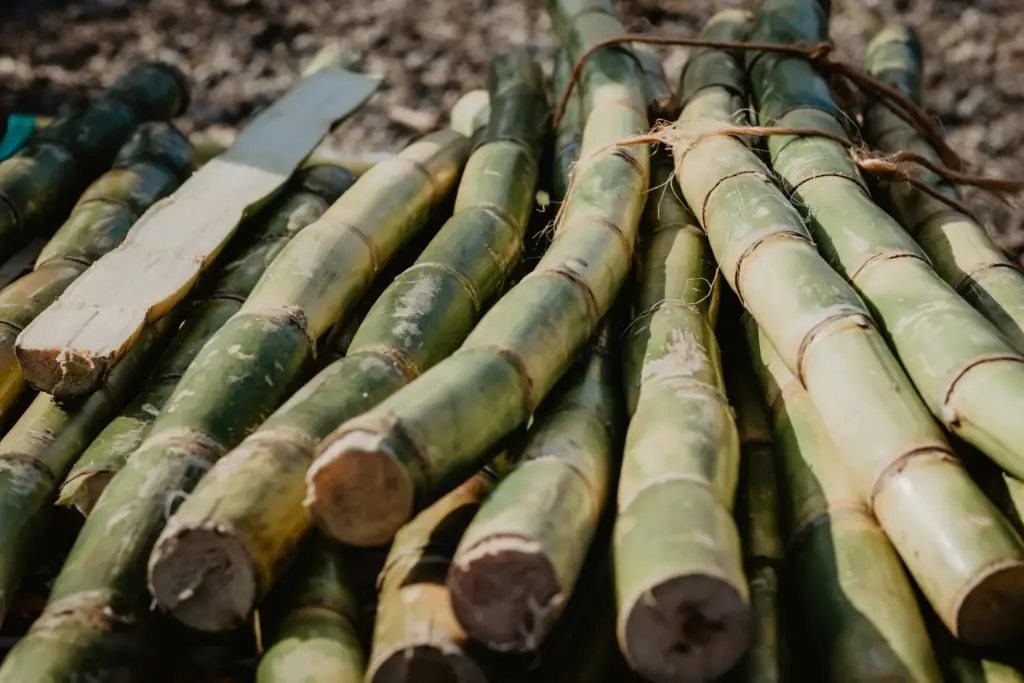
Bagasse is made from sugarcane fibre left over after the juice is pressed, the same crop that stands in every soop at Chhath. It holds hot kheer without going soggy, and after use it can go into the wet-waste bin, where it breaks down in about 60 to 90 days. It does cost more per piece than thermocol, so samitis usually budget for it as part of the festival rather than as a last-minute purchase.
How much to order
For prasad handed out at the ghat, plan one small plate or bowl per person you expect, plus about 15% for families who come back for a second helping. For a sit-down sevak meal, plan one compartment plate and one bowl per person. A samiti expecting 800 people at the morning arghya should order about 920 small plates or bowls.
Where to buy bagasse plates in bulk for Chhath
Pulpcraft makes bagasse plates, compartment plates, bowls, meal trays and clamshell boxes in India and supplies puja samitis, housing societies, caterers and trusts direct from the factory at wholesale rates. Production is certified to ISO 9001, ISO 14001, ISO 22000 and ISO 45001, with SGS testing, Sedex membership and a BRCGS Packaging Materials certificate (Grade A), so what people eat from is food-grade.
Tell us how many people you expect at your ghat and what you are serving, and we will suggest a mix and quote for it. Contact the Pulpcraft team for bulk pricing or samples, or see the full range. With Diwali on 8 November and Chhath a week later, aim to confirm your order by the end of October.
Frequently asked questions
When is Chhath Puja in 2026?
Chhath Puja 2026 runs from 13 to 16 November. Nahay Khay is on Friday 13 November, Kharna on Saturday 14 November, the Sandhya Arghya on Sunday 15 November and the Usha Arghya on Monday 16 November.
What items are needed for Chhath Puja?
A bamboo soop and daura, a brass or copper lota, diyas and ghee, sindoor, a coconut, sugarcane, seasonal fruit and vegetables such as banana, gagal, singhara, suthni and fresh haldi, thekua and other prasad, and new clothes for the vrati.
What is the main prasad of Chhath Puja?
Thekua, a crisp fried cookie of wheat flour, jaggery and ghee, is the main prasad. Kasar ladoos, the Kharna gur kheer and the fruit from the soop are also offered and shared.
Can onion, garlic or salt be used in Chhath food?
No onion or garlic is used at any point. Regular salt is avoided too; the Nahay Khay meal uses rock salt, and the Kharna kheer and thekua use none.
What should samitis use instead of plastic plates at Chhath ghats?
Leaf plates or bagasse plates and bowls. Both can go into wet waste after use, while plastic and thermocol plates are banned under India’s single-use plastic rules and end up in the same water vratis stand in.
The bottom line
Chhath falls on 13 to 16 November this year, a week after Diwali. Buy the soop, daura and dry ingredients early, leave the fruit for the day before the Sandhya Arghya, and make extra thekua for the people who will ask. If you are serving the ghat, sort your plates and cups by the end of October.
Running a prasad or sevak stall this Chhath? Pulpcraft supplies certified, compostable bagasse plates, bowls and meal trays in bulk to samitis, societies and caterers. Get in touch for wholesale pricing or samples.