The honest answer is not a simple yes or no. It depends entirely on what you are cooking and how.
Aluminium foil is in nearly every kitchen. We wrap rotis in it, line baking trays with it, seal leftovers with it, and hand over restaurant parcels in it.
Every so often a headline warns that it is quietly poisoning us, and just as often another article says there is nothing to worry about. Both cannot be right.
The truth, as usual, sits in the middle and depends on the details. Here is what the research actually shows, when foil is a non-issue, when it is worth avoiding, and what to reach for instead.
Why Foil Is Even a Question
Aluminium is a soft metal, and unlike the stainless steel in your good pans, it can migrate into food it touches. In small amounts this is not alarming on its own.
Aluminium is one of the most common elements on earth and shows up naturally in many foods and in drinking water. Healthy kidneys clear a lot of what we take in.
The worry is not a single meal. It is the steady build-up from many sources at once, and foil used the wrong way can add a surprising amount to the pile.
What the Studies Actually Say
Researchers who cook food in foil and then measure it find real, and sometimes large, increases in aluminium. One often-cited study found that cooking meat in aluminium foil raised its aluminium content by roughly 89 to 378 percent, depending on the conditions.
The key word is conditions, because the amount that leaches is not fixed. It rises sharply with four things: heat, time, acidity and salt. Wrap a dry, cold sandwich and almost nothing moves. Slow-cook a tomato and lemon marinade in foil at high heat and the transfer is a different story.
Key Factors That Drive Leaching
The pattern from the research is consistent:
- Acidity is the biggest driver. Tomatoes, lemon, vinegar and tamarind pull aluminium out of foil far faster than neutral foods.
- Heat multiplies it. Leaching climbs as temperature rises, with a clear jump above roughly 200 °C.
- Salt and spices add to it. Both increase how much metal moves into the food.
- Time matters. The longer food sits against hot foil, the more it picks up.
The Number That Puts It in Perspective
To judge whether this is actually dangerous, you need a yardstick. Food-safety bodies use a tolerable weekly intake, the amount you can take in every week over a lifetime without expected harm.
The European Food Safety Authority sets this at 1 milligram of aluminium per kilogram of body weight per week. For a 60 kg adult that is about 60 mg a week.
Here is the uncomfortable part. EFSA found that a significant share of people already reach or pass that limit from ordinary food alone, before any foil is involved. Average adult intake runs from about 0.2 to 1.5 mg per kg per week, and for children the top of the range is higher still, around 2.3.
In other words, many of us have little headroom left. Foil used in the high-leaching way is not the only source of aluminium in a diet, but it is an easy, avoidable one that stacks on top of a load that is often already close to the ceiling.
Low Risk or High Risk? It Depends
This is why a flat yes or no is the wrong question. The same roll of foil is harmless in one use and worth avoiding in another. Read across this quick guide:
| What you are using foil for | How much aluminium gets into the food |
| Wrapping cold, dry food such as a sandwich or a roti to carry | Low. No heat, little moisture, short contact. |
| Covering non-acidic leftovers in the fridge | Low. Cold and brief. |
| Briefly baking or grilling plain, non-acidic food | Moderate. Heat drives some migration. |
| Cooking or wrapping acidic food (tomato, lemon, vinegar, tamarind) | High. Acid strips aluminium quickly. |
| Salted, spiced food cooked hot in foil, like tikka or tandoori | High. Salt, spice and heat together push it to the peak. |
| Long, high-heat cooking above about 200 °C | High. More time and heat means more metal in the food. |
Indian Cooking and the Worst-Case Overlap
Notice where the red rows sit. They line up almost exactly with how a lot of Indian cooking works. Foil-wrapped tikka and tandoori, marinated meats heavy with lemon, salt and spice, tomato and tamarind gravies, all cooked hot.
The everyday habit of sealing a spicy, acidic dish in foil and heating it is close to the worst case the studies describe, while the innocent use of wrapping a dry roti to carry is close to the safest.
What Health Bodies Do and Do Not Claim
It is worth being precise, because this topic attracts a lot of scare stories. High, long-term aluminium intake has been linked in research to possible effects on the nervous system and on bone, which is why the weekly limit exists.
At the same time, the popular claim that aluminium foil causes Alzheimer’s disease is not supported by the current evidence, and major health agencies do not endorse it.
The sensible reading is not panic. It is simply that there is no benefit to taking in extra aluminium you can easily avoid, so it makes sense to keep the avoidable sources down, especially for children, who are smaller and more sensitive.
Safer Materials, Use by Use
The good news is that foil is easy to replace, and in most cases the alternative is something you already own or can buy cheaply. The right swap depends on the job:
| Instead of foil for… | Reach for |
| Baking and roasting | Glass, ceramic or stainless-steel dishes, with parchment (butter) paper to line trays. |
| Keeping rotis and parcels warm | A cloth-lined casserole or an insulated hot-pack instead of a foil wrap. |
| Wrapping food to carry | Food-grade paper or a reusable steel dabba. |
| Serving, parcelling and takeaway | Compostable bagasse plates, bowls and boxes with snap lids, made for hot and oily food. |
Serving and Takeaway: The Hardest Habit to Break
For actual oven cooking, glass, ceramic and steel are the workhorses, and parchment paper lines a tray without any metal touching the food. For keeping food warm, a cloth-lined casserole beats a foil wrap and does not leach anything.
The place foil is hardest to shake, and where it does the most quiet harm, is serving and takeaway, where parcels get wrapped in foil or packed in foil-lined boxes. That is exactly where a modern compostable material does the job better.
Where Bagasse and Pulpcraft Come In
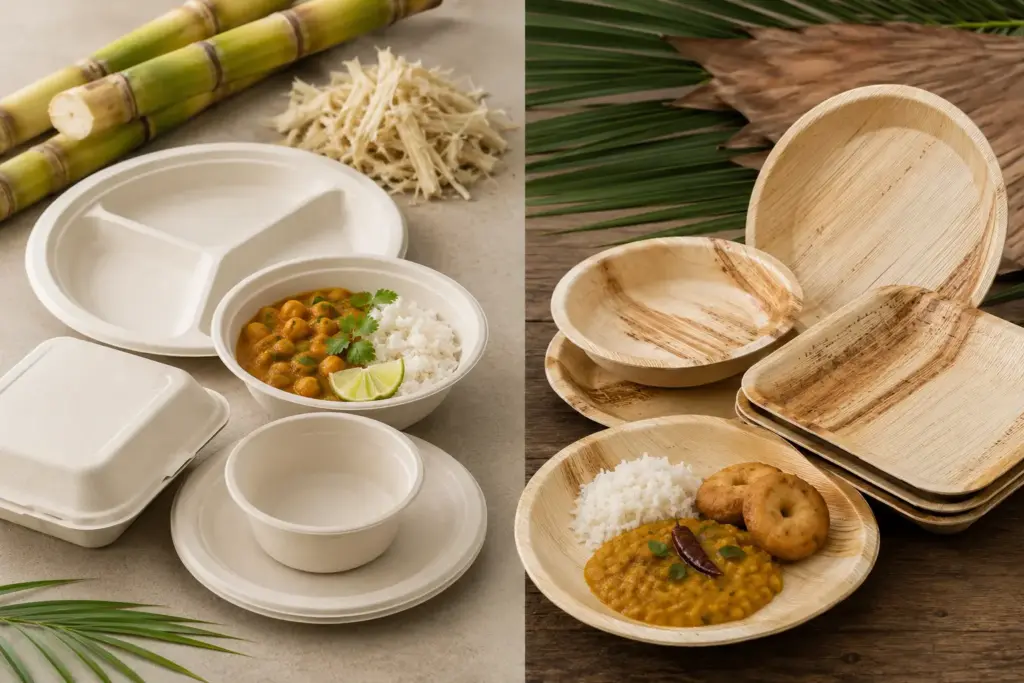
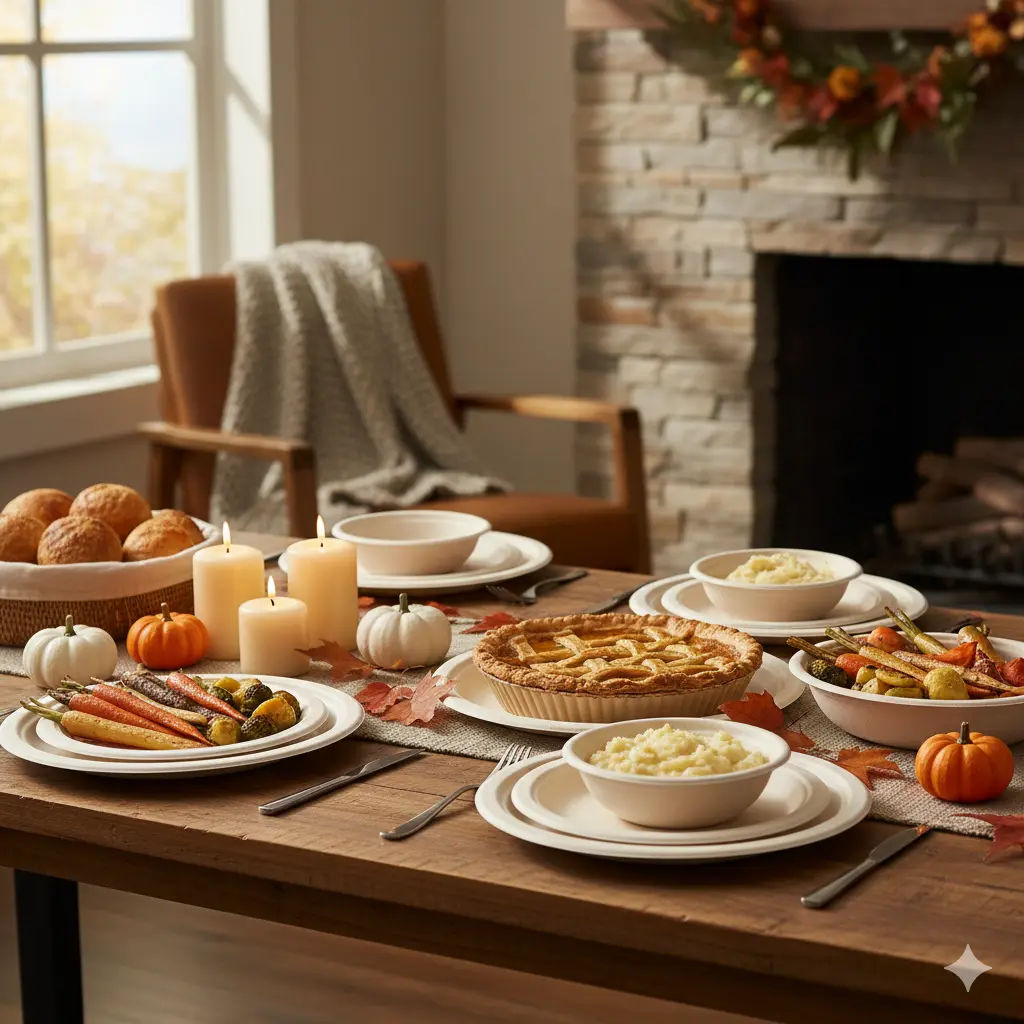
For serving, parcelling and takeaway, the clean replacement for foil is single-use tableware moulded from bagasse, the fibre left over after sugar mills crush the juice from sugarcane. It holds hot, oily and gravy-heavy food without any metal migrating into it, and instead of being thrown into a landfill it composts in a couple of months.
Pulpcraft is one of India’s largest makers of this tableware, and it produces exactly the formats that replace a foil wrap or a foil-lined box, including plates, bowls, compartment meal trays and clamshell boxes with tight snap lids for spill-free transport.
Everything is made under strict food-safety certifications, including ISO 9001, ISO 14001, ISO 22000 and ISO 45001, along with SGS testing, Sedex and FDA compliance, so what holds your food is properly food-grade and safe with hot dishes.
Because Pulpcraft supplies direct from the factory in bulk at steady wholesale rates, a kitchen, cloud brand or tiffin service can move its packing off foil for a rupee or two a piece without ever running short in a rush. To get wholesale pricing and samples for your menu, reach out to the Pulpcraft team.
Simple Rules for the Home Cook
You do not have to throw your foil away. You just have to use it where it is harmless:
- Keep foil for cold and dry jobs. Wrapping a sandwich or a plain roti to carry is low risk, so foil is fine there.
- Keep acidic and spicy food off it. Do not cook or store tomato, lemon, vinegar or heavily spiced dishes in foil, and skip the foil for tikka and tandoori.
- Do not line a hot oven tray with it. Use parchment paper or a glass or steel dish for baking and roasting instead.
- Switch takeaway and serving to bagasse. It is the one place foil is both common and easy to replace with a safer, greener option.
The Bottom Line
Aluminium foil is neither the silent poison some headlines claim nor the completely harmless kitchen staple others insist on. The studies are clear that heat, acid, salt and time pull real amounts of aluminium into food, that a lot of people are already near the safe weekly limit from diet alone, and that the worst-case uses map neatly onto spicy, acidic, high-heat Indian cooking.
The fix is not fear, it is matching the material to the task. Keep foil for the cold, dry, quick jobs where it does no harm, use glass, steel and paper for cooking, and move your serving and takeaway to compostable bagasse. Same food, far less metal, and a lighter footprint on the way out.
Packing food in foil or foil-lined boxes? Pulpcraft supplies certified, compostable bagasse plates, bowls, meal trays and clamshell boxes in bulk, a food-grade, no-metal way to serve and parcel hot food. Get in touch for wholesale pricing and samples that fit your menu.