The water gets most of the blame. The plate it is served on deserves a share too.
Few things are as loved in India as street food. The pani puri vendor with a crowd around the cart, the sizzle of a dosa on the tawa, the paper plate of chaat handed over hot. It is fast, cheap and full of flavour. It is also, if we are honest, where a lot of people pick up a bad stomach. Most of the worry goes to the water and the hands that prepare the food, and rightly so. What gets far less attention is the plate, cup or wrapper the food lands on, which can add its own risk on top. This post looks at both, and at a simple change that helps.
Table of Contents
The hygiene problem, in numbers
This is not about singling out vendors, most of whom work hard in tough conditions. It is about what testing actually finds. When a community medicine team at Gandhi Medical College in Hyderabad sampled popular street foods, the results were sobering:
| 45% of pani puri water samples were contaminated in a Hyderabad study | 70% of chutney samples in the same study carried harmful bacteria | 48% of food samples were unsafe when the stall stood within two metres of a bin |
The bacteria showing up in those samples, mostly E. coli, point to faecal contamination, usually traced back to unsafe water and poor hand washing. Doctors see the results in their clinics. Gastroenterologists warn that contaminated street food spreads Hepatitis A and E, typhoid and severe food poisoning, and that in vulnerable people a bad infection can even tip into acute liver failure. Pani puri draws special concern because the flavoured water and raw toppings sit open and are handled again and again through the day.
How the contamination actually happens
The risk is rarely one single thing. It builds up from a few ordinary steps:
- The water. Flavoured water, chutneys and ice are often made with water that was never safe to begin with, which is why they test dirty so often.
- The hands. With no sink on the cart, one unwashed pair of hands can carry traces of faecal matter into a whole batch of pani.
- The surroundings. The Hyderabad study found contamination jumped when a stall sat within two metres of a dustbin or an open drain. Dust, flies and waste are part of the roadside setting.
- The serveware. A stack of plates rinsed all day in one bucket of grey water passes bacteria from customer to customer, and hot food served in the wrong material picks up chemicals of its own.
The first three are hard for a single vendor to fix on the spot. The fourth is the one that can be changed today, cheaply, and it is the one almost nobody thinks about.
The overlooked risk: what your food is served on
Reach for a cutting chai in a foam cup or a plate of hot sambar in a thin plastic dish, and the container is quietly reacting with the food. Here is what the common options really cost you:
| Serveware | Where you see it | The harm |
| Thermocol / foam plates and cups | Chaat, hot tea, sambar, gravy dishes served straight into foam. | Styrene can leach out of foam when food is hot or oily. It is listed as a possible human carcinogen, and the foam itself never breaks down. |
| Thin plastic plates and cups | Almost everywhere, often with a plastic film over a plate. | Hot, oily food can pull chemicals and microplastics out of low-grade plastic. None of it is compostable. |
| Newspaper and printed paper | Pakoras, samosas and fried snacks wrapped to go. | Printing ink carries chemicals that migrate into oily food. FSSAI has warned against serving food in newspaper for exactly this reason. |
| Reused steel or plastic, washed on the cart | Busy stalls that rinse a few plates in one bucket all day. | A single bucket of dirty water spreads bacteria from one customer to the next. This is a leading route for stomach infections. |
| Bagasse (sugarcane) tableware | A growing choice for vendors who want a clean, single-use plate. | A fresh plate every time, nothing to leach into hot food, and it composts in 60 to 90 days instead of lasting for centuries. |
Foam is the worst offender for hot food. Foam cups and plates are made from polystyrene, and the styrene they are built from can leach into food when it is hot, oily or acidic, which describes most of what a chaat stall serves. Styrene is listed by the International Agency for Research on Cancer as a possible human carcinogen. Thin plastic behaves in much the same way under heat, shedding chemicals and microplastics into the very food you are about to eat. Newspaper looks harmless and green, but the printing ink migrates straight into oily snacks, which is why India’s food safety regulator has warned against it for years.
So the plate is not a side issue. For hot street food it sits right alongside the water as a source of harm, and unlike the water it is fully within a vendor’s control.
A cleaner default: bagasse tableware
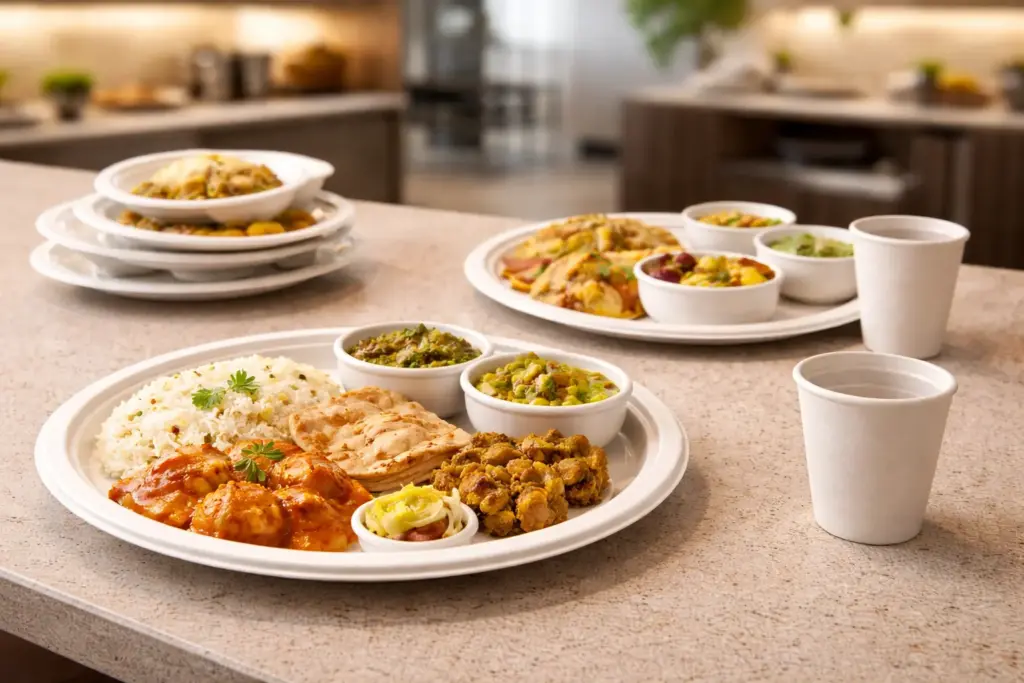
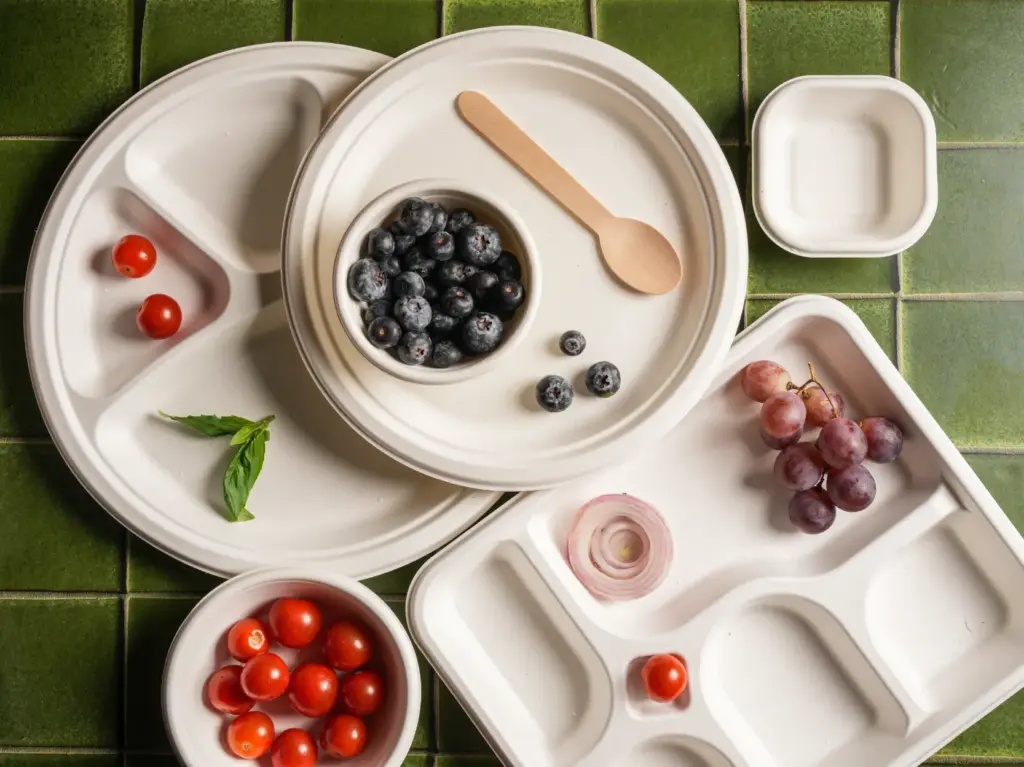
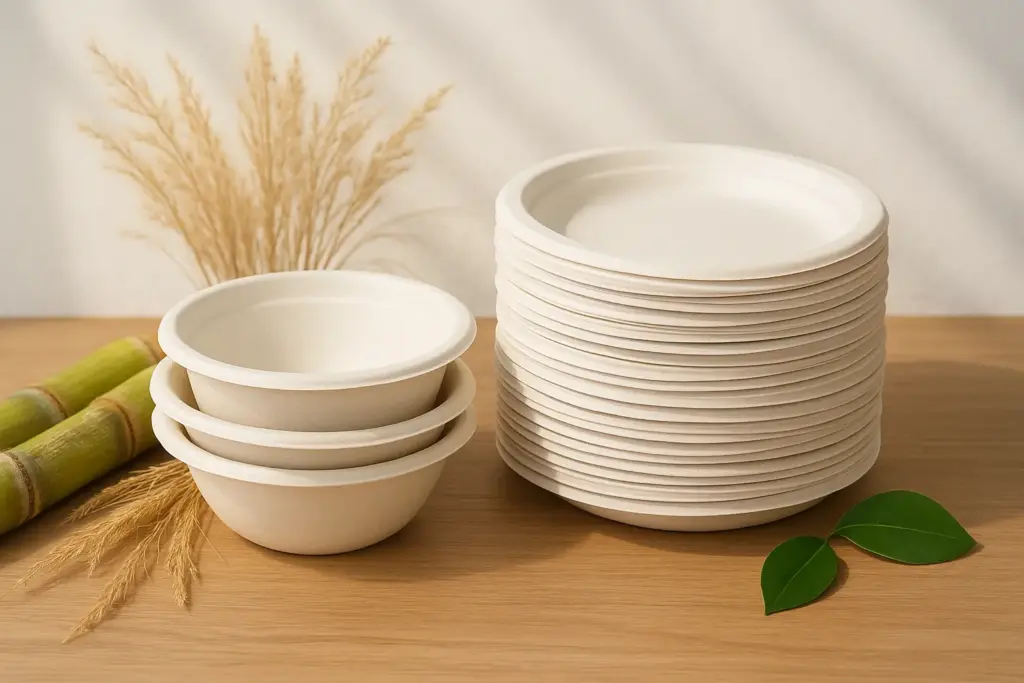
There is a simple middle path between reusing plates in dirty water and serving on foam or plastic. It is single-use tableware made from bagasse, the fibre left over once sugar mills crush the juice out of sugarcane. India makes huge quantities of it, and rather than burning it as waste, it can be moulded into plates, bowls, cups and the little compartment trays that chaat and rice dishes need. For a street food setting it fixes both problems at once:
- A fresh plate every time. Single-use serving removes the dirty-bucket washing step completely, so nothing passes from one customer to the next.
- Nothing leaches into hot food. Bagasse is plant fibre with no plastic coating and no styrene, so hot sambar, oily chaat and cutting chai are safe in it.
- Built for messy food. It resists oil and moisture and stays firm under gravy, so plates do not go soft and leak.
- It composts, it does not pile up. Used bagasse breaks down in roughly 60 to 90 days, while foam and plastic sit in drains and landfills for centuries.
- It is ban-proof. As single-use plastic and thermocol bans spread across Indian states, a vendor already on bagasse has nothing to change and no fine to fear.
Where Pulpcraft comes in
If you run a stall, a chaat counter or a catering setup and want to make this switch, Pulpcraft is one of India’s largest manufacturers of bagasse tableware, and it makes exactly the formats street food needs. Its range covers plates, bowls, cups and multi-compartment trays that suit everything from pani puri and chaat to a full plate of chole bhature, all resistant to oil and moisture and safe with hot food. The tableware is produced under strict food-safety certifications, including ISO 9001, ISO 14001, ISO 22000 and ISO 45001, along with SGS testing, Sedex and FDA compliance, so what touches your customers’ food is properly food-grade. Because Pulpcraft sells direct from the factory in bulk at steady wholesale rates, even a small vendor can buy compostable plates for a rupee or two apiece and never run short during the evening rush. It is a small change to the cost of a plate that upgrades both the hygiene and the image of everything you serve. To get wholesale pricing and samples for your menu, reach out to the Pulpcraft team.
What vendors and eaters can do
For a vendor, a few practical moves go a long way:
- Switch hot and oily items to bagasse first. Chai, sambar, gravy chaat and fried snacks are where foam, plastic and newspaper do the most harm.
- Stop reusing plates in a shared bucket. A fresh compostable plate per customer removes one of the biggest infection routes on the cart.
- Use safe water for pani and ice, and keep a hand sanitiser on the cart. Bagasse fixes the plate, not the water, so both matter together.
- Put it on a sign. A simple line such as served on compostable sugarcane plates tells customers you care, and it pulls in the crowd that worries about hygiene.
As an eater, you have signals too. Look for a vendor who serves on clean single-use plates rather than a wet stack, who uses bottled or visibly filtered water, and whose cart sits away from open drains and bins. None of it guarantees a safe plate, but together these habits tilt the odds firmly in your favour.
The bottom line
Street food does not have to mean a gamble with your health, and cleaning it up is not only the vendor’s job or the customer’s luck. The water and the hands get most of the attention, and they should. The plate deserves its share too, because for hot food a foam cup or a plastic dish adds a chemical risk on top of a biological one. Moving to compostable bagasse serveware is one of the cheapest, fastest upgrades a vendor can make. It gives every customer a fresh plate, keeps chemicals out of the food, and leaves nothing behind that will choke a drain. Your next pani puri can be every bit as good, and a good deal safer, served the right way.
Serving street food, chaat or catering? Pulpcraft supplies certified, oil-resistant, compostable bagasse plates, bowls, cups and compartment trays in bulk, the clean and plastic-free way to serve everything from pani puri to chole bhature. Get in touch for wholesale pricing and samples that fit your menu.