The garbage truck drives away and the problem feels solved. Inside the landfill, it is only just beginning.
The short version
A landfill is not a place where trash quietly rots away. Packed tight with no oxygen, waste breaks down slowly and releases methane, a powerful greenhouse gas, along with a toxic liquid called leachate that can poison groundwater.
India buries most of its 1.7 lakh tonnes of daily waste this way. Plastic and foam last for centuries in there, while natural materials like bagasse break down in months and can be composted into soil instead.
Who this is for: students and researchers studying waste management, and anyone, at home or running a food business, who wants to understand where their trash really goes and how to cut what they send to a landfill.
Most of us meet our garbage for about ten seconds a day. We hand a bag to the collector or drop it in a bin, the truck takes it away, and the problem feels finished. It is not.
That waste travels to a landfill, and what happens there is slow, toxic and largely invisible to the people who created it. For a country generating well over a lakh and a half tonnes of waste a day, understanding the inside of a landfill is the first step to sending less to one. This is the ugly truth, laid out plainly.
What actually happens inside a landfill?
Short answer: Waste is dumped in layers and packed down tight. With almost no oxygen, it rots very slowly and gives off methane, a strong greenhouse gas, plus a toxic liquid called leachate that can seep into soil and groundwater.
A landfill is not a giant compost heap. It is a deep, tightly packed pile where fresh waste is spread, crushed by heavy machines and often covered with soil. That compaction squeezes out the air, and this is the key to everything that follows.
Without oxygen, the bacteria that break down organic matter switch to anaerobic digestion, a slow process whose main by-product is methane. Meanwhile, rain trickles through the pile and picks up a cocktail of chemicals on the way down, forming leachate, a dark, poisonous liquid that can contaminate groundwater if it is not contained.
Add the constant risk of methane fires, the smell, and the disease-carrying pests, and a landfill becomes a hazard long after the last truck leaves.
How big is India’s landfill problem?
Short answer: Very big. India produces around 1.7 lakh tonnes of waste a day, and only about half is properly processed. The rest piles up into landfills so large that Delhi’s Ghazipur dump stands roughly 65 metres tall.
| 1.7 lakh tonnes of waste India generates every single day | ~50% of it is actually processed; the rest is dumped or landfilled | ~65 m the height of Delhi’s Ghazipur trash mountain, near that of the Qutub Minar |
The scale is hard to picture until you see the numbers. India generates roughly 1.7 lakh tonnes of municipal solid waste every single day. Most of it is collected, but only about half is scientifically processed. The rest is simply dumped.
Delhi alone processes only around two-thirds of its daily waste, sending the remainder to landfills at Ghazipur, Bhalswa and Okhla. Ghazipur has grown into a mountain of garbage close to the height of the Qutub Minar, and Mumbai’s Deonar dumping ground is one of the oldest and largest in the country.
These sites regularly catch fire, leak into the water table, and sit next to neighbourhoods where people live and children play.
Why don’t things just rot away in a landfill?
Short answer: Because there is no oxygen. Composting needs air, but a packed landfill has almost none, so even food and paper break down painfully slowly and produce methane instead of clean soil.
This is the point most people miss. When you compost waste in a garden pit, oxygen lets microbes turn it into soil in a matter of weeks. Bury that same waste deep in a compacted landfill and you starve those microbes of air.
Decomposition slows to a crawl, and archaeologists have famously pulled decades-old newspapers and recognisable food out of old landfills. So a landfill does not solve waste. It stores it, badly, while leaking gas and poison.
The lesson is that where your waste ends up matters as much as what it is made of.
How long does trash take to break down?
Short answer: Natural materials go in weeks to months, but plastic and foam last for centuries. A plastic bag can take 500 to 1,000 years, while bagasse tableware breaks down in about 60 to 90 days when composted.
Here is a rough timeline for common items. Green is quick, red lasts for generations:
| Item in a landfill | Rough time to break down |
| Vegetable and food scraps | A few weeks to a few months |
| Paper | 2 to 6 weeks |
| Bagasse (sugarcane) tableware | 60 to 90 days in composting conditions |
| Cotton cloth | 1 to 5 months |
| Aluminium can | 200 to 500 years |
| Plastic bag | 500 to 1,000 years |
| Plastic bottle | About 450 years |
| Styrofoam / thermocol | 500 years or more, effectively never |
The gap is staggering. A vegetable peel is gone in weeks. A plastic bag from the same lunch can outlast your great-great-grandchildren, and as it slowly fragments it turns into microplastics that spread through soil and water.
Styrofoam barely breaks down at all. Every plastic and foam item we send to a landfill is, in effect, permanent.
What about compostable products like bagasse?
Short answer: Compostable products made from natural fibre such as bagasse break down in about 60 to 90 days in composting conditions, leave no microplastics, and can become soil instead of landfill. Even if they do reach a landfill, they break down far faster than plastic.
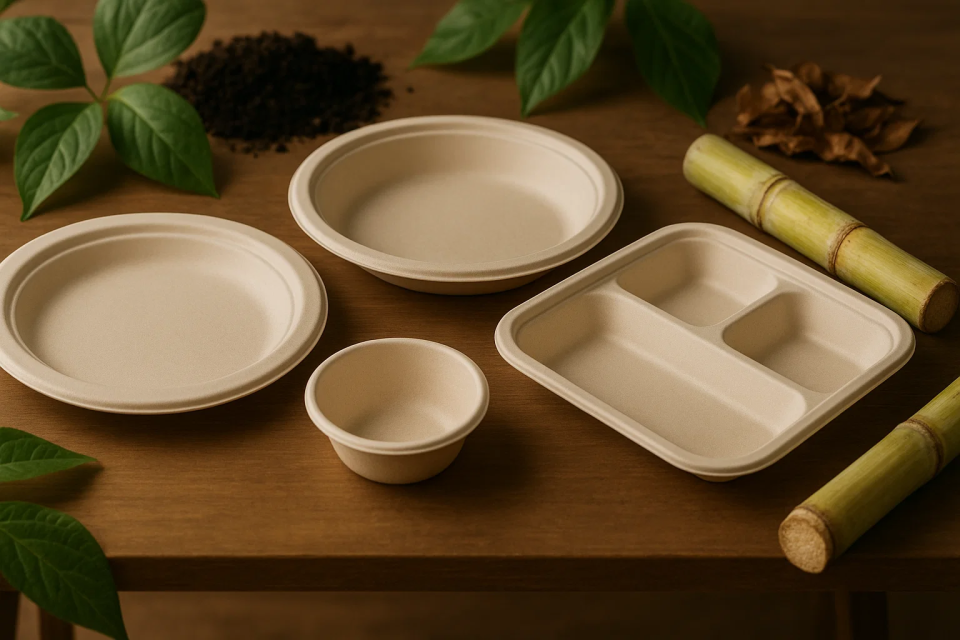
This is where the material choice starts to matter enormously. Bagasse, the fibre left after sugar mills crush the juice from sugarcane, is natural plant matter with no plastic in it.
Sent to a composting facility or even a home compost pit, a bagasse plate turns into nutrient-rich soil in roughly 60 to 90 days. Because it is plant fibre, it leaves behind no microplastics and no toxic residue.
A plastic clamshell holding the same meal does the opposite: it sits in a landfill for centuries and slowly poisons its surroundings.
To be honest about it, a compostable plate reaches its best ending when it is actually composted rather than buried, which is why waste segregation matters. But even in the worst case of ending up in a dump, plant fibre breaks down in a fraction of the time plastic takes and does none of the long-term microplastic damage.
So what is the real solution?
Short answer: Cut what reaches the landfill in the first place: separate wet and dry waste, compost organic matter, and swap single-use plastic and foam for compostable materials that can go back to the soil.
Landfills will not fix themselves, and building more is not an answer. The realistic path has three parts:
- Segregate waste at the source into wet, dry and hazardous, so organic matter can be composted instead of buried.
- Compost the wet waste — at home, in a community pit, or through a municipal facility — so it becomes soil rather than methane.
- Replace single-use plastic and foam with compostable materials that belong in the compost stream, not the landfill. This is where every food business and household has direct control.
Do those three things and the mountain stops growing.
Where Pulpcraft comes in
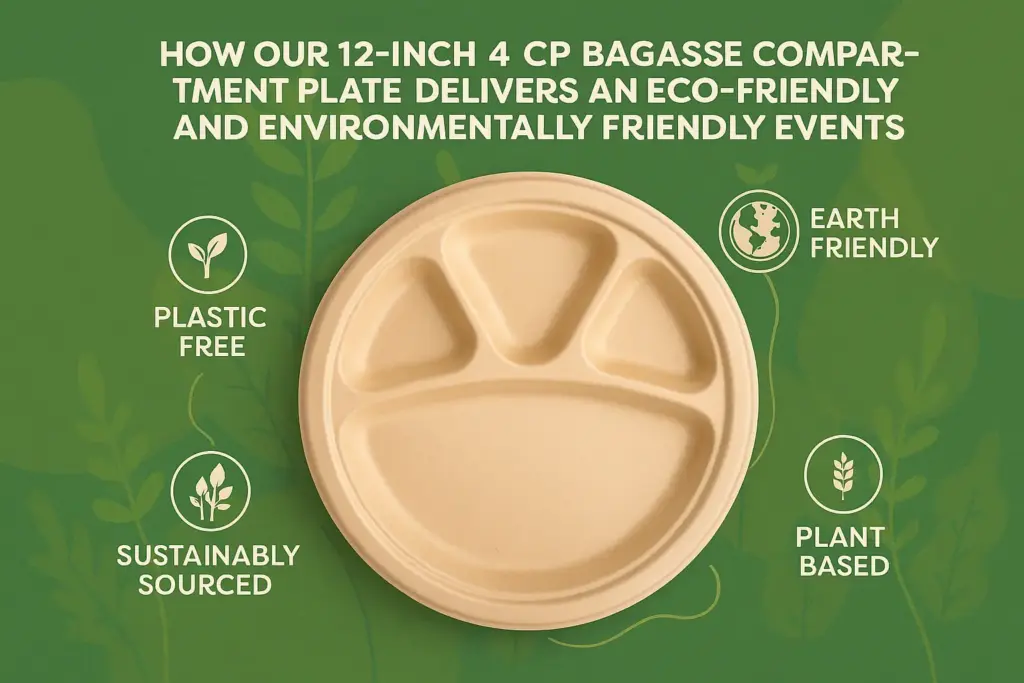
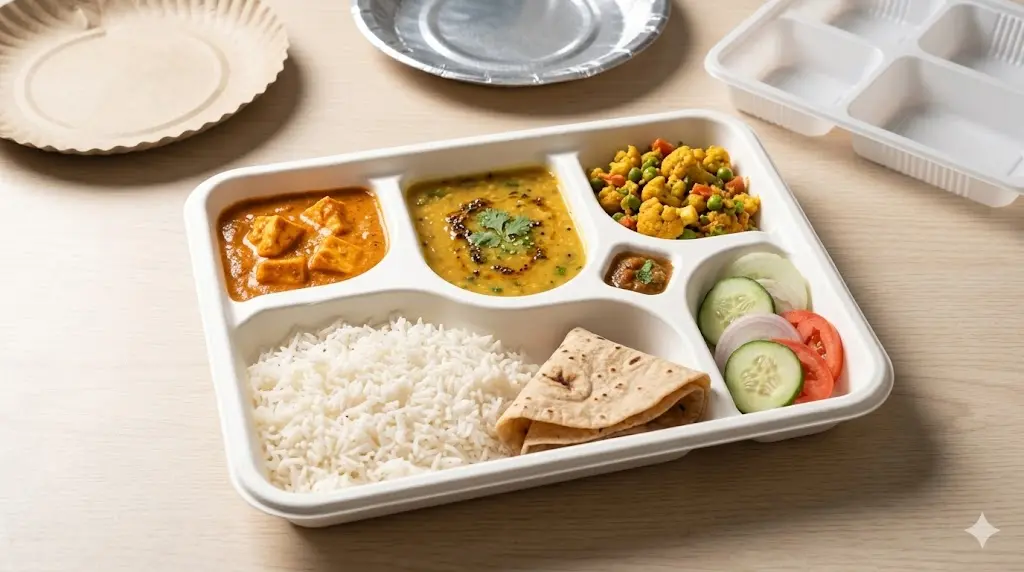
For anyone serving or packing food, the third step is the easiest to act on today, and Pulpcraft is built for it. As one of India’s largest makers of bagasse tableware and packaging, it turns sugarcane waste into plates, bowls, compartment meal trays and clamshell boxes that do the job of plastic without the centuries-long afterlife.
Because they are pure plant fibre, they are compostable in about 60 to 90 days and leave no microplastics behind.
Everything is made under strict food-safety certifications:
- ISO 9001, ISO 14001, ISO 22000 and ISO 45001
- SGS testing
- Sedex compliance
- FDA compliance
This means the products are both compostable and properly food-grade.
Pulpcraft supplies direct from the factory in bulk at steady wholesale rates, which lets a restaurant, cloud kitchen, canteen or event caterer switch away from landfill-bound plastic for a rupee or two per piece. Every box swapped is one less plastic item added to a dump that will still be there in five hundred years.
To get wholesale pricing and samples for your menu, reach out to the Pulpcraft team.
What you can do to send less to the landfill
Short answer: Separate your waste, compost your food scraps, refuse single-use plastic and foam, and choose compostable tableware for meals and events.
- Segregate at home. Keep wet, dry and hazardous waste in separate bins so each can be handled properly.
- Compost your kitchen waste. A small home or community compost turns food scraps into soil instead of landfill methane.
- Refuse plastic and foam for food. These are the items that last for centuries, so cutting them has the biggest long-term impact.
- Choose compostable tableware. For parties, canteens and takeaway, bagasse plates and boxes can go into the compost, not the dump.
- If you run a food business, switch your packaging. One purchasing decision keeps thousands of plastic items a month out of the landfill.
Frequently asked questions
What gases does a landfill release?
Mainly methane and carbon dioxide from rotting organic waste. Methane is a greenhouse gas far more powerful than carbon dioxide over the short term, which makes landfills a serious climate problem.
How much of India’s waste is actually processed?
Roughly half. India generates about 1.7 lakh tonnes of municipal solid waste a day, and a large share is dumped or landfilled rather than scientifically processed.
Do compostable products break down in a landfill?
They break down much faster than plastic, but they do best in actual composting conditions with oxygen. That is why separating waste and composting it matters as much as choosing compostable materials.
How long does plastic last in a landfill?
Commonly 450 to 1,000 years depending on the item, and styrofoam effectively never breaks down. As plastic fragments it also creates microplastics that spread through soil and water.
Is bagasse tableware really better for landfills?
Yes. It is plant fibre that composts in about 60 to 90 days and leaves no microplastics, so it can return to the soil instead of adding permanently to a dump.
The bottom line
A landfill is not the end of our waste — it is a slow-motion problem we bury and forget. Packed tight and starved of air, it leaks methane into the sky and poison into the ground, and it holds every plastic and foam item we ever threw in it for centuries.
India cannot dig its way out of this by building bigger dumps. The way forward is to send less: separate waste, compost what can be composted, and replace throwaway plastic with materials like bagasse that turn back into soil in months.
The garbage truck may drive away, but the choice of what we hand it stays with us.
Want to stop sending plastic to the landfill? Pulpcraft supplies certified, compostable bagasse plates, bowls, trays and clamshell boxes in bulk, made from sugarcane fibre that returns to soil in months instead of centuries. Get in touch for wholesale pricing and samples that fit your menu.