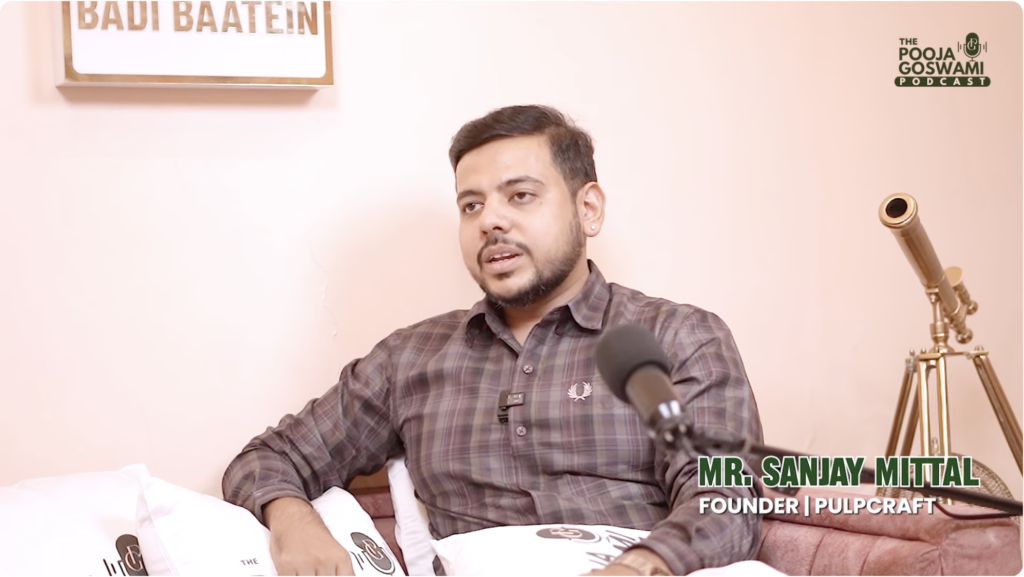
The global shift toward sustainability is accelerating, and at the heart of this transformation are companies that dare to rethink the way the world consumes everyday essentials. In a recent episode of The Pooja Goswami Podcast, listeners had the opportunity to hear from Mr. Sanjay Mittal, the founder of Pulpcraft, one of India’s most forward-thinking manufacturers of sugarcane bagasse tableware.
This powerful conversation explores the origins of Pulpcraft, the science behind bagasse products, and the larger movement towards eco-friendly dining solutions. The episode is not just about tableware, it’s about innovation, mindset, government policy, entrepreneurship, and the future of sustainability in India.
Table of Contents
How Pulpcraft Was Born: Turning a Problem Into a Solution
At the beginning of the discussion, Mr. Mittal shares the inspiration behind starting Pulpcraft. The idea emerged from a simple question: How can we create sustainable products from agricultural waste?
With India producing massive quantities of sugarcane, bagasse often went unused or was burned — causing pollution. Identifying this gap, Mr. Mittal saw an opportunity to transform waste into value.
This led to the establishment of Pulpcraft’s manufacturing setup in Varanasi, built around modern, clean, and efficient processes for converting raw bagasse into strong, reliable, compostable tableware.
What Pulpcraft Manufactures: A Complete Range of Sugarcane Bagasse Tableware
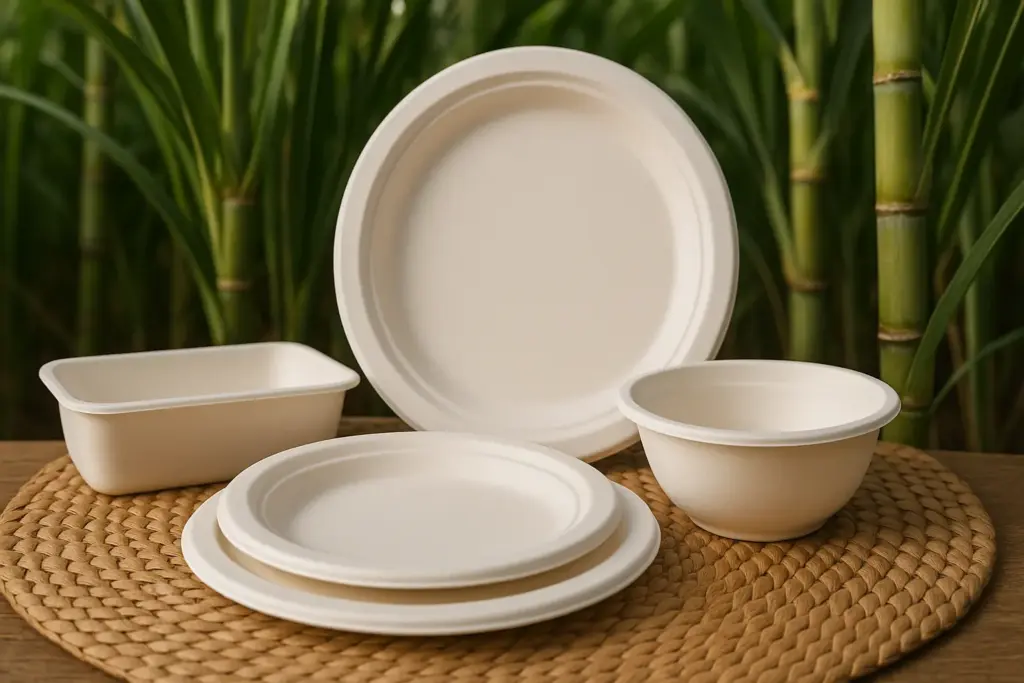
Pulpcraft manufactures a functional and elegant range of products made entirely from sugarcane fiber. These include:
- 6″ Plate
- 11″ 4CP Plate
- 12″ Plate
- 180 ml Bowl
- Meal Trays
- Eco-friendly Glasses
- 6″ Deep Round Plate
Every product is designed for durability, heat resistance, and complete compostability, making them ideal for food delivery brands, restaurants, caterers, events, and retailers.
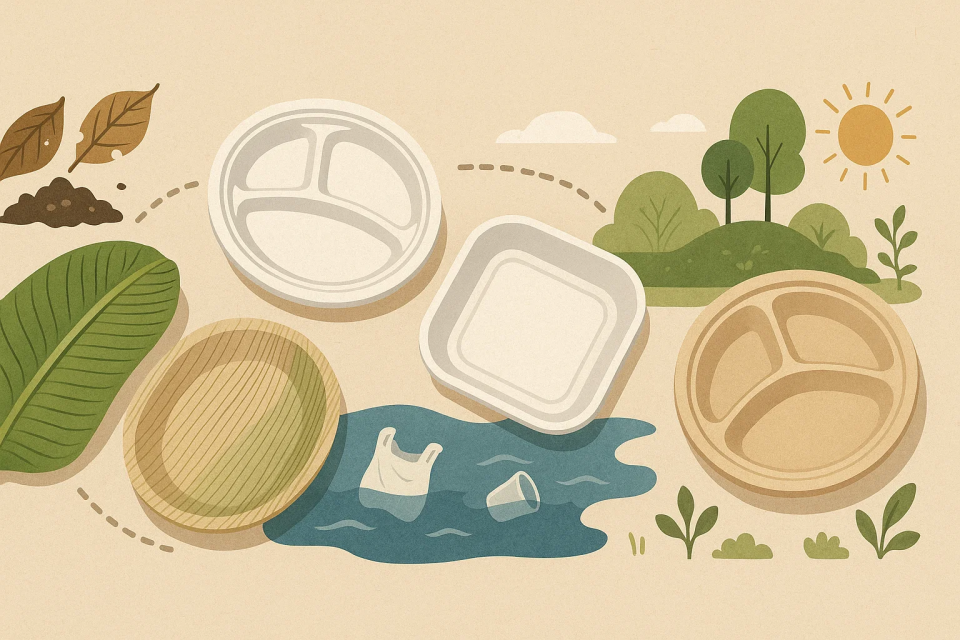
Bagasse vs Plastic: Why the Shift Matters
A core part of the discussion focuses on why bagasse products are better than plastic or thermocol. Mr. Mittal explains that plastic has a lifespan of minutes but a decomposition period of centuries. Thermocol is harmful and non-recyclable.
Bagasse solves both problems:
- Made from agricultural waste
- Decomposes naturally
- Food-grade and chemical-free
- Heat and oil-resistant
- Safe and sturdy
Bagasse products are often perceived as expensive, but as Mr. Mittal clarifies, the long-term environmental and compliance benefits far outweigh the marginal price difference.
Changing Mindsets: How India Can Adopt Sustainable Practices Faster
One of the strongest segments of the podcast touches on Indian consumer mindset. Many people still view eco-friendly products as unnecessary or costly. Pulpcraft tackles this challenge through:
- Awareness campaigns
- Education about compostability
- Collaborating with B2B partners
- Offering quality products that match or exceed plastic performance
As Mr. Mittal says, “Mindset change begins when people see and experience a better alternative.”
Behind the Scenes: The Entrepreneurial Journey
The conversation also dives deep into Mr. Mittal’s own life, education, and the personal journey that shaped Pulpcraft.
Key moments include:
- Deciding to enter the sustainability space
- Cracking the first major client
- Challenges of convincing businesses to switch
- Innovation cycles inside the factory
- Expansion into future eco-friendly products
His vision extends beyond tableware, Pulpcraft is already researching medical and hygiene products made from natural fibers.
Innovation, Durability & R&D
Mr. Mittal shares insights about ongoing research to increase the durability, rigidity, and performance of bagasse products. Pulpcraft continuously tests and refines product design, partnering with designers to match market needs.
Every innovation is guided by real-world usage, from hot meals to food delivery stresses.
Government Role, Regulations, and Market Reality
Several sections of the podcast discuss:
- India’s single-use plastic ban
- Black marketing of banned materials
- Gaps in enforcement
- How government policies can accelerate bagasse adoption
- Carbon credits and their future role
Mr. Mittal also highlights proud moments where government bodies acknowledged Pulpcraft’s contribution to sustainability.
India vs the World: Where Do We Stand?
India is improving but still catching up to countries where sustainable alternatives are the norm. According to Mr. Mittal:
- Awareness must increase
- Products must be accessible
- Businesses must set examples
- Government support must strengthen
With manufacturers like Pulpcraft leading innovation, India is well-positioned to become a global hub for eco-friendly tableware.
Practical Takeaways for Businesses & Listeners
The episode concludes with powerful advice for:
Businesses:
- Treat sustainability as a long-term investment
- Follow government regulations early
- Switch to compostable packaging to protect brand reputation
Gen-Z:
- Take responsibility for the world you inherit
- Make conscious choices in consumption
- Advocate for cleaner, safer alternatives
Manufacturers & Entrepreneurs:
- Look for opportunities in solving real problems
- Innovate continuously
- Think beyond profit — think impact
Why Pulpcraft Stands Out
Throughout the conversation, one message is clear:
Pulpcraft is not just a manufacturer — it is a movement.
What makes Pulpcraft unique?
- Ethical, science-driven manufacturing
- Wide product range
- Strong B2B partnerships
- Vision beyond tableware
- Commitment to education and awareness
Pulpcraft is shaping a greener India one product — and one conversation — at a time.
Watch the Full Podcast
This blog only scratches the surface of the insights shared by Mr. Sanjay Mittal.
Watch the full episode here: https://www.youtube.com/watch?v=gt53RhtYn1A