If you are pricing bamboo plates for a restaurant, a catering job or a shop shelf, you will usually end up comparing them with bagasse (sugarcane fibre) plates. Both are sold as plastic-free. They differ in what they are made of, how they handle hot Indian food, what they cost per plate and how easy they are to buy by the box. This guide covers each of those, from the point of view of a business that orders in volume.
Table of Contents
What “bamboo plates” usually means
The term covers three quite different products, and the listing rarely says which one you are looking at:
- Bamboo leaf or sheath plates: pressed from dried bamboo sheath, similar in idea to areca leaf plates. Rustic, brown, each one slightly different.
- Moulded bamboo pulp plates: bamboo fibre pulped and moulded under heat and pressure, the same process used for bagasse. They look like bagasse plates, often in a darker, tan colour.
- Bamboo fibre “reusable” plates: thicker, glossy plates sold as dinnerware. Some of these are bamboo powder bound with a resin. Ask the supplier what binder is used before treating them as compostable or food-safe for hot dishes.
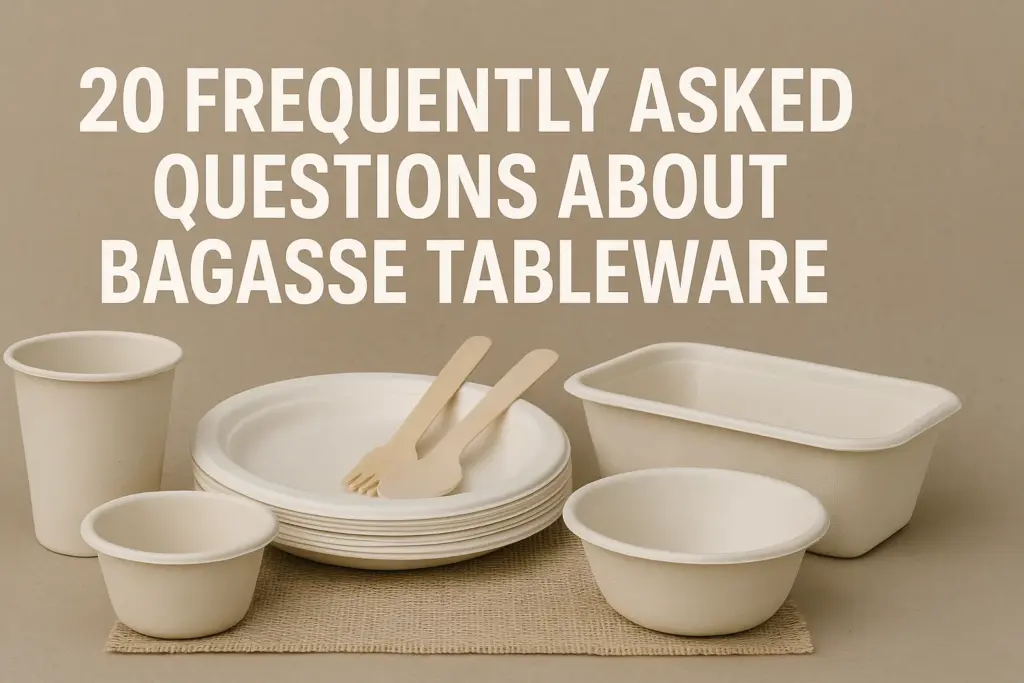
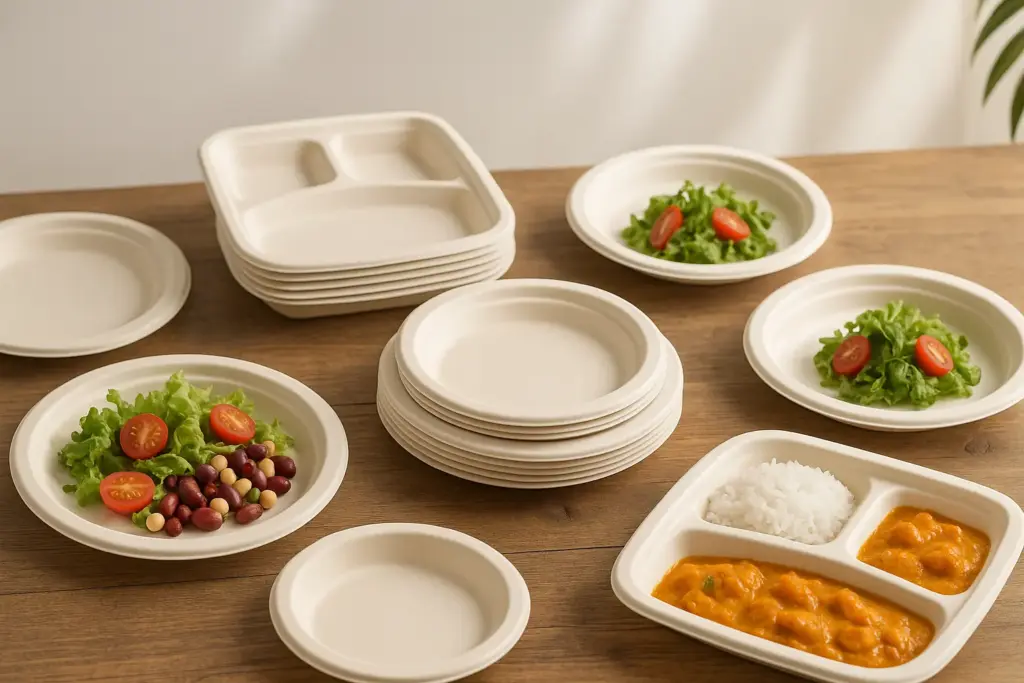
Bagasse plates are simpler to describe: sugarcane fibre left after juice extraction, pulped and moulded, with no plastic lining. Every Pulpcraft plate is made that way.
Bamboo plates vs bagasse plates: side by side
| Factor | Bagasse plates | Bamboo plates |
|---|---|---|
| Raw material | Sugarcane fibre, a by-product of sugar mills | Bamboo grown as a crop (leaf, pulp or powder) |
| Cost at volume | Usually lower, made at scale | Usually higher, depends heavily on type |
| Hot dal and gravy | Designed for wet, oily food | Varies by type; leaf plates can soak at the edges |
| Microwave | Yes | Check each product; resin-bound items may not be |
| Look | Clean off-white, uniform | Natural tan or brown, varies by batch |
| After use | Compostable | Leaf and pulp types compost; ask about resin-bound types |
| Supply in India | Steady, year-round | Less predictable at volume |
| Best use | Everyday foodservice, catering, takeaway | Premium look, cutlery, semi-reusable items |
Comparing quotes for plates?
Send us the sizes and quantities you are pricing for bamboo plates and we will quote the matching bagasse sizes, with samples so you can compare them side by side with your own food.
Strength with hot Indian food
The test that matters is simple: does the plate hold a full serving of hot dal, sabzi and rice for the length of a meal without bending or leaking? Bagasse is moulded for exactly that and stays rigid with wet and oily food, which is why it is so common in takeaway and catering. Moulded bamboo pulp performs in a similar way. Bamboo leaf plates are firm but have a natural grain, and thin areas can soften when gravy sits on them.
For reheating, bagasse plates can go in the microwave. With bamboo, confirm per product, especially for glossy resin-bound plates, which are often sold as not suitable for microwaves.
Cost and availability for bulk buyers
Cost is where the two usually differ most. Bagasse comes from a waste stream that sugar mills already produce, and it is moulded at scale, so prices for bulk buyers tend to be lower and steadier. Bamboo is grown and processed as a crop, so prices are usually higher, and stock for moulded bamboo plates is often harder to line up at volume. For a business using thousands of plates a month, both points add up.
Ask any supplier for the same three things before comparing: the price per plate at your monthly quantity, the minimum order, and how quickly they can repeat the order in a busy season. A cheap first order is not much use if the second one takes weeks.
Bagasse sizes you can compare against
If you are moving from bamboo plates to bagasse, or pricing both, these are the sizes Pulpcraft makes. Match them to the bamboo sizes on your current quote. See all bagasse plates for more detail.
| Product | Size | Depth | Weight | Per packet | Per box |
|---|---|---|---|---|---|
| 6 inch Deep Round Plate | 150 mm | 25 mm | 7 g | 50 | 2,000 |
| 7 inch Deep Round Plate | 175 mm | 25 mm | 8 g | 50 | 1,500 |
| 9 inch Round Plate | 225 mm | 18.5 mm | 14 g | 25 | 1,000 |
| 10 inch Round Plate | 250 mm | 22 mm | 19 g | 25 | 500 |
| 11 inch Round Plate | 278 mm | 24.5 mm | 21 g | 25 | 500 |
| 12 inch Round Plate | 305 mm | 24.5 mm | 25 g | 25 | 500 |
| 10 inch 3 Compartment Plate | 250 mm | 22 mm | 19 g | 25 | 500 |
| 11 inch 4 Compartment Plate | 278 mm | 24.5 mm | 22 g | 25 | 500 |
| 12 inch 4 Compartment Plate | 305 mm | 24.5 mm | 26 g | 25 | 500 |
Which should your business choose?
- Cloud kitchens, QSRs and caterers: bagasse, for lower cost per plate, wet-food performance and repeatable supply.
- Cafes and premium dine-in brands: bamboo leaf or tan pulp plates can suit a natural brown look, if the cost works.
- Retailers and wholesalers: bagasse usually gives a better margin and sells across more customer types.
- Weddings and large events: bagasse, because you need hundreds of identical plates that stack and hold gravy.
Bagasse plates with bamboo cutlery: often the best mix
Many businesses use both. Bamboo and wood work well for cutlery, stirrers and skewers, where a firm, rigid material is the point. Bagasse is the better choice for plates, bowls, trays and clamshells, where you need a moulded shape that holds wet food. Pairing bagasse tableware with bamboo or wooden cutlery is a common setup.
What to check before ordering bamboo or bagasse
- Ask exactly which type of bamboo plate it is (leaf, pulp or resin-bound) and what binder, if any, is used.
- Confirm the plate is food-grade and has no plastic lining or film.
- Load-test a sample with your hottest, oiliest dish and leave it for 15 minutes.
- Check that plates from different packets match in size and thickness.
- Get the minimum order, box count and reorder time in writing.
Our guide to red flags when buying bagasse plates covers more checks that apply to any plate supplier. Pulpcraft makes every plate, bowl and tray at its own plant in Kaimur, Bihar. The plant holds BRCGS (Packaging Materials, Grade A), ISO 9001, ISO 14001, ISO 45001 and ISO 22000 certification, with SGS and CIPET test reports on the products. You can see the certificates on the About page.
After use
Bagasse plates compost in commercial facilities and, more slowly, at home; our composting tips explain how. Bamboo leaf and pulp plates also compost. If a bamboo plate is bound with resin, ask the supplier how it should be disposed of. For the difference between the labels you will see on packs, read biodegradable vs compostable vs recyclable.
FAQs
Are bamboo plates cheaper than bagasse plates?
Usually not. Bagasse is made from a sugarcane by-product at large scale, so it is typically cheaper per plate at volume. Bamboo prices vary a lot by type.
Are bamboo plates compostable?
Bamboo leaf and moulded bamboo pulp plates are. Some thicker bamboo fibre plates use a resin binder, so ask the supplier before treating them as compostable.
Which is better for hot curry and dal?
Bagasse is the safer all-round choice for hot, wet Indian food. See our notes on hot and oily food.
Can I use bamboo plates in a microwave?
Check each product. Bagasse plates can be microwaved; glossy resin-bound bamboo plates often cannot.
Which is easier to buy in bulk in India?
Usually bagasse. It is made from a steady by-product at large scale, so stock and repeat orders are easier to arrange.
Can Pulpcraft send samples to compare?
Yes. Tell us the sizes you need and we will send bagasse samples so you can test them next to the bamboo plates you are considering.
Get bagasse plates direct from the manufacturer
Send your sizes and monthly quantity for a quote, or read more about Pulpcraft as a manufacturer and buying plates wholesale.