Bagasse and bamboo are both popular eco-friendly alternatives to plastic, and they are often mentioned in the same breath. But they are made differently, cost differently and suit different jobs. Here is a clear, practical comparison so you can decide which one fits your menu and budget.
How they are made
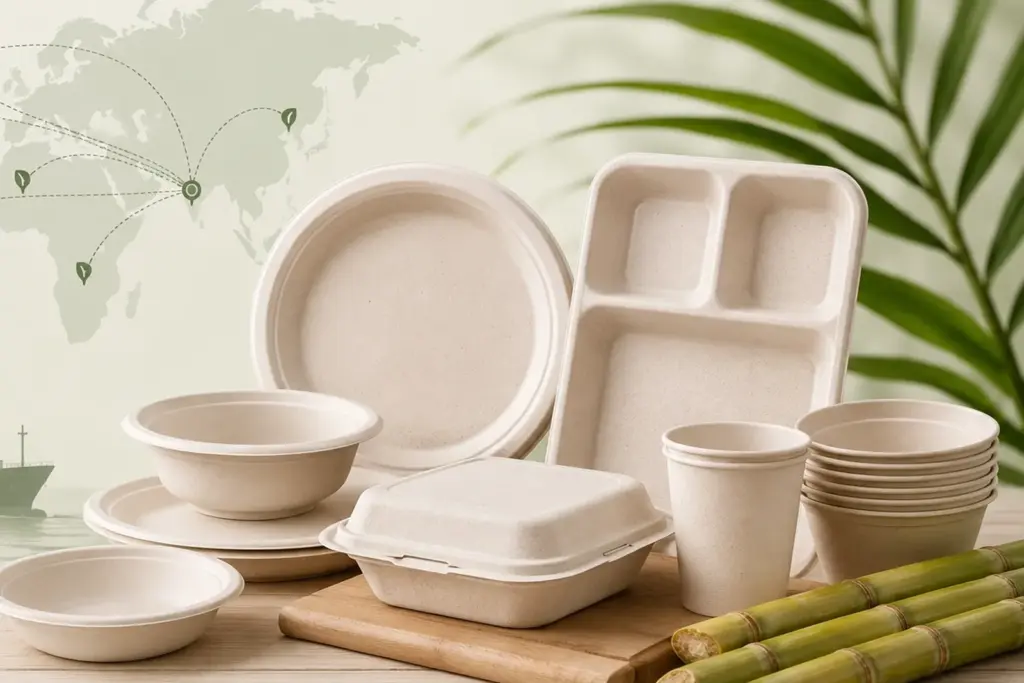
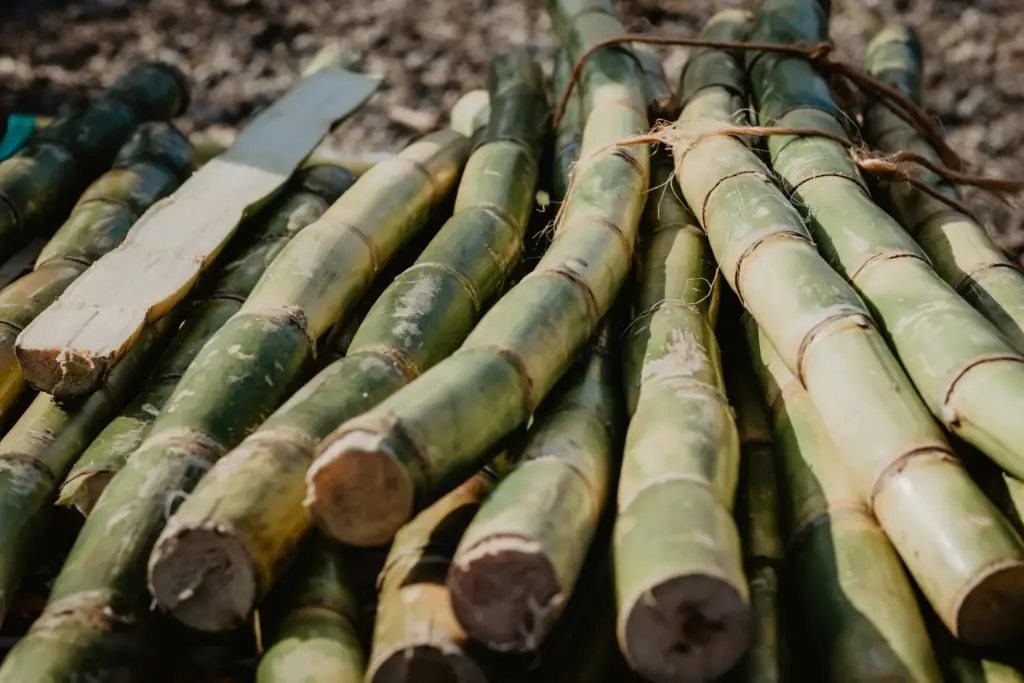
Bagasse uses the sugarcane pulp left over after juice extraction, moulded under heat and pressure into plates, bowls and trays. Bamboo tableware usually means either pressed bamboo-fibre products or bamboo pulp blended into moulded shapes. Both use fast-renewing plant material rather than petroleum.
Bagasse vs bamboo: side by side
| Factor | Bagasse | Bamboo |
|---|---|---|
| Source | Sugarcane waste fibre | Fast-growing bamboo |
| Cost at volume | Lower, very competitive | Generally higher |
| Liquid and oil resistance | Strong, designed for wet food | Good, varies by product |
| Microwave safe | Yes | Often yes, check product |
| Look | Clean off-white | Natural light-brown tone |
| Compostable | Yes, 30 to 90 days | Yes, but denser items take longer |
| Best for | Everyday foodservice, takeaway, catering | Premium look, reusable-style items |
Sustainability notes
Bagasse has a strong circular-economy story because it turns an existing waste stream from sugar mills into useful products, with no extra land or crop grown specifically for it. Bamboo is also renewable and grows quickly, but it is usually cultivated as a crop. Both are far better than plastic; bagasse simply has the edge of being a true by-product.
Which should you choose?
For disposable foodservice where cost, liquid resistance and consistent supply matter, bagasse is typically the more economical and practical choice. Bamboo is attractive where you want a natural brown aesthetic or are leaning toward sturdier, semi-reusable items. For most takeaway, catering and cloud-kitchen use, bagasse delivers the better balance of price and performance.
Durability and real-world performance
In daily use, the question is simple: does the plate hold your food without bending, leaking or going soft? Bagasse is engineered for wet and oily food and stays rigid through a full meal, which is why it is so widely used in takeaway and catering. Bamboo products are generally sturdy as well, though performance varies more between products, since bamboo tableware ranges from thin pressed items to thicker, semi-reusable pieces.
For hot food and reheating, bagasse is reliably microwave-safe and tolerates a wide temperature range. Many bamboo items are microwave-friendly too, but it is worth confirming per product rather than assuming.
Cost at scale for businesses
Cost is where the two diverge most. Bagasse is made from a sugar by-product and produced at large scale, so it is typically the more economical option for bulk buyers, with steady, predictable pricing. Bamboo is cultivated and processed as a crop, which usually puts it at a higher price point. For a business buying thousands of plates a month, that gap adds up quickly.
Which should different businesses choose?
The right pick depends on what you are optimising for:
- Cloud kitchens, QSR and caterers: bagasse, for its lower cost, strong liquid resistance and consistent supply.
- Cafes and premium dine-in brands that want a natural brown aesthetic: bamboo can suit the look.
- Retailers and wholesalers serving everyday customers: bagasse usually offers the better margin and broader appeal.
Bagasse plates with bamboo cutlery: often the best mix
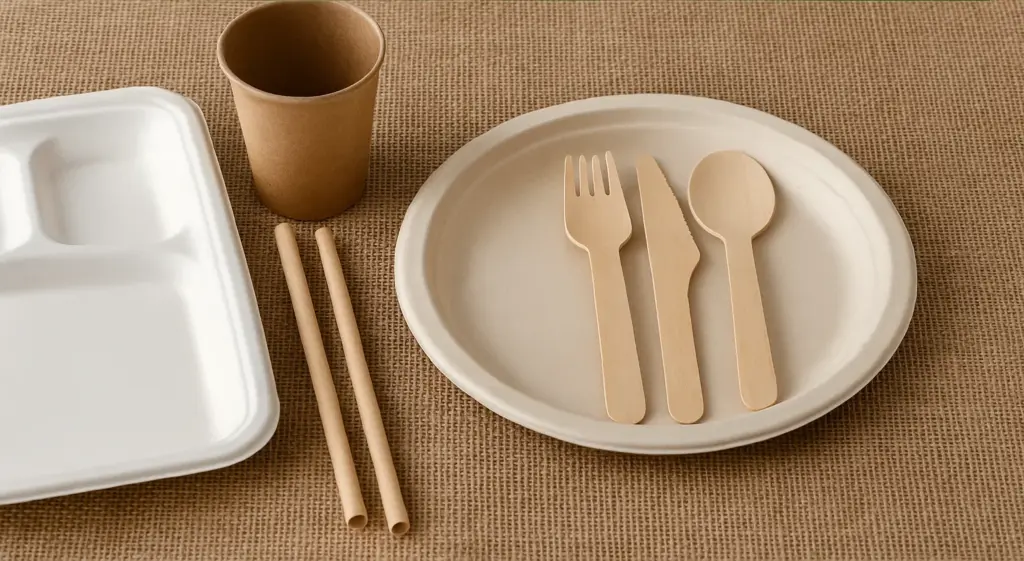
It is easy to frame this as bagasse versus bamboo, but in practice many businesses use both. Bamboo and wood are excellent for cutlery, stirrers and skewers, where a firm, rigid material works well. Bagasse is the stronger choice for plates, bowls, trays and clamshells, where you need a moulded shape that holds wet and oily food. Pairing bagasse tableware with bamboo or wooden cutlery often gives the best overall result rather than forcing a single material everywhere.
Food safety and certifications
Both materials are natural and generally food-safe, but quality still varies. Look for products described as food-grade, and prefer items made without a plastic lining or questionable coatings. Bagasse plates are moulded from fibre without a plastic layer, which is part of why they reheat cleanly in the microwave. With bamboo products, check how the item is bound or pressed, since some lower-grade pieces use binders you may want to avoid.
What to check before buying bamboo or bagasse
- Confirm the product is food-grade and free from a plastic lining.
- Check rigidity and thickness with a loaded sample, not an empty plate.
- For bagasse, confirm consistent sizing and smooth moulding across the batch.
- For bamboo, confirm the finish is even and free from rough edges or binders you do not want.
- Ask about bulk pricing and lead time, since bagasse is usually cheaper and easier to source at scale.
A quick verdict
For everyday plates, bowls and trays, where cost, liquid resistance and steady supply decide the outcome, bagasse is the more practical and economical choice. Bamboo shines for cutlery and for brands that specifically want a natural brown aesthetic or sturdier, semi-reusable items. The smartest setups often combine the two.
The bottom line
Bagasse and bamboo are both genuine upgrades over plastic. For most disposable foodservice, where cost, liquid resistance and reliable supply decide the winner, bagasse is the more practical, economical choice. Bamboo earns its place where a natural brown look or sturdier, semi-reusable items are the priority.
Frequently Asked Questions
Is bagasse or bamboo cheaper?
Bagasse is usually cheaper at volume because it is made from a sugar by-product, while bamboo is cultivated and processed as a crop.
Which is more sustainable?
Both are renewable and compostable. Bagasse has a slight edge because it reuses existing sugarcane waste rather than requiring a dedicated crop.
Can both go in the microwave?
Bagasse is reliably microwave-safe. Many bamboo products are too, but you should confirm per product.
Is bagasse or bamboo better for hot food?
Bagasse is reliably microwave-safe and handles hot, wet food well. Many bamboo products manage hot food too, but performance varies, so bagasse is the safer all-round choice.
Which is easier to source in bulk in India?
Bagasse is generally easier and cheaper to source in bulk because it is produced at scale from sugarcane waste, with steady year-round availability.
Is bamboo or bagasse better for cutlery?
Bamboo and wood are usually better for cutlery, stirrers and skewers, while bagasse is better for plates, bowls and trays. Many businesses use bagasse tableware with bamboo or wooden cutlery.
Do bagasse and bamboo decompose at the same rate?
Both are compostable, but thin bagasse items typically break down faster, in about 30 to 90 days, while denser bamboo pieces can take longer.