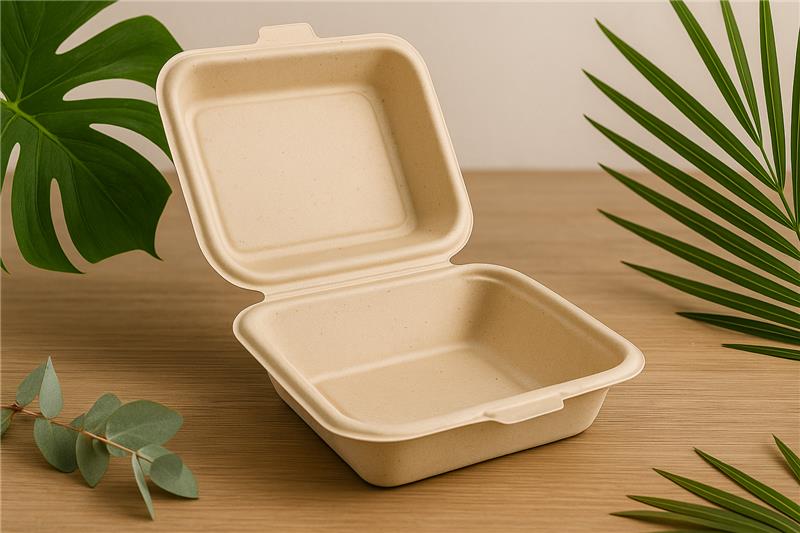
If you’ve had a bad experience with bagasse plates or sugarcane plates, you’re not alone. Many restaurants, cloud kitchens, and bulk buyers switch to biodegradable plates or eco-friendly disposable plates expecting a smooth transition, only to face issues like weak plates, leakage, inconsistent quality, or unreliable supply.
The frustration is real. One bad supplier can disrupt operations, affect customer experience, and create hesitation about switching again.
At Pulp-Craft, we often work with businesses who come to us after exactly this situation. The good news is that a failed supplier doesn’t mean the material is the problem. It usually means the sourcing decision needs to be corrected.
Here’s what to do next.
Step 1: Identify What Actually Went Wrong
Before switching suppliers, it’s important to understand the failure clearly. Most issues with sugarcane bagasse plates fall into a few categories:
- Plates bending or breaking under normal use
- Oil or gravy seeping through
- Inconsistent quality across batches
- Delayed deliveries or stock shortages
- Poor communication from the supplier
Pinpointing the exact problem helps avoid repeating the same mistake. Not all bagasse tableware performs the same, and treating all suppliers as equal is often where buyers go wrong.
Step 2: Re-Test the Material, Not Just the Supplier
After a bad experience, many buyers lose confidence in biodegradable disposable plates altogether. That’s understandable, but often misplaced.
The issue is rarely the material itself. High-quality sugarcane plates are designed to handle hot, oily, and heavy food. The problem usually lies in poor fibre density, weak moulding, or lack of quality control.
Before placing a new order:
- Test plates with hot curries and oily food
- Leave food on the plate for 15–20 minutes
- Check for bending, leakage, and softness
At Pulp-Craft, we encourage buyers to test our eco-friendly disposable plates under real service conditions before committing. Performance should be proven, not assumed.
Step 3: Stop Choosing Based on Price Alone
One of the biggest reasons suppliers fail is unrealistic pricing expectations.
When buying disposable plates wholesale, extremely low prices often mean compromises in:
- Raw material quality
- Fibre compression
- Manufacturing consistency
This leads to exactly the problems buyers experience—leakage, breakage, and inconsistency.
Instead of focusing only on price, evaluate total value:
- How many plates fail during service
- How often staff need to double-plate
- How many customer complaints arise
Reliable bagasse plates reduce these hidden costs significantly.
Step 4: Check Consistency Across Batches
A common issue with failed suppliers is inconsistency. The first batch works well, but later orders feel thinner or weaker.
When evaluating a new supplier for sugarcane bagasse tableware, ask:
- Are specifications standardised across batches?
- How is quality controlled during production?
- Can the supplier maintain consistency at scale?
At Pulp-Craft, consistency is a priority. Our bagasse tableware is manufactured with controlled processes to ensure that every batch performs the same way, so operations remain predictable.
Step 5: Evaluate Supply Reliability, Not Just Product Quality
Even good products fail if supply is unreliable.
Many buyers face:
- Delayed shipments
- Stock shortages during peak demand
- Sudden changes in product quality
When sourcing biodegradable plates or eco-friendly plates, ensure the supplier can:
- Handle your volume consistently
- Scale with your growth
- Deliver on time without variation
A reliable supply chain is as important as the plate itself.
Step 6: Start Small, Then Scale With Confidence
After a failed experience, it’s smart to rebuild trust gradually.
Start with:
- Sample testing
- Small trial orders
- Limited rollout across outlets
Once the plates prove reliable in real conditions, scale your order. At Pulp-Craft, many of our long-term clients began this way—testing first, then expanding once performance was confirmed.
Step 7: Shift From Vendor to Partner Thinking
One of the biggest mindset shifts is this: don’t look for the cheapest vendor, look for a reliable partner.
A good supplier of sugarcane bagasse plates should:
- Understand your food and service conditions
- Maintain consistent quality
- Communicate clearly
- Support long-term supply needs
At Pulp-Craft, we work as partners, not just suppliers. Our focus is on ensuring that our bagasse plates, biodegradable disposable plates, and eco-friendly disposable plates perform reliably in real-world food service, every single time.
Final Thoughts
A failed supplier can be frustrating, but it’s also a useful learning point. It highlights what matters: performance, consistency, and reliability.
The key is not to abandon bagasse plates or sugarcane plates, but to choose better. When sourced correctly, sugarcane bagasse tableware offers strength, stability, and operational ease that supports your business instead of disrupting it.
With the right partner, the experience changes completely. The plates stop being a problem and start doing exactly what they should: working quietly in the background, without surprises.