If you want to import bagasse tableware from India, the hard part isn’t finding a factory. It’s getting the shipment through customs without delays, fines, or a rejected container. This guide walks you through the entire process, from choosing a verified Indian manufacturer to clearing your first shipment, so you can source compostable plates, bowls, and clamshells with confidence.
India produces over 400 million tonnes of sugarcane a year, making it one of the world’s largest sources of bagasse, the fibrous residue left after juice extraction. That abundant, cheap raw material is why importers in the US, UK, Europe, and Australia increasingly choose to import bagasse tableware from India rather than from China or Southeast Asia.
Table of Contents
Why Import Bagasse Tableware from India Specifically?
Not every country with a sugarcane industry makes a good sourcing destination. India stands out for two concrete reasons.
Raw material cost. India’s massive sugarcane output means bagasse is available at a fraction of what manufacturers elsewhere pay. That translates directly into lower per-unit costs for plates, bowls, clamshell containers, and compartment trays. Indian manufacturers also offer flexible minimum order quantities, which matters if you’re a mid-size distributor testing a new line rather than a multinational placing container-load orders.
Export infrastructure. Established Indian manufacturers already ship to the USA, UK, Europe, and the Middle East. That means existing logistics relationships, familiarity with destination-country regulations, and packaging designed to survive ocean freight. A factory that has never exported will cost you time and money in ways that don’t show up on the invoice.
Choosing the Right Indian Supplier
This is where most first-time importers get burned. The price looks good, samples arrive fine, and then the bulk order turns out to be a different product entirely. Here’s how to avoid that.
Certifications Are Non-Negotiable
Any supplier worth working with should provide, without hesitation:
- FDA food-contact compliance certificates (required for US imports)
- BPI compostability certification
- Third-party lab test reports for food safety
- PFAS-free certification, which global buyers increasingly demand
If a supplier can’t produce these within 48 hours of your request, walk away. Cutting corners here risks having your entire shipment rejected at the port.
PulpCraft is one Indian manufacturer worth shortlisting on this basis. It maintains current FDA food-contact documentation, BPI compostability certification, and PFAS-free test reports as standard, precisely because its customer base is weighted toward US and EU importers who require them up front. Ask for these documents when you request a quote and samples, and verify them against the checks below.
What to Verify Beyond Certificates
Certificates can be faked, so supplement them with direct verification:
- Request a live video call showing the production floor, not just the showroom
- Ask for references from current export customers
- Check samples for leakage, structural strength, and finish
- Confirm production capacity matches your order timeline
Start with a Trial Order
Don’t commit to a full container on your first purchase. Professional importers start with small trial orders to test product quality, packaging integrity after shipping, and the supplier’s communication reliability. A trial order of 5,000 to 10,000 units is usually enough to evaluate a supplier without significant financial exposure.
Product Specifications to Lock Down Before Ordering
Bagasse tableware isn’t a single product. It’s a category spanning dozens of SKUs, and your order needs to specify exactly what you’re buying.
The highest-demand products in Western markets right now:
- Plates: 6″, 7″, 9″, 10″, and 11″ sizes, covering desserts to main courses
- Bowls: 100ml for sauces and dips, 180 to 250ml for soups, 350ml+ for full meals
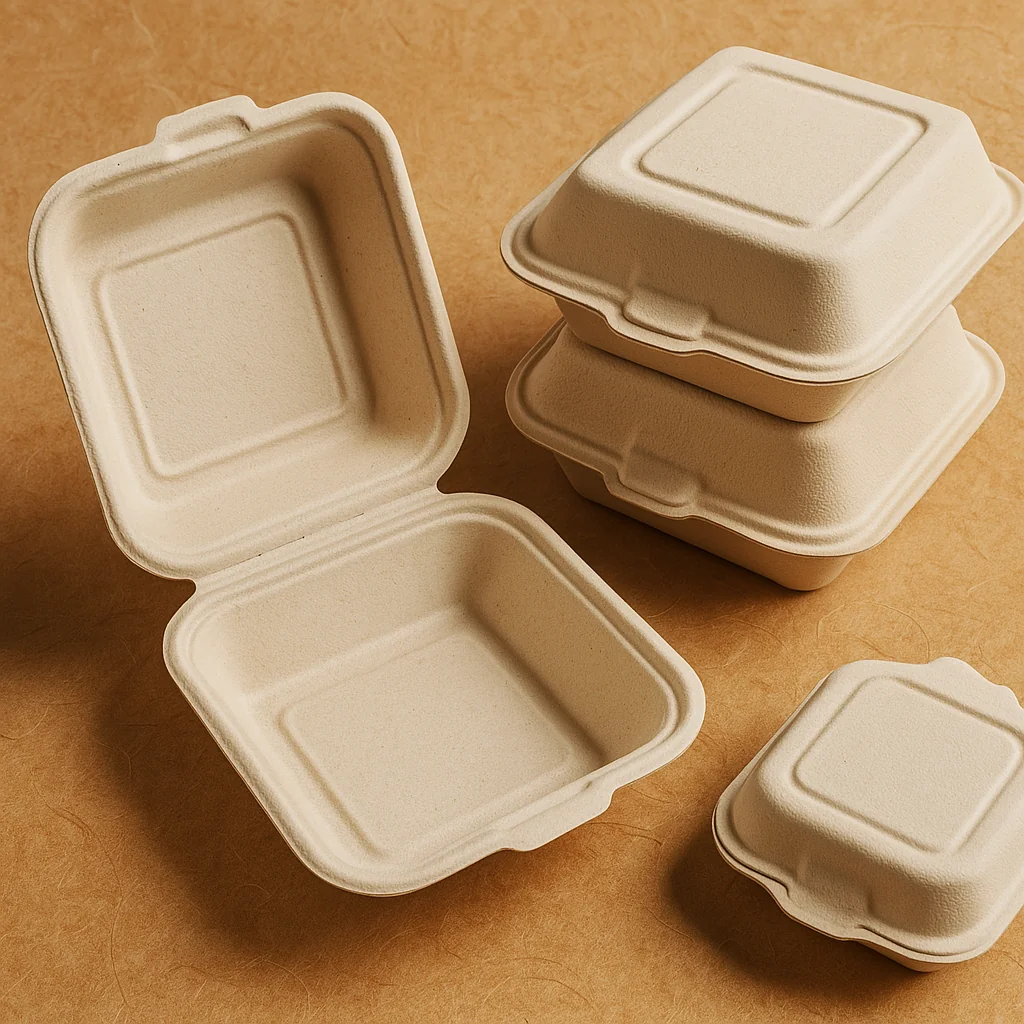
- Clamshell containers: The workhorse of food-delivery packaging, leak-resistant and sturdy
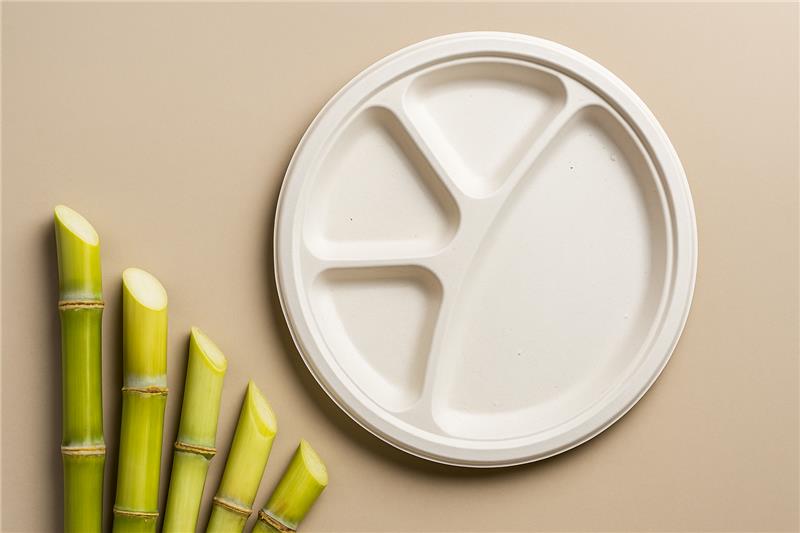
- Compartment trays: Popular for catering, meal prep, and institutional food service
Before ordering, confirm in writing: product dimensions, wall thickness, weight per unit, packaging configuration (units per carton, cartons per pallet), and any custom branding such as embossing or private labeling. Many Indian suppliers now offer custom embossing, private labeling, and custom packaging, which can differentiate your product in a crowded market.
FDA Compliance and US Regulatory Requirements
If you’re importing into the United States, FDA compliance isn’t optional. It’s the single biggest regulatory hurdle, and failing it means your shipment sits at the port or gets sent back.
The core FDA requirements for bagasse tableware:
- All materials must be certified food-safe for direct food contact
- No harmful chemicals or contaminants can be present in the finished product
- The manufacturing process itself must comply with FDA standards
Non-compliant products can be rejected at the border, and you’ll bear the cost of return shipping or destruction. Your supplier should provide FDA compliance documents as part of the standard order package.
For European markets, you’ll need compliance with EU food-contact material regulations, principally Framework Regulation EC 1935/2004 and the Good Manufacturing Practice rules under EC 2023/2006. Note that food-contact tableware does not carry CE marking; CE marking applies to product categories like electronics and medical devices, not to food-contact articles. UK imports post-Brexit carry their own parallel requirements. Know your destination market’s rules before you place an order, not after.
HS Codes, Customs Clearance, and the Details That Delay Shipments
Bagasse tableware is generally classified under HS heading 4823.70, covering articles of moulded pulp, though the final subheading and duty rate depend on your destination country’s tariff schedule. Get the classification wrong and you risk delays, incorrect duty calculations, and potential fines. Confirm the exact code with your customs broker for your destination.
Documents You’ll Need for Customs Clearance
- Import declaration
- Commercial invoice with accurate product descriptions and values
- Packing list matching the commercial invoice
- Bill of lading from the shipping line
- FDA filing (for US imports)
- Certificate of origin
- Phytosanitary certificate (sometimes required for plant-based products)
Missing any one of these can hold your container at the port, racking up daily storage fees. Use a freight forwarder experienced with food-contact imports. A generalist who mainly handles electronics or textiles won’t know the specific documentation requirements.
Shipping Methods: FOB, CIF, and DDP
Three shipping terms dominate bagasse tableware imports. The right one depends on your experience and risk tolerance.
FOB (Free on Board): You take responsibility once goods are loaded onto the vessel at the Indian port, and you arrange ocean freight, insurance, and destination logistics. More control over cost, but more of the process to manage.
CIF (Cost, Insurance, Freight): The supplier handles shipping and insurance to your destination port; you handle customs clearance and inland delivery. A middle ground for importers who have a customs broker but don’t want to manage ocean freight.
DDP (Delivered Duty Paid): The supplier handles everything, door to door. You pay a premium, but for first-time importers it’s often worth it, because the supplier bears the risk of customs issues.
For your first shipment, seriously consider DDP even at a higher per-unit cost. Watching the process happen end-to-end is an education worth the premium. Switch to FOB once you know the process and have your own freight relationships.
Hidden Costs That Blow Up Your Budget
The quoted price per unit is never the final cost. Budget for these from day one:
- Customs clearance fees: Your broker’s charges for processing documentation
- Port handling charges: Unloading, moving, and storing your container at destination
- Demurrage and detention: Daily charges if your container sits too long
- Storage fees: If a customs inspection delays release of your goods
- Documentation error costs: Corrections, refilings, and the delays they cause
As a rough rule of thumb, budget an extra 15 to 25 percent on top of the CIF price to estimate your true landed cost. The exact figure depends on your destination port, broker fees, and how smoothly clearance goes.
Packaging for International Shipping
Bagasse tableware is lightweight but fragile. A plate that’s intact at the factory can arrive cracked if the packaging isn’t built for ocean freight. Reinforced kraft paper or double-walled cartons add protection and significantly reduce damage rates.
Ask your supplier exactly how they package for export: carton grade, whether products are shrink-wrapped within cartons, how cartons are palletized, and whether corner protectors are used. PulpCraft, for example, ships in double-walled export cartons with corner protection designed around the reality that containers get stacked, shifted, and occasionally dropped in transit. That kind of practical packaging detail matters more than the spec sheet suggests.
Typical lead time from order to delivery is 30 to 60 days depending on production and shipping. Factor that into inventory planning, especially if you supply restaurants or food-service companies that can’t wait on backorders.
Building a Long-Term Supply Chain
Your first import is a learning experience. Your second is where you start optimizing. Importers who build profitable bagasse tableware businesses treat their Indian suppliers as long-term partners, not interchangeable vendors. That means regular communication, fair payment terms, and volume commitments that let the manufacturer plan production efficiently.
The global market for sustainable tableware is growing fast, driven by plastic-ban regulations, the food-delivery boom, and corporate sustainability commitments. Importers who establish reliable Indian supply chains now will hold a real advantage as demand accelerates. The process isn’t simple, but with a verified supplier, proper documentation, and realistic cost planning, it’s entirely manageable.
Frequently Asked Questions
Do I need FDA approval to import bagasse tableware into the US?
Products must comply with FDA food-contact regulations. This isn’t a one-time approval; your supplier needs to maintain current compliance documentation, and you need to include the FDA filing in your customs clearance.
Can I import bagasse tableware without certifications?
Technically you can try, but your shipment will likely be held or rejected, and no reputable customs broker will process a food-contact import without supporting certification. Don’t try to save money here.
How long does sugarcane bagasse tableware take to decompose?
Under industrial composting conditions, it typically breaks down within 90 to 120 days. Home composting takes longer.
Is bagasse tableware microwave and freezer safe?
Many bagasse products are rated as microwave-safe for short durations and suitable for cold storage, but this varies by wall thickness and coating, so confirm the rating for each specific SKU with your supplier.
What is the minimum order quantity for importing from India?
Most Indian manufacturers offer flexible MOQs. For a first purchase, a trial order of 5,000 to 10,000 units is typical, enough to test quality and shipping without major financial exposure.
How long does shipping take from India?
Typical lead time from order placement to delivery is 30 to 60 days, depending on production time and ocean freight schedules.
Which shipping term is best for first-time importers?
DDP (Delivered Duty Paid) is usually safest for your first shipment because the supplier handles everything door to door and bears the customs risk. Switch to FOB once you know the process and have your own freight relationships.
What is the HS code for bagasse tableware?
It’s generally classified under HS heading 4823.70 (articles of moulded pulp), but confirm the exact subheading and duty rate with your customs broker for your destination country.