Paper plates have been the default cheap disposable for decades, but they struggle with hot, oily and saucy food. Bagasse plates were built for exactly those conditions. Here is how the two compare when you put real food on them.
The core difference
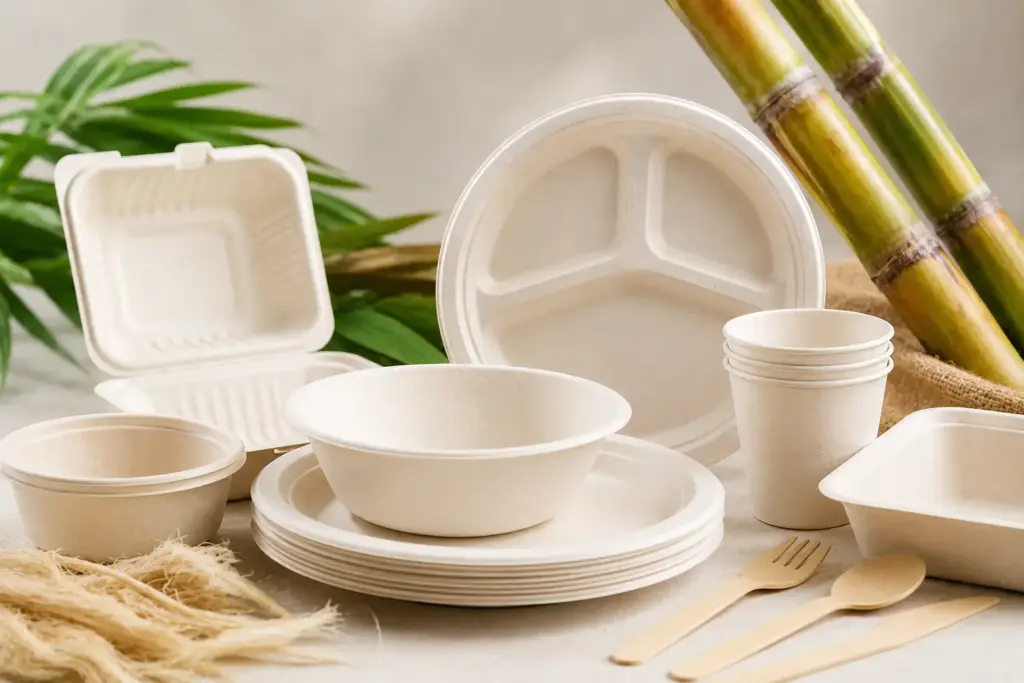
A standard paper plate is thin and often coated with a plastic or wax layer to resist moisture, which can make it harder to recycle or compost. A bagasse plate is a thick, moulded fibre product that resists liquid and oil naturally, without a plastic lining, and composts fully.
Bagasse vs paper: side by side
| Factor | Bagasse | Paper Plate |
|---|---|---|
| Strength | Rigid, does not flop when loaded | Thin, can bend and collapse |
| Leak and oil resistance | High, holds gravy and oil | Low to medium, often needs a coating |
| Hot food | Handles hot meals and microwaving | Can warp or soften with hot, wet food |
| Plastic lining | None | Often plastic or wax coated |
| Compostable | Yes, fully | Only if uncoated |
| Cost | Slightly higher than basic paper | Lowest upfront, but less reliable |
Which should you choose?
If you serve dry snacks and the budget is everything, basic paper plates can do the job. But for any meal with curry, gravy, oil or heat, bagasse is the clear winner: it stays rigid, does not leak, and you avoid the soggy, drooping plate that frustrates customers. Bagasse also composts cleanly, while many coated paper plates do not.
Performance with hot, oily and saucy food
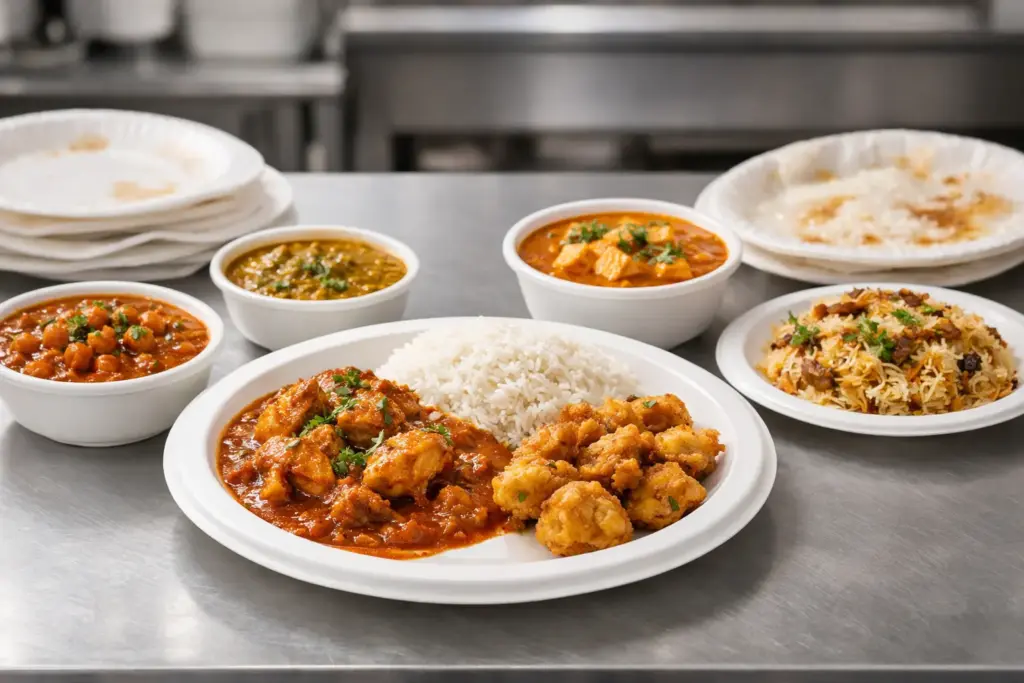
This is where the gap is widest. A thin paper plate softens and bends once hot gravy, curry or oily food sits on it, and many paper plates rely on a plastic or wax coating just to survive contact with moisture. A bagasse plate is moulded from dense sugarcane fibre, so it stays rigid and resists oil and liquid naturally, with no plastic lining. For Indian food and any proper meal, that difference is the whole ballgame.
Cost vs reliability: the real math
Paper plates win on sticker price, but the cheapest plate is not always the cheapest choice. A plate that bends, leaks or needs doubling up costs you in wasted product, messy service and unhappy customers. Bagasse costs a little more per piece but holds a full meal on a single plate, which often makes it the better value once you account for performance. For dry snacks the maths can favour paper, but for real meals bagasse usually pays for itself.
When do paper plates still make sense?
Paper plates are not useless. They are a reasonable pick for dry, low-moisture items such as biscuits, dry snacks, cake or finger food where there is no gravy, oil or heat to deal with, and where budget is the only priority. The moment hot or saucy food enters the picture, bagasse is the safer call.
The hidden problem with paper plates: the coating
Most paper plates that survive contact with wet food rely on a thin plastic or wax coating. That lining is what stops the plate from disintegrating, but it comes at a cost. A plastic-coated paper plate is no longer cleanly recyclable or compostable, and as it breaks down it can shed tiny plastic fragments. So a plate that looks like a simple paper product can quietly carry the same plastic problem you were trying to avoid. Bagasse needs no lining at all, because the dense fibre resists liquid on its own, which is why it composts fully.
Strength in real-world use
The difference shows up the moment you load the plate. A standard paper plate flexes under the weight of a full meal, which is why people instinctively double them up, using two plates for one serving. A bagasse plate stays flat and firm on its own, so one plate does the job. Across a busy service, that means less waste, less mess and fewer complaints about food sliding off a drooping plate.
Cost breakdown for businesses
On the shelf, paper looks cheaper, but the real cost depends on performance. If staff double up paper plates, the per-serving cost can quietly match or exceed bagasse. Add the cost of spills, remakes and a weaker customer impression, and the cheapest plate is often not the cheapest choice. For dry snacks, paper can still win on price. For proper meals, bagasse usually delivers better value per serving.
A quick verdict
Paper plates make sense for dry, low-moisture items on a tight budget. For hot, oily and gravy-rich food, which describes most Indian meals, bagasse is the stronger, cleaner and often better-value option, with no plastic lining and full compostability.
The bottom line
For dry snacks on a tight budget, paper plates can do the job. For hot, oily, gravy-rich food, which is most Indian meals, bagasse is the clear winner: it stays rigid, resists leaks, contains no plastic lining and composts fully. If you serve actual meals, bagasse is the plate that holds up.
Frequently Asked Questions
Are bagasse plates stronger than paper plates?
Yes. Bagasse plates are thicker and moulded, so they stay rigid under heavy, wet and oily food where paper plates tend to bend or leak.
Are paper plates compostable?
Only if they are uncoated. Many paper plates have a thin plastic or wax lining that prevents clean composting. Bagasse plates compost fully with no lining.
Is bagasse more expensive than paper?
Slightly, but the better strength and leak resistance usually justify it for proper meals rather than dry snacks.
Do paper plates need a plastic coating?
Many do. Standard paper plates are often lined with a thin plastic or wax layer to resist moisture, which makes them harder to compost. Bagasse needs no lining and composts fully.
Which is better for Indian food, bagasse or paper?
Bagasse, clearly. Indian food is full of gravy, oil and heat, and bagasse stays rigid and leak-resistant where paper plates tend to bend and go soggy.
Are bagasse plates microwave safe like paper plates?
Bagasse plates are reliably microwave-safe with no plastic lining. Plastic-coated paper plates can be risky to microwave because the coating may soften or leach.
How long do paper and bagasse plates take to break down?
Uncoated bagasse composts in roughly 30 to 90 days. Plastic-coated paper plates do not compost cleanly and can persist far longer because of the lining.