India’s plastic ban marks a major step toward a cleaner, more sustainable future. But for the ban to truly succeed, eco-friendly alternatives must be practical, scalable, and affordable. This is where bagasse tableware plays a crucial role — offering a responsible replacement for the plastic plates, cups, and trays that have long polluted our cities and rivers.
As one of India’s leading manufacturers and wholesalers of bagasse tableware, Pulpcraft is proud to be part of this shift toward sustainable dining and packaging.
Table of Contents
India’s Plastic Problem: A Quick Overview
India generates nearly 3.5 million tonnes of plastic waste every year, according to the Central Pollution Control Board (CPCB). A large portion of this waste comes from single-use plastics — items used for minutes but lasting centuries.
Common culprits include:
- Disposable plastic plates, cups, and cutlery
- Thermocol food trays and containers
- Plastic packaging for takeaways and deliveries
Most of this plastic ends up in landfills, rivers, and oceans, or is burned, releasing toxic gases. Recognizing the damage, India introduced a nationwide ban on single-use plastics in July 2022, targeting items with no viable recycling or reuse options.
The ban created both a challenge and an opportunity — the need for sustainable alternatives that can replace plastic without disrupting industries dependent on disposables.
Enter Bagasse: Nature’s Answer to Plastic Waste
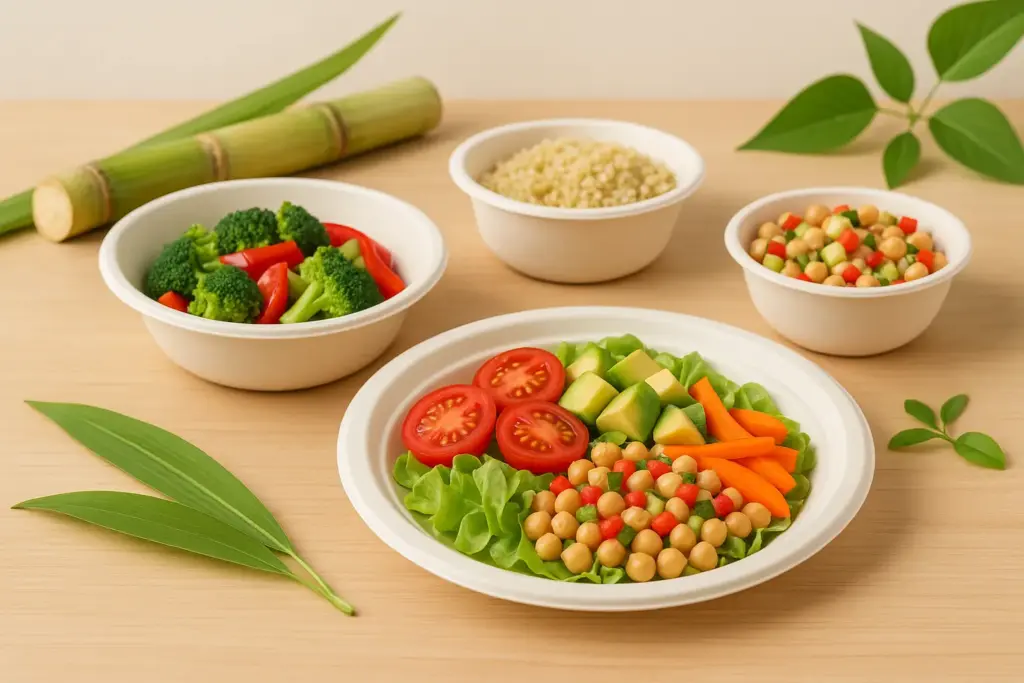
Bagasse is the fibrous residue left after extracting juice from sugarcane. Traditionally discarded or burned as agricultural waste, it is now being used to create eco-friendly, compostable tableware such as plates, bowls, and meal trays.
Instead of harming the planet, bagasse helps reduce pollution while supporting India’s agricultural economy.
Why Bagasse Is an Ideal Plastic Substitute:
- 100% Biodegradable: Decomposes within 60–90 days in composting conditions.
- Strong and Durable: Handles hot, cold, and oily foods easily.
- Microwave and Freezer Safe: Performs like plastic, without the environmental damage.
- Chemical-Free and Non-Toxic: Safe for direct food contact.
- Made from Agricultural Waste: No trees cut, no new resources consumed.
In short, bagasse transforms waste into a sustainable, food-safe product — a perfect example of circular economy principles in action.
Bagasse Tableware and India’s Plastic Ban: A Perfect Partnership
The plastic ban is not just a policy; it’s a behavioral shift that depends on the availability of reliable alternatives. Bagasse tableware meets all the key criteria set by India’s sustainability goals:
| Requirement under Plastic Ban | How Bagasse Tableware Fits |
|---|---|
| Must be biodegradable or compostable | Fully compostable within 90 days |
| Must not release toxins when heated | Made from natural sugarcane fiber |
| Must support Make in India | Manufactured domestically using agricultural waste |
| Must support small businesses | Affordable, easy to source, available at wholesale prices |
Bagasse tableware bridges the gap between regulation and reality, offering a solution that consumers and businesses can adopt easily.
Pulpcraft: Supporting India’s Plastic-Free Vision
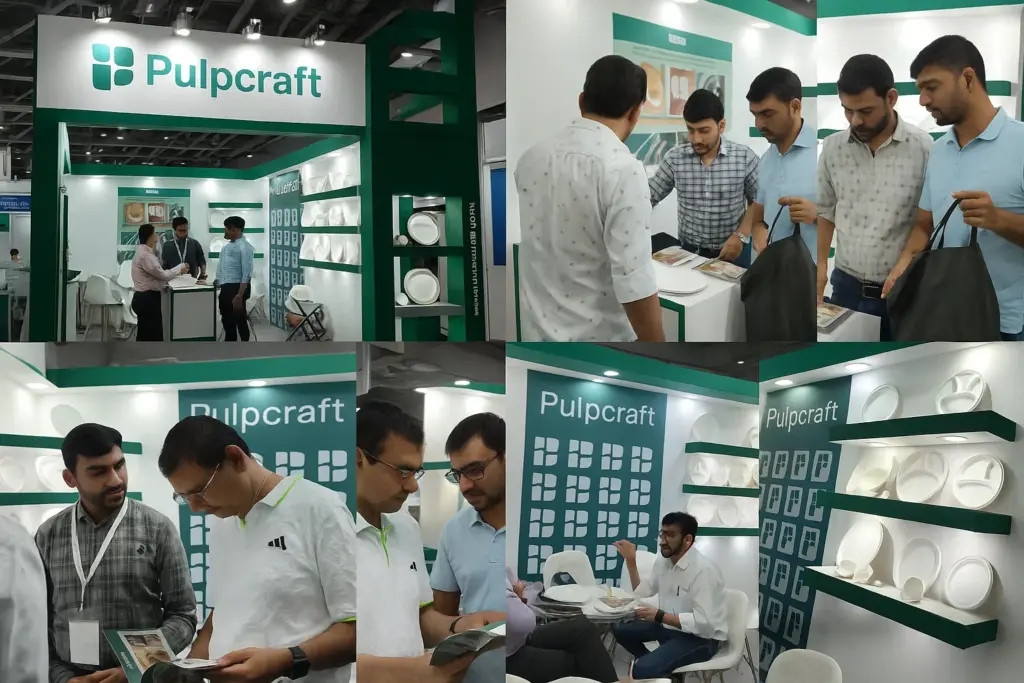
As a leading bagasse tableware manufacturer and exporter in India, Pulpcraft is helping restaurants, caterers, and retailers transition away from plastic by supplying durable, compostable, and cost-effective alternatives.
Our mission aligns perfectly with the goals of India’s plastic ban movement.
Pulpcraft’s key strengths:
- In-house manufacturing with strict quality control
- Scalable production for bulk and export orders
- Competitive wholesale pricing
- Custom branding and packaging options for food businesses
- Certified compostable materials that meet global standards
By replacing plastic with bagasse, Pulpcraft isn’t just manufacturing products — it’s building a sustainable ecosystem that supports farmers, reduces pollution, and promotes responsible consumption.
How Businesses Are Adapting with Bagasse Tableware
Since the ban, thousands of small and large businesses have adopted bagasse plates and trays for their daily operations.
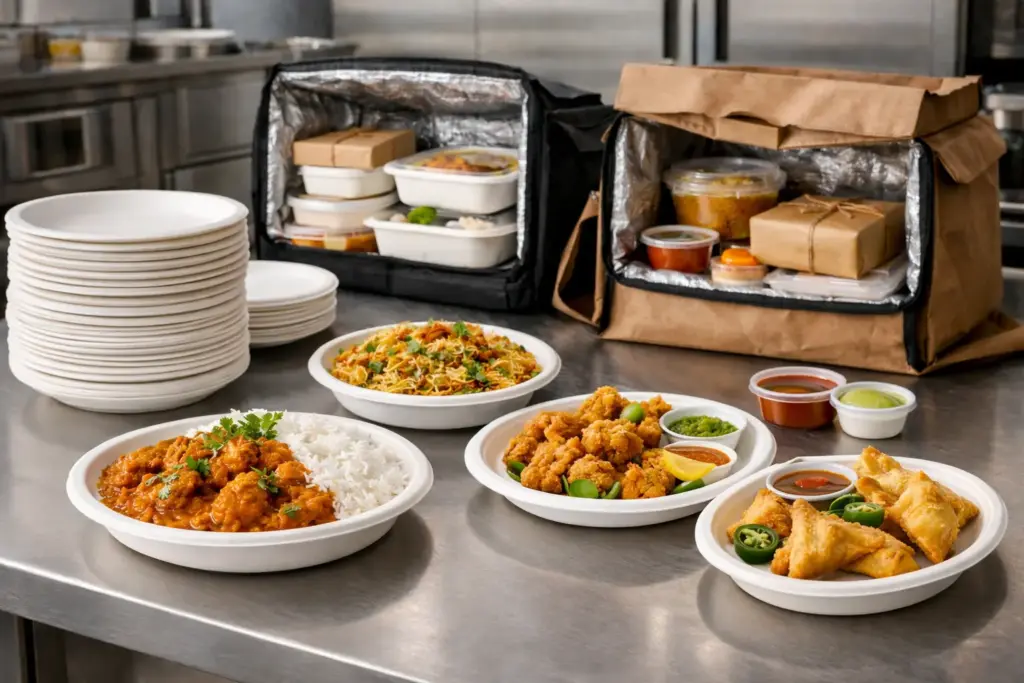
- Restaurants and Cloud Kitchens: Switching to bagasse containers and trays for takeaways and deliveries.
- Event Caterers: Using compostable plates and cutlery for weddings and functions.
- Corporates and Cafeterias: Moving toward sustainable dining solutions.
- Retailers and Exporters: Stocking eco-friendly alternatives for growing demand.
The transition isn’t just regulatory compliance — it’s brand differentiation. Businesses that adopt eco-friendly practices are increasingly favored by environmentally aware consumers.
Challenges and the Road Ahead
The shift to sustainable materials isn’t without challenges. Awareness gaps, cost perceptions, and uneven supply chains still slow adoption in smaller towns. However, as production scales and government policies support compostable alternatives, the cost difference continues to shrink.
Pulpcraft is investing in innovation, logistics, and partnerships to make bagasse tableware accessible to every corner of India and beyond.
The goal isn’t just to replace plastic — it’s to redefine convenience through sustainability.
Conclusion: A Nation Moving Toward Green Living
India’s plastic ban is more than a regulation; it’s a call for collective responsibility. Bagasse tableware gives individuals and industries the power to act on that responsibility without sacrificing convenience or quality.
As India moves toward a circular economy, products like those made by Pulpcraft are proving that sustainability can be scalable and practical.
This isn’t just about what we eat on — it’s about how we care for the planet that feeds us.