Thanksgiving is about gratitude, for good food, good people, and the planet that provides for us all. But somewhere between the cooking, hosting, and cleaning, our celebrations often leave behind something we never intended, a pile of single-use plastic waste.
In 2025, as sustainability becomes a shared value across homes and businesses, it’s time to rethink even the smallest choices. One simple yet powerful change this Thanksgiving could be switching from plastic disposable tableware to bagasse tableware, an eco-friendly alternative that’s as practical as it is planet-conscious.
Table of Contents
The Hidden Cost of Plastic Thanksgiving Feasts
Every year, millions of disposable plastic plates, cups, and cutlery are used during Thanksgiving dinners, office parties, and community meals. They make post-feast cleanup easy, but the real cleanup never ends.
Plastic tableware takes hundreds of years to decompose. Most end up in landfills, rivers, or oceans, breaking down into microplastics that contaminate soil, water, and even our food supply. A single evening of convenience can have environmental consequences lasting generations.
In a season dedicated to gratitude, continuing to use non-biodegradable plastics feels out of place. It’s time our table settings reflect the same thoughtfulness as our traditions.
What Makes Bagasse Tableware Different
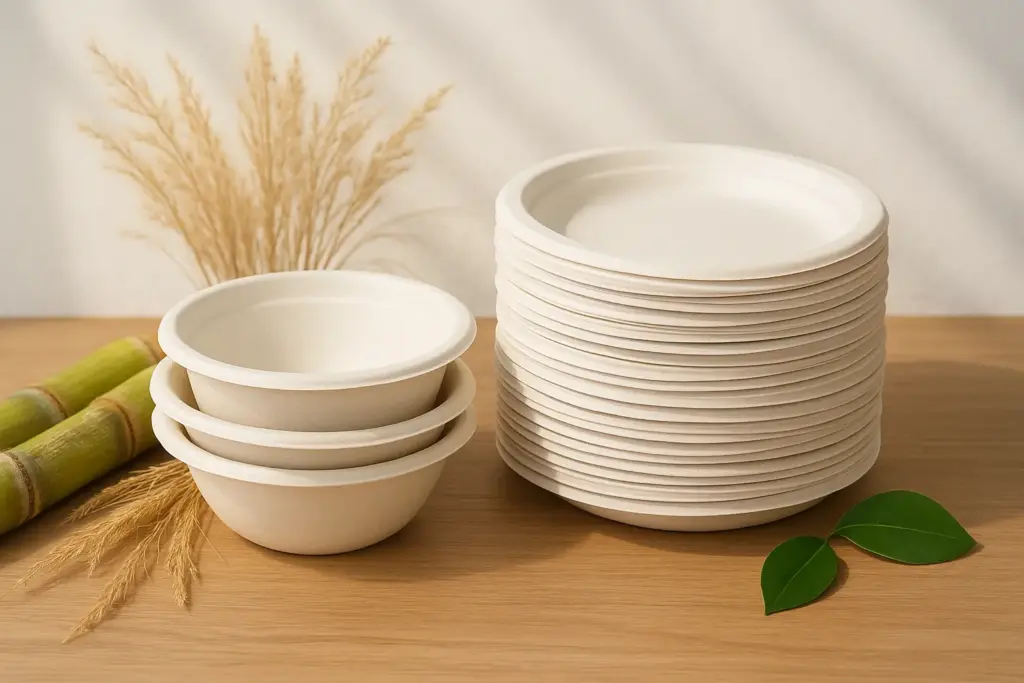
Bagasse tableware is made from sugarcane fiber, a natural byproduct left after juice extraction. Instead of burning this residue, which contributes to air pollution, it’s repurposed into sturdy, compostable plates, bowls, and trays.
Why it’s perfect for Thanksgiving:
- Compostable and biodegradable, decomposes within 60–90 days, unlike plastic.
- Strong and reliable, can handle everything from gravy to pumpkin pie.
- Heat and oil resistant, ideal for warm, hearty meals.
- Elegant and minimal, fits seamlessly into any festive table setting.
- Non-toxic and food-safe, no chemicals, no coatings, no plastic.
So while your guests enjoy a warm, wholesome dinner, the planet gets a moment to breathe too.
Small Changes, Big Gratitude
Choosing eco-friendly bagasse plates and bowls doesn’t mean giving up convenience. It means aligning your celebrations with your values, honoring both family and the environment.
You can still enjoy all the ease of disposable plates, no dishwashing, no stress, while reducing your environmental footprint. After the meal, simply compost them or discard them responsibly, knowing they’ll return to the soil naturally.
It’s a small shift that carries a big message, gratitude for the Earth that feeds us.
How to Make Thanksgiving 2025 More Sustainable
A few simple steps can make your celebration both joyful and responsible:
- Choose compostable tableware: Opt for bagasse instead of plastic or thermocol.
- Plan mindful portions: Reduce food waste by serving thoughtfully.
- Decorate naturally: Use dried leaves, candles, or reusable decor instead of plastic ornaments.
- Compost leftovers and plates: Let the celebration nourish the soil too.
- Share the message: Encourage guests to take eco-friendly habits home.
Sustainability doesn’t have to feel like a sacrifice, it can be part of the celebration.
Thanksgiving Beyond the Table
Thanksgiving isn’t just about food, it’s about appreciation. When we choose responsibly sourced ingredients, reduce waste, and use products that don’t harm the planet, we extend that gratitude beyond our homes.
Bagasse tableware represents that idea beautifully, transforming agricultural waste into something useful, clean, and sustainable. It’s a quiet but meaningful way to say thank you to the Earth for its endless generosity.
A New Thanksgiving Tradition
Maybe this year, when your guests compliment the dinner setup, you can tell them how your table is as sustainable as it is inviting. Maybe next year, they’ll do the same.
That’s how change begins, one table, one meal, one decision at a time.
This Thanksgiving 2025, celebrate abundance, not excess. Serve your feast with kindness, joy, and a touch of sustainability.
Because gratitude feels best when it’s shared, with people, and with the planet.