Plastic, aluminium, styrofoam or bagasse. We put the four on a table and asked which one is actually safe to eat from.
You order a hot biryani or a bowl of curry, it arrives in a container, and you tip it onto a plate or eat straight out of the box. Simple. Except that steaming, oily, spicy food is exactly the situation in which a container stops being a neutral holder and starts sharing a little of itself with your meal. Some materials do this a lot, some barely at all. With food delivery now a daily habit for millions, the box your food travels in is worth a closer look. So we lined up the four most common takeaway materials and compared them honestly.
The quick answer, in one table
If you only read one thing, read this. Green is good, red is not, amber means it depends:
| Can it handle… | Plastic | Styrofoam | Aluminium | Bagasse |
| Hot food safely | No | No | Caution | Yes |
| Oily, spicy or acidic food | No | No | No | Yes |
| Free of leaching chemicals | No | No | Caution | Yes |
| Composts after use | No | No | No | Yes |
| Allowed under plastic bans | No | No | Yes | Yes |
One column is green all the way down. That is not an accident, and the rest of this post explains why, material by material, so you can share it with anyone who still thinks a takeaway box is just a takeaway box.
The four materials, side by side
| Material | What can get into your food | The wider picture |
| Thin plastic containers | BPA, phthalates and microplastics, especially when hot, oily or microwaved. These act on the body’s hormones. | Microwave safe only means it will not melt, not that it stays chemical-free. Non-biodegradable and a growing microplastic problem. |
| Styrofoam / thermocol | Styrene, which leaches from foam into hot and oily food and is listed as a possible human carcinogen. | Never breaks down and already banned for food use in many Indian states. The worst pick for hot food. |
| Aluminium foil and trays | Aluminium, which migrates faster with acid, salt, spice and heat. It adds to a weekly load many people already max out. | Recyclable but energy-heavy to make. Fine for cold, dry food, risky for spicy or acidic dishes. |
| Bagasse (sugarcane) | Nothing of concern. It is plain plant fibre with no plastic coating, no styrene and no metal to leach. | Handles hot, oily and gravy food, and composts in 60 to 90 days. Made from farm waste, not trees or petroleum. |
Plastic: the everyday worry
Thin plastic is the default for most Indian takeaway, and it is the one people ask about most. When plastic meets hot, oily food, it can release BPA and phthalates, chemicals that act like hormones in the body and are linked in research to reproductive and developmental harm. Heating makes it worse, and a growing pile of studies show tiny microplastics shedding into food and drink, with hot items carrying far more than cold. The label that reassures everyone, microwave safe, only promises the box will not melt. It does not promise the food stays free of chemicals or plastic particles.
Styrofoam: the one to drop first
Foam containers and cups are made from polystyrene, and the styrene they are built from leaches into hot, oily and acidic food. Styrene is classed by the International Agency for Research on Cancer as a possible human carcinogen. Add that foam never breaks down and is already banned for food service in many Indian states, and styrofoam is the clear loser here. If you change only one thing about how your food is packed, start with this one.
Aluminium: fine until it is not
Aluminium trays and foil are better than foam for many uses, but they are not the free pass people assume. Aluminium migrates into food, and it does so much faster when the food is acidic, salty, spicy or hot, which describes most Indian curries. It also adds to a weekly aluminium load that food-safety data shows many people already push to the limit from diet alone. For a cold, dry parcel it is low risk. For a hot, tangy gravy it is not the container you want.
Bagasse: the one that stays out of your food
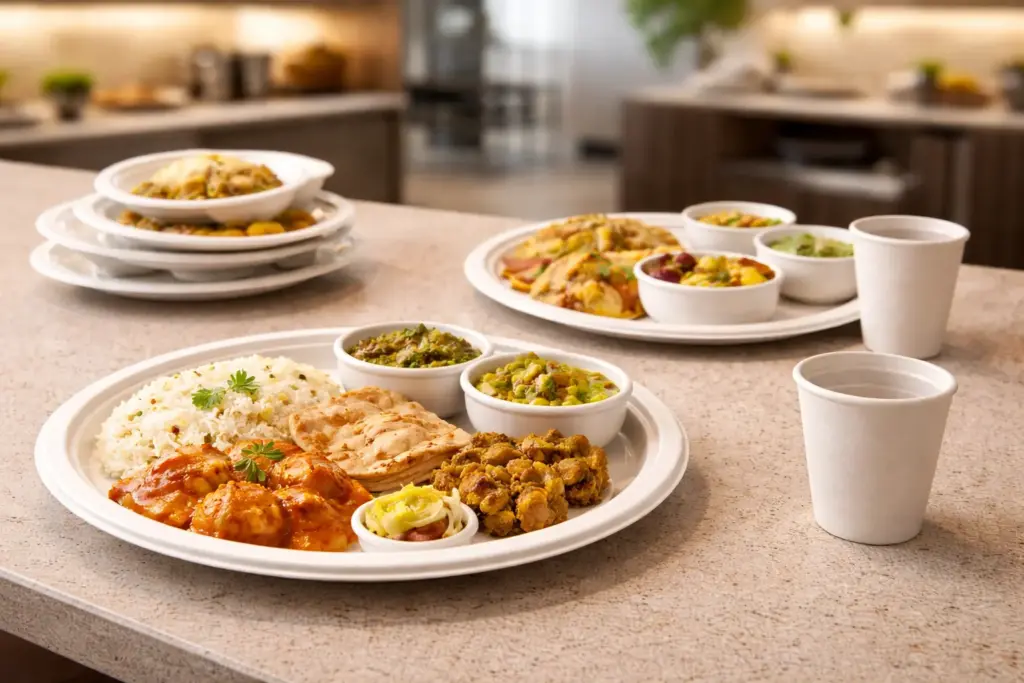
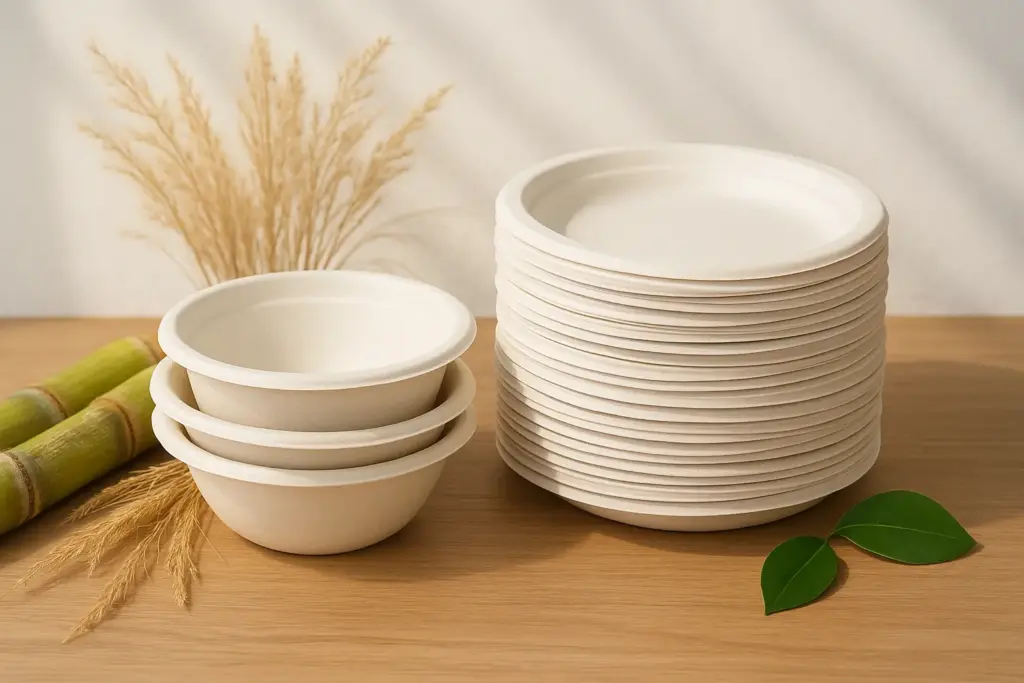
Bagasse is the fibre left after sugar mills crush the juice from sugarcane. Moulded into plates, bowls and boxes, it is simply plant fibre with no plastic lining, no styrene and no metal, so there is nothing of concern to leach into even the hottest, oiliest dish. It handles gravy and heat comfortably, and once you are done it composts in about 60 to 90 days instead of sitting in a landfill for centuries. It is the one material on the table that scores well on both counts, what it keeps out of your food and what it leaves behind in the world.
So which is safest?
On the evidence, the order is not really in doubt. Bagasse is the safest of the four for hot takeaway food, because it is the only one with nothing meaningful to give up into your meal. Aluminium is acceptable for cold and dry food but a poor match for spicy, acidic dishes. Plastic carries a real, if debated, chemical and microplastic question that heat makes worse. Styrofoam is the one to avoid outright. If your test is simply which container you would want your child’s hot lunch packed in, the answer writes itself.
Where Pulpcraft comes in
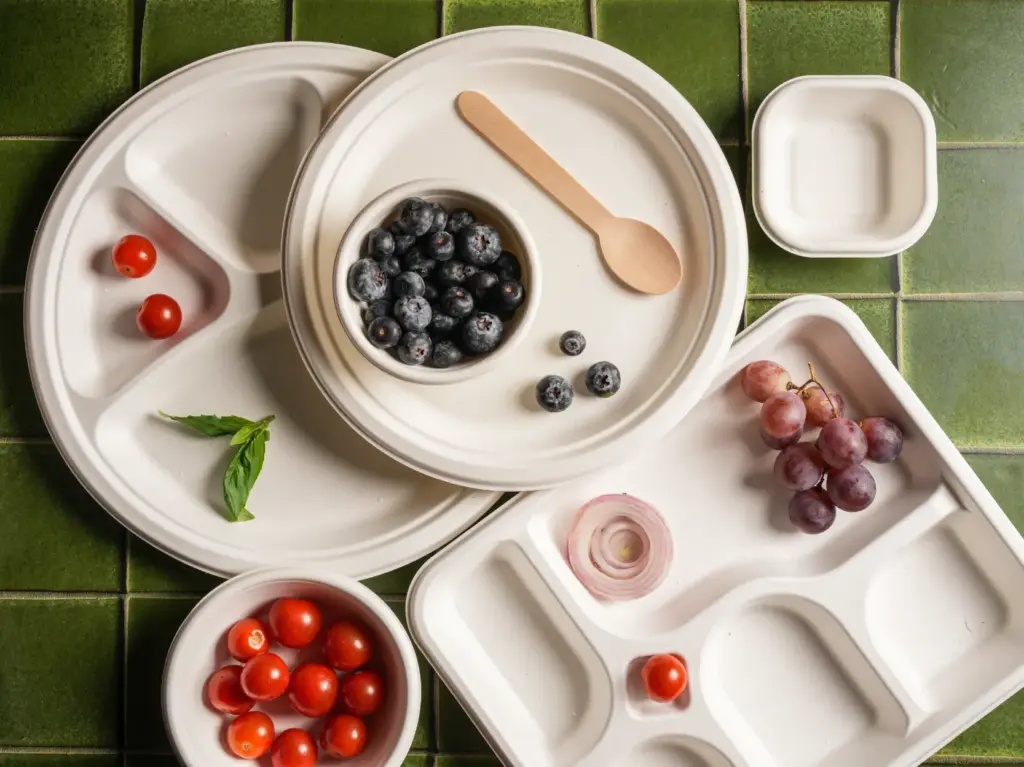
If you run a restaurant, a cloud kitchen or a tiffin service and want your food to travel in the safe column of that table, Pulpcraft is one of India’s largest makers of bagasse tableware and packaging. It produces the full set of takeaway formats, including clamshell boxes, compartment meal trays, bowls and plates with tight snap lids that keep gravy where it belongs. The containers resist oil and moisture, take hot food straight from the kitchen, and are made under strict food-safety certifications, including ISO 9001, ISO 14001, ISO 22000 and ISO 45001, along with SGS testing, Sedex and FDA compliance, so what carries your food is properly food-grade. Because Pulpcraft sells direct from the factory in bulk at steady wholesale rates, switching your packaging off plastic and foam costs only a rupee or two more per box, and you never run short in a dinner rush. It is a small change that moves every order you send out into the safe column and gives your brand a real sustainability story. To get wholesale pricing and samples for your menu, reach out to the Pulpcraft team.
What you can do tonight
Whether you sell food or just order it, a few habits help right away:
- Never microwave in the takeaway box. Move food to a glass or ceramic plate first, whatever the box is made of.
- Do not let hot, oily food sit in plastic or foam. Tip it out soon after it arrives rather than eating straight from the container.
- If you run a kitchen, switch packing to bagasse. It is the simplest way to take chemical worry off the table for every customer at once.
- Ask for greener packaging. As a customer, tell your regular restaurants you prefer compostable boxes. Demand is what moves them.
The bottom line
A takeaway container is not a neutral object once hot food goes in it. Plastic can shed chemicals and microplastics, styrofoam can release a possible carcinogen, and aluminium quietly adds to a metal load you may already be carrying. Only bagasse sits there doing nothing but holding your food, and then composts when it is done. The safest box is the one made from sugarcane, and for anyone serving food it is now cheap and easy to make that the standard. Your next biryani deserves to arrive tasting only of biryani.
Want your food in the safe column? Pulpcraft supplies certified, leak-resistant, compostable bagasse clamshells, meal trays, bowls and plates in bulk, the no-chemical way to pack hot takeaway. Get in touch for wholesale pricing and samples that fit your menu.