The debate over bagasse plates vs plastic plates has shifted from a niche environmental talking point to a mainstream business decision. With over 8 million tons of plastic entering our oceans each year and single-use plastic bans spreading across 77+ countries, choosing the right disposable plate now carries real financial and legal consequences. Whether you run a restaurant, cater events, or simply host backyard cookouts, this comparison will give you the hard data you need to make a smart choice.
Bagasse plates are made from sugarcane fiber, a byproduct left over after juice extraction. Plastic plates rely on petroleum-based polymers like polypropylene (PP) and polystyrene (PS). These two materials couldn’t be more different in origin, performance, and environmental impact. Here’s a thorough breakdown of how they stack up across every category that matters.
What Are Bagasse Plates Made Of?
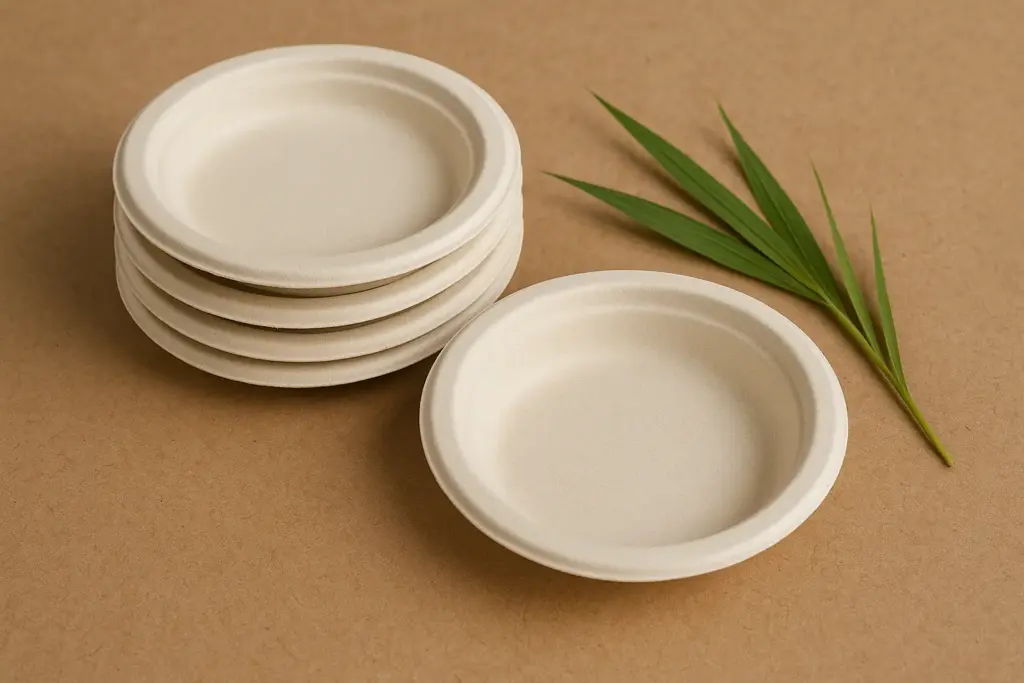
Bagasse is the dry, fibrous pulp that remains after sugarcane stalks are crushed to extract juice. Sugar mills around the world produce roughly 540 million tons of this residue annually, according to the Food and Agriculture Organization (FAO). Historically, most of it was burned as boiler fuel or dumped in landfills. Today, manufacturers collect this agricultural waste, wash and pulp it, then press it into rigid plates under high heat and pressure.
The result is a sturdy, natural-looking plate that’s free from petroleum, BPA, phthalates, and PFAS chemicals. Because the raw material is a waste byproduct, bagasse plates effectively upcycle something that would otherwise have zero value. That circular economy angle is a major reason the global bagasse tableware market reached $201.4 million in 2022 and is projected to grow at a 6.7% CAGR to nearly $367.6 million by 2031.
How Plastic Plates Are Manufactured
Plastic plates start with crude oil. The oil is refined into polymer resins, primarily polypropylene or polystyrene, which are then injection-molded or thermoformed into plates. This process requires significant energy. According to a 2020 study published in Science Advances, plastic production consumes up to 8% of global oil output.
The plates themselves are lightweight, water-resistant, and extremely cheap to produce at scale. But those advantages come with a steep hidden cost: non-biodegradability, chemical leaching risks, and an end-of-life problem that recycling alone cannot solve. Less than 10% of all plastic waste is effectively recycled worldwide, per National Geographic’s 2022 reporting.
Bagasse Plates vs Plastic Plates: Head-to-Head Comparison
Rather than relying on vague claims, here’s a direct comparison of bagasse plates vs plastic plates across the eight factors that matter most to buyers.
| Factor | Bagasse Plates | Plastic Plates |
|---|---|---|
| Raw Material | Sugarcane fiber (renewable waste) | Petroleum-based polymers (non-renewable) |
| Biodegradability | 60 to 90 days (industrial composting) | 400+ years in landfill |
| Heat Resistance | Up to 120°C (248°F); microwave safe | Varies; polystyrene warps above 100°C |
| Chemical Safety | BPA-free, PFAS-free, no toxic additives | May leach BPA, phthalates at high temps |
| Grease Resistance | Excellent; holds oily foods without leaking | Good; depends on plastic type |
| Unit Cost | $0.08 to $0.15 per plate | $0.03 to $0.07 per plate |
| Disposal Cost | Low; compostable, reduces landfill fees | High; environmental penalties increasing |
| Regulatory Risk | Compliant with global plastic bans | Facing bans in EU, India, 10+ US states |
The pattern is clear. Plastic plates win on upfront unit price, but bagasse plates dominate across sustainability, safety, and long-term cost predictability. As oil prices fluctuate and plastic regulations tighten, that initial price gap is narrowing fast.
Environmental Impact: Carbon Footprint, Decomposition, and Ocean Pollution
The environmental gap between these two materials is staggering. A 2022 study in Frontiers in Sustainable Food Systems found that switching from plastic to bagasse plates can reduce CO₂ emissions by up to 60%. Manufacturing bagasse tableware emits roughly 50% less carbon dioxide than producing equivalent plastic products, according to a 2021 UNEP lifecycle report. Water consumption during production runs about 40% lower as well.
Decomposition tells an even starker story. Bagasse plates fully break down within 60 to 90 days under industrial composting conditions, returning organic nutrients to the soil. Plastic plates? They persist for 400 or more years, fragmenting into microplastics that contaminate soil, waterways, and marine ecosystems. The UNEP estimates that plastic plates and similar single-use items contribute to 1.5 million tons of ocean waste annually.
Harvard University research has confirmed that bagasse-based packaging decomposes approximately 40 times faster than polystyrene foam. That’s not a marginal improvement. It’s a fundamentally different relationship with the planet.
Health and Food Safety: What Touches Your Food Matters
Plastic plates often contain bisphenol A (BPA) and phthalates, both linked to hormonal disruption according to a 2020 review in Environmental Health Perspectives. These chemicals can leach into food, especially when plates hold hot or acidic items. A 2023 WHO report found microplastics in 88% of bottled water samples, underscoring how pervasive plastic contamination has become.
Bagasse plates sidestep this problem entirely. They’re made from pure plant fiber with no synthetic coatings, chemical binders, or plastic linings. They don’t release harmful substances at high temperatures, making them safe for reheating food in the microwave. For families with young children or businesses serving health-conscious customers, this distinction is significant.
Certifications to Look For
- BPI Certified Compostable: Confirms the plate meets ASTM D6400 standards for industrial composting
- FDA Food Contact Approved: Verifies the material is safe for direct food contact
- OK Compost (TÜV Austria): European certification for compostability
- BPA-Free and PFAS-Free labels: Confirms absence of harmful chemicals
Cost Analysis: Why the Price Gap Is Shrinking
Yes, bagasse plates cost more per unit than plastic. Typical pricing ranges from $0.08 to $0.15 per bagasse plate versus $0.03 to $0.07 for plastic. But that number tells only half the story.
Plastic disposal costs are climbing. Landfill tipping fees have increased 30% in many US municipalities over the past five years, and businesses generating plastic waste face growing surcharges. Meanwhile, compostable waste like bagasse often qualifies for lower disposal rates. Some jurisdictions offer tax incentives and grants to companies that switch to biodegradable packaging.
There’s also the brand equity factor. Surveys consistently show that 70% to 80% of consumers prefer businesses that demonstrate environmental responsibility. One case study from Bioleader, a bagasse tableware supplier, found that a flagship restaurant switching to sugarcane plates reduced non-recyclable waste by 40% while seeing over 80% of surveyed diners express appreciation for the eco-friendly initiative.
Performance in Real-World Scenarios
Hot and Greasy Foods
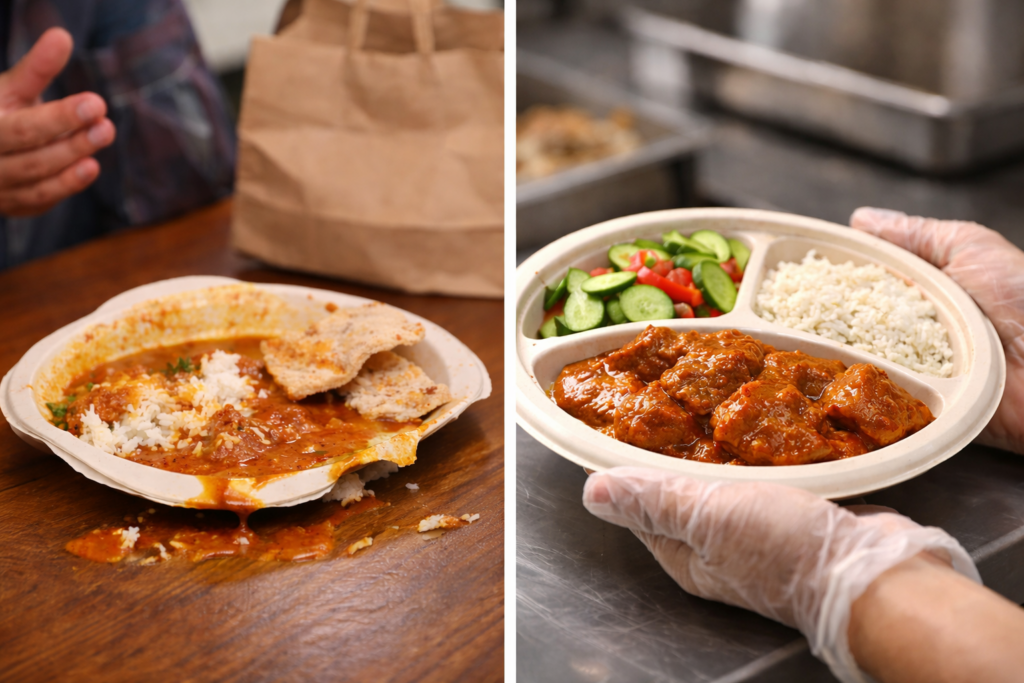
Bagasse plates handle hot pizza, roast chicken, curries, and greasy burgers without soaking through or collapsing. They’re rated safe up to 120°C (248°F), and they won’t warp, melt, or release fumes the way polystyrene can under heat.
Outdoor Events and Catering
At a 500-person corporate event documented by Bioleader, bagasse plates, bowls, and cutlery performed flawlessly with both hot soups and cold desserts. After the event, all items were sent to industrial composting and fully decomposed within three months. Try getting that result with plastic.
Liquid-Heavy Dishes
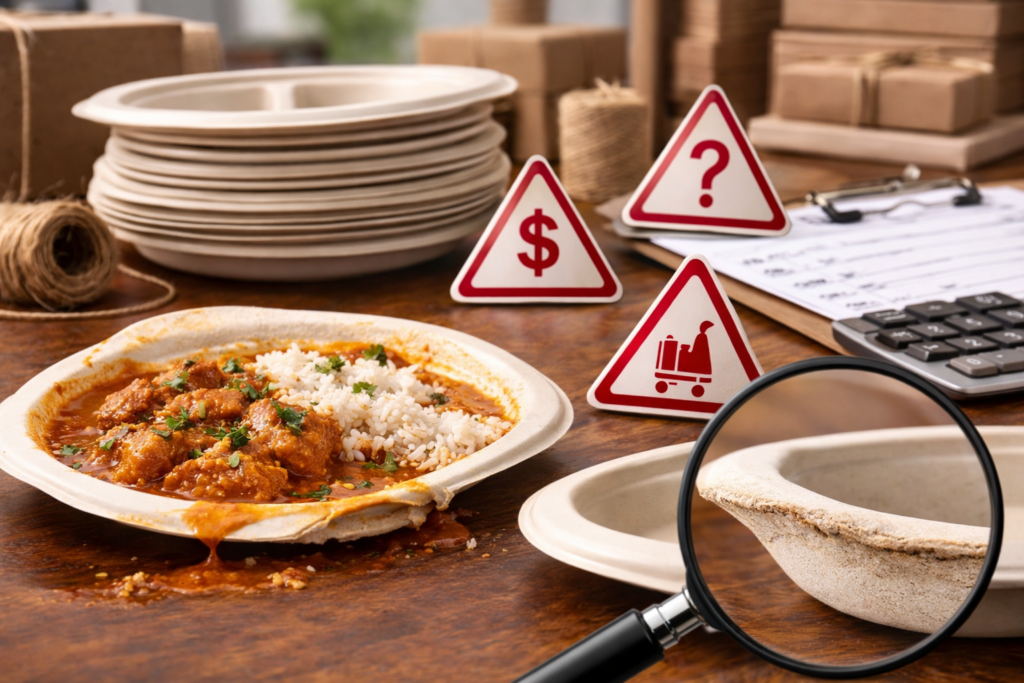
This is the one area where plastic holds a slight edge. For extended liquid storage, like holding soup for hours, plastic’s impermeability wins. Bagasse handles saucy dishes well for typical meal durations, but it isn’t designed for overnight food storage. For those use cases, consider bagasse containers with secure lids that offer better liquid retention.
How to Switch from Plastic to Bagasse Plates: A 4-Step Plan
- Audit your current usage. Track how many plastic plates you go through weekly and identify the sizes and shapes you need most (6-inch for appetizers, 9-inch for mains, 12-inch for platters).
- Run a pilot test. Replace 50% of your plastic plates with bagasse for 30 days. Monitor customer feedback, waste volumes, and any operational issues.
- Train your team. Educate staff on proper disposal. Bagasse plates need industrial composting, not standard recycling bins. Mislabeled waste undermines the environmental benefit.
- Scale and communicate. Once the pilot succeeds, go fully bagasse. Promote the switch on your menu, signage, and social media. Customers reward transparency.
Frequently Asked Questions
Are bagasse plates as strong as plastic plates?
Yes, for typical meal service. Bagasse plates are pressed under high heat and pressure, creating a rigid structure that holds heavy, greasy, and hot foods without bending or collapsing. They’re comparable in sturdiness to plastic for single-use dining scenarios. The only limitation is extended liquid storage, where plastic’s impermeability gives it a slight advantage.
How long do bagasse plates take to decompose?
Under industrial composting conditions, bagasse plates break down in 60 to 90 days. In home composting setups, the timeline extends to roughly 90 to 180 days depending on moisture, temperature, and microbial activity. By contrast, plastic plates take 400 or more years to decompose and fragment into harmful microplastics along the way.
Are bagasse plates safe for hot food?
Absolutely. Bagasse plates are heat-resistant up to 120°C (248°F) and are microwave safe. Unlike some plastic plates that release BPA or other chemicals when heated, bagasse is entirely plant-based and does not leach any toxic substances into food at high temperatures.
Why are bagasse plates more expensive than plastic?
The per-unit cost difference reflects plastic’s mature, petroleum-subsidized manufacturing infrastructure. However, bagasse prices are dropping as demand increases and production scales up. When you factor in rising landfill fees, potential regulatory fines for plastic use, and consumer preference for sustainable brands, the total cost of ownership for bagasse is often lower than plastic over a 12-month period.
Can bagasse plates replace plastic plates completely?
For most food service applications, yes. Bagasse handles hot meals, cold desserts, greasy foods, and outdoor events with ease. The exceptions are very long-term liquid storage and specific industrial applications where plastic’s durability is required. For 90%+ of disposable plate use cases, bagasse is a full and superior replacement.
Are bagasse plates microwave and freezer safe?
Yes on both counts. You can reheat leftovers directly on a bagasse plate in the microwave and store prepared food in the freezer without the plate cracking or degrading. This versatility makes them practical for meal prep, catering operations, and everyday household use.
Make the Switch Before Regulations Force It
The comparison of bagasse plates vs plastic plates produces a clear winner on nearly every metric except raw unit price, and even that gap is closing. Bagasse plates decompose 40 times faster, emit 60% less CO₂ during production, contain zero toxic chemicals, and align with the regulatory direction of every major market on the planet.
If you’re a restaurant owner, event planner, or eco-conscious household, the time to switch is now. Don’t wait for a plastic ban to force your hand. Start with a pilot, measure your results, and join the growing number of businesses that are proving sustainability and profitability aren’t opposites. Explore our full range of bagasse plates and find the right fit for your needs today.