Restaurants that move from plastic to bagasse plates and sugarcane plates rarely do it for one reason alone. Some are responding to regulations, others to customer expectations, and many simply want packaging that performs better. But once the switch is made, most businesses arrive at the same realisations.
These lessons come from actual operational experience, not theory. For restaurants using biodegradable plates, eco friendly disposable plates, and sugarcane bagasse plates at scale, the transition reveals what truly matters.
Why the initial hesitation is usually overestimated
Before switching, most restaurants assume the change will disrupt service. There is concern about leakage, bending, and staff adjustment. This hesitation is understandable, especially for businesses that rely on disposable plates wholesale and cannot afford inconsistencies.
In practice, restaurants that chose well-made bagasse tableware found that the transition was smoother than expected. Once the plates proved reliable during peak hours, the concern quickly disappeared. The hesitation was not about the material itself, but about uncertainty.
Performance matters more than sustainability claims
Many restaurants initially approach sugarcane bagasse tableware as a sustainability decision. What they learn quickly is that performance drives acceptance.
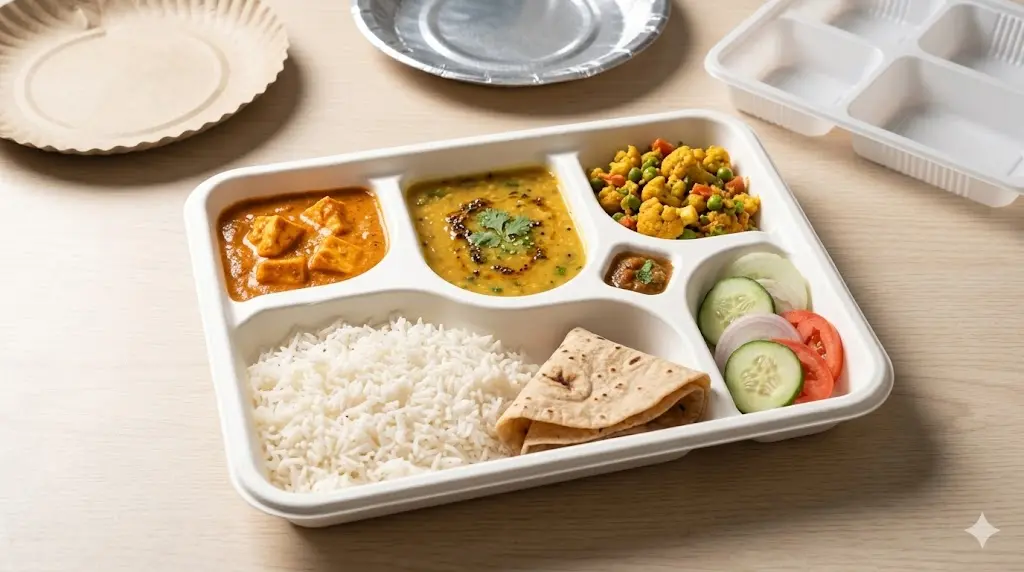
If biodegradable disposable plates fail with hot or oily food, staff lose confidence immediately. But when bagasse plates handle curries, gravies, and heavy portions without bending or leaking, the conversation shifts. The plates stop being eco friendly and start being simply reliable.
Restaurants that succeed in the transition focus on performance first and sustainability as a secondary benefit.
The wrong supplier creates most of the problems
One of the biggest lessons restaurants share is that not all bagasse plates are the same. Early failures often come from low-quality suppliers, not from the material itself.
Inconsistent fibre density, weak moulding, and poor quality control lead to issues like sogginess, cracking, or uneven thickness. Once restaurants switch to consistent suppliers of sugarcane plates, most of these problems disappear.
The takeaway is clear: sourcing decisions matter more than material choice.
Staff adaptation happens faster than expected
A common fear is that staff will struggle with new packaging. In reality, adaptation happens quickly when the plates behave predictably.
When eco friendly plates hold shape, resist oil, and stack well, staff do not need to change their workflow. Restaurants that switched to reliable bagasse tableware found that teams adjusted within days, often without formal training.
Operational disruption usually comes from poor-quality plates, not from change itself.
Customer perception improves without effort
Restaurants rarely expect packaging to influence customer perception significantly. But after switching to sugarcane bagasse plates, many notice subtle improvements.
Food looks more stable, cleaner, and better presented. Customers may not comment directly on biodegradable plates, but they notice when there is no leakage or mess. This quietly improves reviews and repeat orders, especially for delivery-focused businesses.
Good packaging does not attract attention. It removes reasons for dissatisfaction.
Consistency becomes the real priority
After switching, restaurants realise that consistency matters more than anything else. A single good batch is not enough. Plates must perform the same way every day.
Businesses sourcing disposable plates wholesale begin to prioritise suppliers who can maintain uniform quality across batches. Consistent bagasse plates reduce complaints, improve staff confidence, and simplify operations.
This is often the point where restaurants move from experimenting with suppliers to building long-term relationships.
Cost is better understood over time
At first, biodegradable plates may seem more expensive than plastic or low-grade alternatives. But restaurants quickly learn to evaluate cost differently.
When bagasse plates reduce leakage, breakage, and complaints, they lower hidden costs. Less wastage, fewer replacements, and smoother service all contribute to better overall efficiency.
Over time, many restaurants find that reliable eco friendly disposable plates deliver better value than cheaper options.
The switch becomes invisible
Perhaps the most important lesson is this: once the right plates are in place, they stop being noticed.
Restaurants that successfully adopt sugarcane plates no longer think about packaging as a problem. It becomes a stable part of operations, like any other reliable input.
That is the real goal of any switch. Not to constantly evaluate, but to reach a point where everything simply works.
Final thoughts
The experience of restaurants that have switched to bagasse plates and sugarcane plates shows that the transition is less about change and more about choosing correctly.
With the right supplier, consistent quality, and proper testing, biodegradable disposable plates and sugarcane bagasse tableware integrate into food service operations without disruption.
The lesson is simple. When packaging performs reliably, it stops being a concern and starts supporting the business quietly, every single day.