In food service, materials are judged less by what they promise and more by how they behave under pressure. Plates are expected to hold hot food, oily gravies, and heavy portions while moving quickly from kitchen to counter to customer. This is where bagasse plates and sugarcane plates, made from natural fibres, consistently outperform synthetic alternatives.
At Pulp-Craft, we work with restaurants, caterers, and bulk buyers who have used both plastic and paper-based synthetics before switching to biodegradable plates. What drives that decision is not sustainability language alone, but performance. Natural fibres behave differently from synthetic materials, and in food service, that difference matters.
The Fundamental Difference Between Natural and Synthetic Materials
Synthetic materials like plastic or coated paper are engineered to resist breakdown. They rely on chemical treatments, plastic linings, or petroleum-based inputs to achieve strength and moisture resistance. While this can work in controlled conditions, it often fails under real food service stress.
Natural fibre materials, such as sugarcane bagasse, work differently. Sugarcane plates made from bagasse rely on compressed plant fibres rather than coatings. The strength comes from the structure itself, not from an added layer. This structural integrity is what gives sugarcane bagasse plates their ability to handle heat, oil, and moisture more reliably during actual use.
Performance With Hot and Oily Food
One of the most common complaints with synthetic disposable plates is warping or leakage when exposed to hot or oily food. Thin plastic softens under heat. Coated paper plates often allow oil to seep through once the coating weakens.
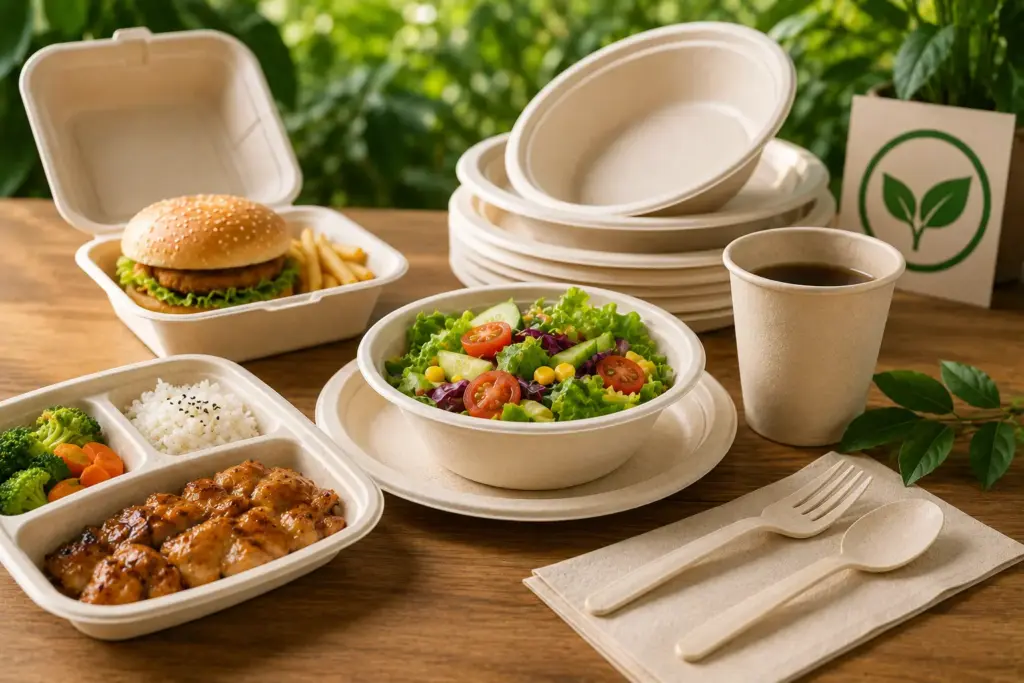
Bagasse plates, on the other hand, are naturally heat resistant and oil resistant because of their dense fibre composition. High-quality bagasse tableware maintains shape when serving curries, gravies, rice, and fried foods. This consistency is especially important for restaurants operating during peak hours, where there is no room for packaging failure.
For food businesses using eco friendly disposable plates, this reliability translates directly into fewer complaints and smoother service.
Moisture Resistance Without Plastic Coatings
Synthetic plates often depend on plastic linings to resist moisture. Once that lining breaks down, the plate absorbs liquid unevenly and loses strength.
Natural fibre plates manage moisture differently. Sugarcane bagasse tableware absorbs minimal moisture on the surface while retaining overall rigidity. The fibres are moulded under pressure, creating a structure that resists sogginess for the duration of a meal.
This makes biodegradable disposable plates made from bagasse far more suitable for liquid-heavy dishes than many synthetic alternatives marketed as “eco friendly.”
Operational Advantages in High-Volume Food Service
In high-volume environments, small inefficiencies become big problems. Plates that need double stacking, frequent replacement, or careful handling slow staff down and increase waste.
Restaurants sourcing disposable plates wholesale consistently tell us that natural fibre plates simplify operations. Eco friendly plates made from bagasse behave predictably, which means staff do not need to change how they plate, carry, or serve food.
When packaging disappears into the workflow, service speed remains intact. That is a practical advantage, not an environmental one.
Consistency Across Batches
Another area where natural fibre products outperform synthetics is consistency. Low-grade synthetic plates often vary in thickness, flexibility, or coating quality across batches. This unpredictability creates operational risk for multi-outlet restaurants and caterers.
Well-manufactured sugarcane bagasse plates offer consistent performance batch after batch. For businesses buying biodegradable plates or eco friendly disposable plates at scale, this consistency reduces wastage, returns, and last-minute sourcing issues.
Safety and Customer Perception
Customers may not always notice the material, but they notice how it feels. Plates that bend, leak, or smell synthetic subtly affect how food is perceived.
Natural fibre bagasse tableware feels sturdier and more intentional. It reassures customers that the packaging is food-safe and thoughtfully chosen. Unlike synthetic plates, bagasse plates are free from plastic linings and harmful chemicals, making them suitable for direct food contact.
This matters increasingly as customers become more aware of what their food comes into contact with, even if they never ask directly.
Sustainability Without Compromising Function
Many restaurants worry that choosing eco friendly disposable plates means compromising on performance. Natural fibre materials challenge that assumption.
Sugarcane bagasse tableware is made from agricultural waste, reducing reliance on virgin raw materials. At the same time, it delivers the strength and reliability required in professional food service. This balance is what makes bagasse a practical alternative, not just a responsible one.
Why Material Choice Is a Business Decision
Choosing between natural and synthetic materials is not about ideology. It is about reducing friction in daily operations.
Natural fibres outperform synthetics in food service because they:
- Handle heat and oil more reliably
- Maintain structure without plastic coatings
- Offer consistent quality at scale
- Simplify workflows for staff
For restaurants and caterers using biodegradable disposable plates and eco friendly plates, these advantages directly affect service quality and brand perception.
Final Thoughts
In food service, materials are tested under pressure, not in theory. Bagasse plates and sugarcane plates outperform synthetic alternatives because they are built from natural fibres that work with food, not against it.
When restaurants choose sugarcane bagasse plates and bagasse tableware for real-world performance, the result is smoother operations, fewer complaints, and packaging that quietly does its job.
That is what good tableware should do—work reliably, stay unnoticed, and support the food it carries.