For restaurants planning to move away from plastic, the concern is rarely ideological. It is operational. Owners worry about whether bagasse plates and sugarcane plates will actually work during peak hours, with hot food, oily gravies, and high customer turnover. Many operators exploring biodegradable plates and eco friendly disposable plates hesitate because they fear disruption to service, staff confusion, or increased complaints.
At Pulp-Craft, these are the exact concerns we hear every day from restaurants, cloud kitchens, caterers, and bulk buyers. The good news is that restaurants can shift away from plastic smoothly, without operational chaos, if the transition is handled methodically. This guide explains how food businesses can replace plastic with sugarcane bagasse plates, biodegradable disposable plates, and bagasse tableware while keeping daily operations stable.
Why Restaurants Delay Moving Away From Plastic
Plastic has remained dominant because it is familiar. Staff know how it behaves, suppliers are easy to find, and costs seem predictable. Any alternative feels risky, especially in high-volume food service.
Common concerns include plates bending under weight, leakage from oily food, inconsistent supply when buying disposable plates wholesale, and staff slowing down during service. These concerns are valid, but they usually stem from choosing the wrong material or switching too abruptly.
This is why, at Pulp-Craft, we focus on designing bagasse plates specifically for real service conditions, not just for sustainability claims.
Step 1: Treat Packaging as an Operational Tool, Not a Sustainability Statement
One of the biggest mistakes restaurants make is selecting eco friendly plates based only on labels. Performance matters more than terminology.
Before switching, restaurants should evaluate whether the alternative can:
- Handle hot and oily food without leaking
- Maintain shape during peak service
- Perform consistently across batches
- Work smoothly for dine-in, takeaway, and delivery
High-quality sugarcane bagasse plates are popular because they behave predictably under stress. When packaging performs reliably, staff adapt quickly and service flow remains uninterrupted. This principle guides how we develop our bagasse tableware at Pulp-Craft.
Step 2: Start With Controlled Testing, Not a Full Switch
Operational disruption usually occurs when restaurants replace plastic overnight. A phased approach reduces risk.
Many restaurants begin by using biodegradable disposable plates for:
- Takeaway and delivery orders
- A single menu category
- One outlet or one shift
This allows staff to experience the new material without pressure. If issues arise, they can be resolved before scaling. Testing also builds confidence. When teams see that bagasse plates do not collapse or leak, hesitation fades naturally.
Step 3: Match the Material to the Food You Serve
Not all alternatives to plastic behave the same way. Paper plates often fail with moisture and oil unless heavily coated, which defeats the purpose of switching.
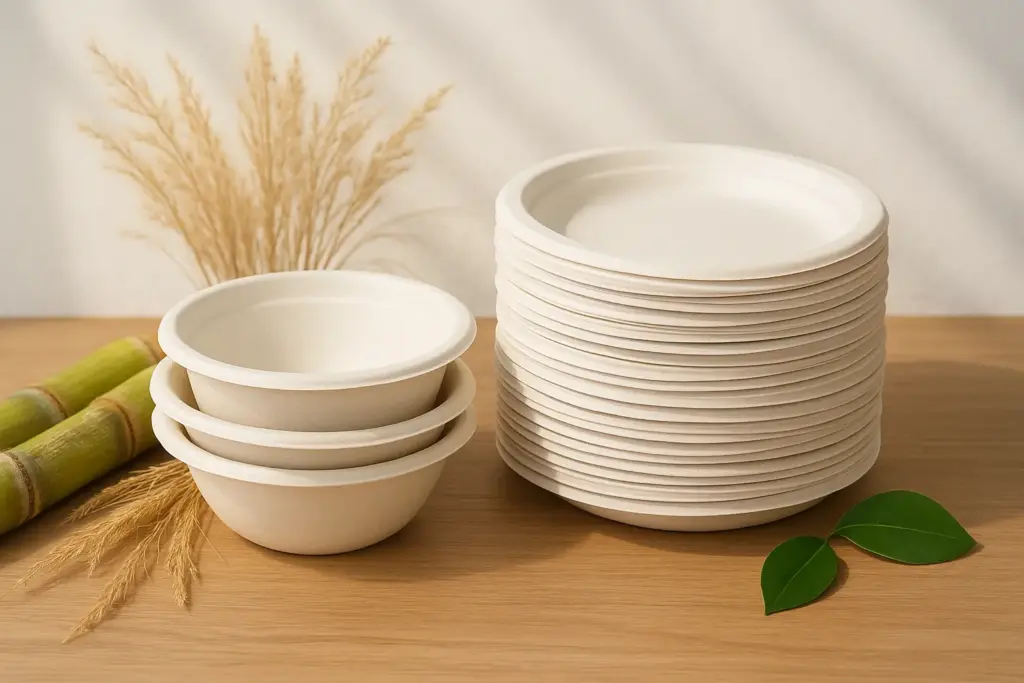
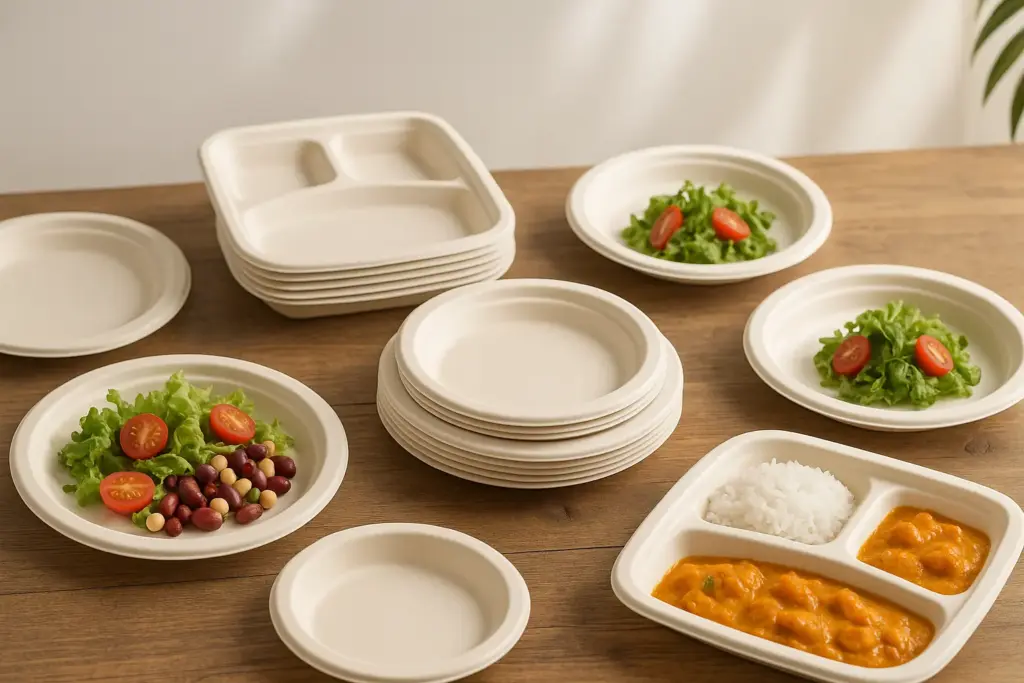
Sugarcane bagasse tableware performs well because of its natural fibre density. Well-manufactured bagasse tableware:
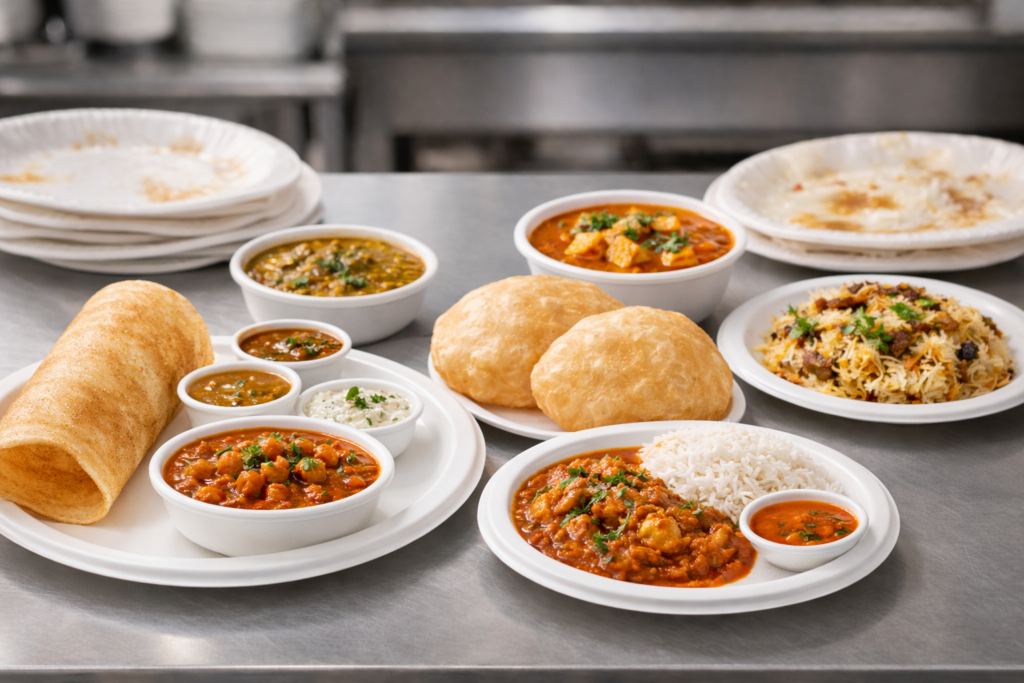
- Handles hot curries and gravies
- Resists oil seepage
- Maintains rigidity during the meal
Restaurants serving oily or liquid-heavy food should prioritise performance over price. The right material eliminates workarounds like double plating, which slow service and increase costs.
Step 4: Let Staff Learn Through Use, Not Instructions
Most operational slowdowns come from uncertainty, not resistance. Staff hesitate when they are unsure how new packaging will behave.
Instead of issuing long instructions, allow staff to handle the new eco friendly disposable plates during prep and service. Let them load food, stack plates, and carry orders. Practical experience builds confidence faster than training sessions.
Once staff trust the plates, speed and efficiency return to normal almost immediately.
Step 5: Secure a Reliable Supplier Before Scaling
Supply inconsistency can derail even the best-planned transition. Restaurants should evaluate suppliers carefully when purchasing disposable plates wholesale.
Key factors to consider include:
- Consistent quality across batches
- Capacity to meet growing demand
- Clear food-grade and safety standards
At Pulp-Craft, consistency and scalability are core priorities, so restaurants don’t have to revisit packaging decisions once plastic is phased out. This reliability is especially critical for multi-outlet restaurants and cloud kitchens.
Step 6: Communicate the Change Without Overexplaining
Customers do not need detailed explanations. A simple message such as “We’ve switched to plastic-free tableware” is enough.
When eco friendly plates perform well, customers rarely question the change. If anything, good packaging quietly enhances brand perception without disrupting the dining experience.
The Long-Term Operational Advantage
Restaurants that shift early often discover unexpected benefits. Complaints related to leakage drop, staff spend less time managing packaging issues, and compliance risks reduce. Over time, the switch to sugarcane bagasse plates becomes invisible because operations stabilise around it.
The real insight is simple: disruption does not come from moving away from plastic. It comes from choosing unsuitable alternatives or switching without preparation.
Final Thoughts
Restaurants do not have to choose between sustainability and smooth operations. With careful testing, the right material, staff involvement, and reliable sourcing, the transition away from plastic can be straightforward.
When bagasse plates, sugarcane plates, and sugarcane bagasse tableware are selected for performance rather than appearance, they integrate naturally into daily workflows. Service remains fast, customers remain satisfied, and the restaurant moves forward without disruption.
In practice, the best packaging change is the one your staff stop noticing after a few days—because everything simply works.