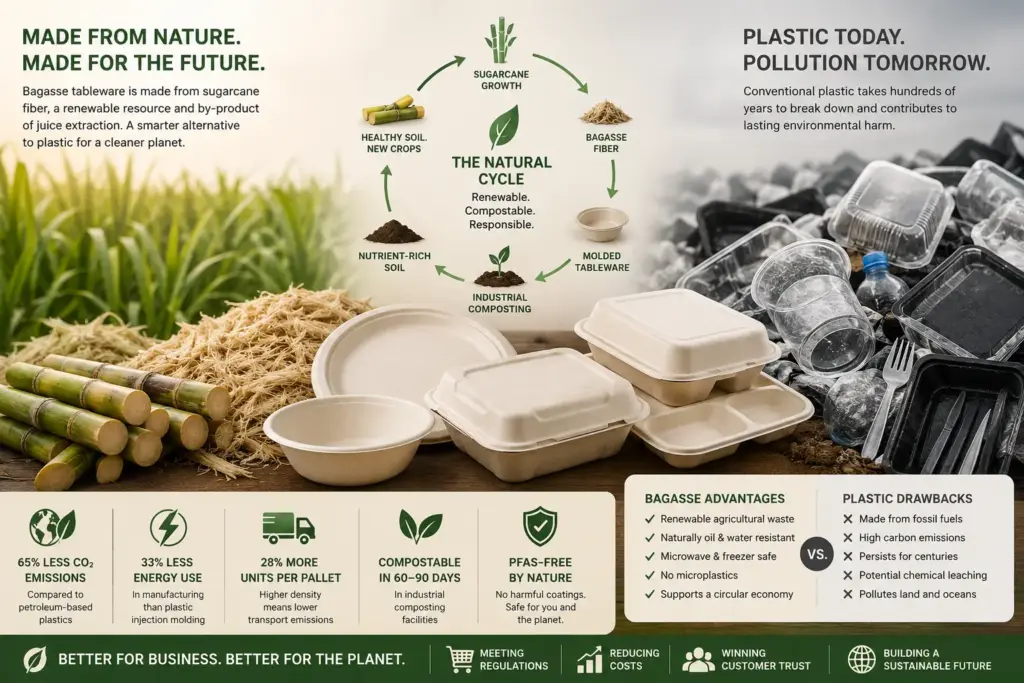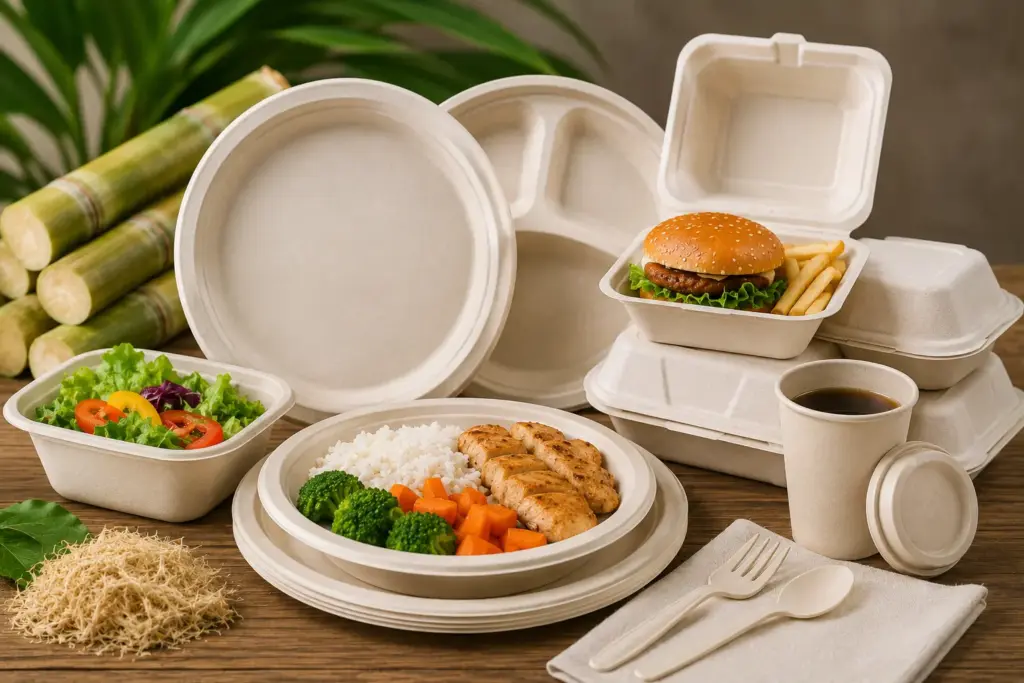
As eco-friendly tableware continues to replace plastic across homes, restaurants, events, and food businesses, bagasse products have become a preferred choice. Made from natural sugarcane fiber, bagasse plates, bowls, trays, and containers offer compostability, strength, and food safety.
However, because bagasse is a natural material, many buyers and businesses ask an important question:
What is the shelf life of bagasse products, and how should they be stored properly?
Understanding the shelf life and correct storage practices is essential to maintain product quality, hygiene, and performance. This guide explains everything you need to know.
Table of Contents
What Are Bagasse Products Made Of?
Bagasse is the fibrous residue left after sugarcane juice extraction. Instead of being burned or discarded, this agricultural byproduct is processed into food-grade pulp and molded into disposable tableware.
Because bagasse products are plant-based and biodegradable, they behave differently from plastic. They do not contain preservatives, synthetic coatings, or chemical stabilizers. This makes proper storage especially important.
Shelf Life of Bagasse Tableware
Typical Shelf Life
When stored correctly, bagasse products generally have a shelf life of 12 to 24 months from the date of manufacture.
This applies to:
- Bagasse plates (round and compartment)
- Bagasse bowls
- Meal trays
- Clamshell containers
The shelf life depends on:
- Storage conditions
- Packaging quality
- Humidity and temperature exposure
- Handling practices
Bagasse products do not “expire” in the way food does, but improper storage can weaken their structure or cause discoloration.
Factors That Affect Shelf Life
1. Moisture and Humidity
Bagasse is naturally absorbent. High humidity can:
- Cause softening or warping
- Reduce strength
- Encourage mold growth in extreme conditions
Moisture is the biggest enemy of bagasse products during storage.
2. Temperature
Excessive heat can:
- Dry out the fibers
- Cause brittleness over long periods
- Affect shape if stacked improperly
Bagasse products should never be stored near ovens, boilers, or direct sunlight.
3. Air Exposure
Leaving products uncovered or unpacked allows:
- Dust accumulation
- Moisture absorption from air
- Gradual loss of rigidity
Proper packaging helps preserve quality.
4. Compression and Weight
Stacking heavy loads on bagasse products for long periods can:
- Deform plates and trays
- Cause permanent bending
- Reduce visual appeal
Best Storage Practices for Bagasse Products
1. Store in a Cool, Dry Place
The ideal storage environment is:
- Temperature between 15°C to 30°C
- Low humidity
- Well-ventilated indoor space
Avoid storage areas such as:
- Open warehouses without climate control
- Damp basements
- Areas prone to water leakage
2. Keep Products in Original Packaging
Bagasse tableware is typically packed in:
- Plastic-wrapped bundles
- Corrugated cartons
Do not remove products from their packaging until use. Original packaging protects against:
- Moisture
- Dust
- Accidental damage
For wholesalers and retailers, resealing partially opened cartons is strongly recommended.
3. Avoid Direct Sunlight
Long exposure to sunlight can:
- Cause discoloration
- Dry out fibers
- Reduce structural strength over time
Always store cartons away from windows or transparent roofing.
4. Use Elevated Storage
Never place cartons directly on the floor, especially in warehouses.
Best practice:
- Store on pallets
- Maintain at least 6 inches above ground
- Protect from accidental water spills
5. Follow FIFO (First In, First Out)
For businesses handling bulk quantities:
- Use older stock first
- Label cartons with arrival or manufacturing dates
- Rotate inventory regularly
FIFO ensures optimal product quality and prevents unnecessary long-term storage.
Handling Best Practices
Proper handling is just as important as storage.
- Avoid dropping cartons
- Do not bend or force products during unpacking
- Keep hands dry when handling large quantities
- Do not store near chemicals, detergents, or strong odors
Bagasse products can absorb surrounding smells if exposed.
Can Bagasse Products Be Stored Long-Term?
Yes, bagasse products are suitable for long-term storage when conditions are controlled.
Many caterers, exporters, and distributors safely store bagasse tableware for over a year without quality loss by:
- Maintaining dry storage
- Using sealed cartons
- Avoiding extreme temperature fluctuations
Signs of Improper Storage
If bagasse products are stored incorrectly, you may notice:
- Soft or spongy texture
- Warping or bending
- Yellowing or uneven coloration
- Surface spots due to moisture exposure
Such issues are related to storage conditions, not manufacturing quality.
Storage Tips for Different Users
For Retailers and Wholesalers
- Maintain climate-controlled storage where possible
- Stack cartons evenly
- Avoid overloading shelves
For Caterers and Event Planners
- Store products indoors until the day of the event
- Transport in covered vehicles
- Avoid leaving cartons open at venues overnight
For Home Users
- Store unused plates in cupboards
- Keep away from sinks and stoves
- Use within a year for best experience
Why Proper Storage Matters
Correct storage ensures that bagasse tableware:
- Retains full strength during use
- Looks clean and presentable
- Performs well with hot and oily food
- Meets food safety expectations
Well-stored bagasse products perform just as reliably as plastic, without the environmental harm.
Conclusion
Bagasse tableware is a sustainable and practical alternative to plastic, but like all natural products, it requires mindful storage. With proper handling and the right environment, bagasse plates, bowls, and trays can be stored safely for up to two years without any loss in quality.
By following simple best practices such as dry storage, sealed packaging, and inventory rotation, businesses and consumers can confidently rely on bagasse products whenever needed.
Understanding shelf life and storage is about respecting the natural materials that make sustainable living possible.